
Heavy Material Handling Solutions for Heavy and Oversized Loads
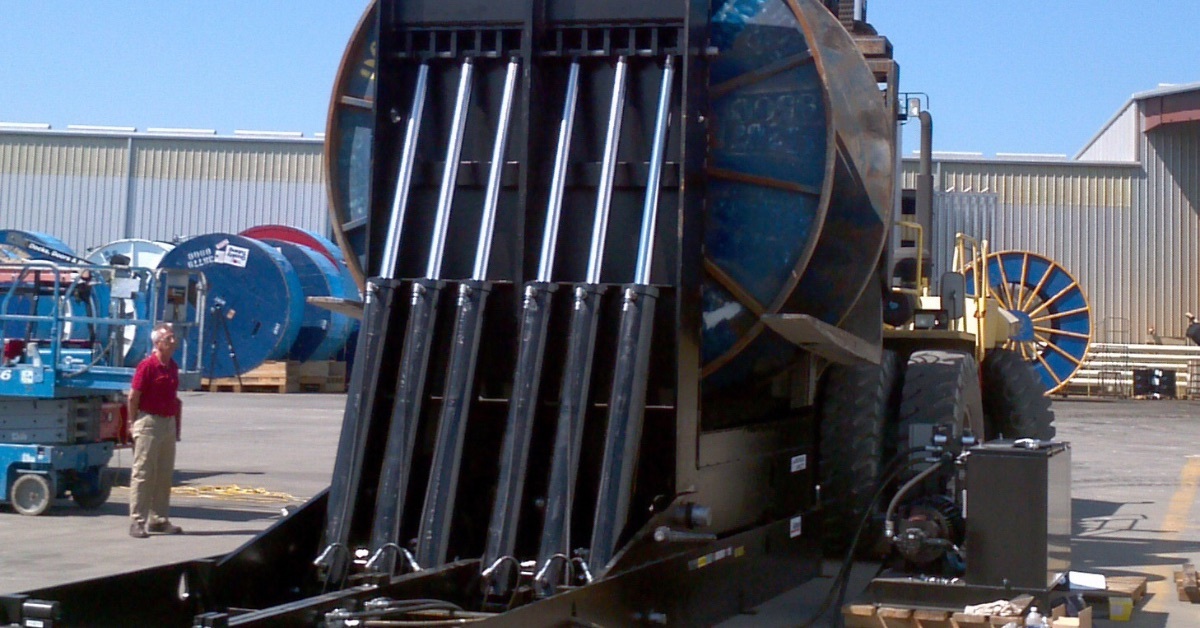


Heavy Material Handling: Matching the Equipment to the Movement
A 12,000 lb steel mold sits on the floor next to the machine it feeds. A pallet of heavy metal parts must move from receiving to a mezzanine. A large engine block needs work on all four sides. Each one is a heavy material handling problem that calls for different equipment.
When a load is this heavy or this awkward, it’s natural to expect the equipment will have to be custom-built. Sometimes it does. But the answer may already exist in an established lift, tilter, turntable, or VRC design, or in one that needs only a few modifications. The first step is understanding the movement your load actually needs.
Here’s what we’ll cover in this article:
- Raising heavy loads to a productive working height
- Tilting and rotating loads so operators can reach the work
- Dedicated vertical movement between floors and mezzanines
- Handling loads that are long, wide, or oddly balanced
- Tying heavy load handling into conveyors and automated systems
- Getting more out of proven, established equipment designs
Working with a load that’s too heavy, too big, or too awkward for your current setup? Let’s talk through your application and build the right handling strategy for your operation.
Why Heavy and Oversized Loads Turn Into Bottlenecks
Heavy loads rarely slow a plant down while they’re moving. They slow it down while everyone waits for them to move. An operator waits on the overhead crane. A crew chains up a part and hoists it because the cart sits at the wrong height. A finished assembly waits because it won’t fit in the freight elevator. Each kind of delay requires a different solution.
Autoquip has been building lifting and positioning equipment since 1947. Our line includes scissor lift tables, tilters, turntables, work positioners, and hydraulic and mechanical VRCs, with high-capacity lifts from 8,000 lbs to 135,000 lbs. That range is why a heavy-duty requirement does not automatically mean engineering from scratch.
Bring Heavy Loads to the Right Working Height
Ever watched an operator bend over a heavy part all shift because it’s sitting too low? Closing the gap between where a load sits and where your team works, without a crane, is a high-capacity lift’s job.
High-Capacity Scissor Lifts
A high-capacity lift table is built differently from a light-duty unit, with heavier scissor legs, larger cylinders, stiffer platforms, and stronger bases. Our Titan and Super Titan series are designed for this range. The Super Titan is built to minimize platform flex, even under the heaviest loads.
Raising Large Components, Assemblies, Dies, Tooling, and Palletized Loads
Typical loads in this range include large components, engine and transmission assemblies, stamping dies, molds and other tooling, and pallets of dense raw material. A die packs its weight into a small area. A palletized load spreads out but can shift, and an assembly may carry most of its weight at one end. We design each industrial scissor lift around how the load sits and how much it weighs.
Reaching the Required Working or Transfer Height
At a workstation, the right height lets your operator reach the work without bending or stretching. At a transfer point, it lets the load slide straight across to a conveyor, machine, or cart. We calculate vertical travel from those numbers, along with a lowered height if the load arrives by forklift or pallet jack.
Supporting Manufacturing, Assembly, and Production Processes
In manufacturing material handling, a high-capacity lift does more than raise a load. It can become a working part of the process itself. It might hold a die at press height while it’s swapped in or out, or raise an assembly in stages as a crew works from the top down. Designed around the process, our lifts let operators work on the load instead of around it.

Position Heavy Materials So Operators Can Reach the Work
Getting a load to the right height doesn’t help much if it’s facing the wrong way, or if the side your operator needs is on the bottom. Material positioning equipment solves that without anyone having to muscle the load into place.
Tilting Loads Toward the Operator or Process
Tilting brings the work to the operator. A bin tipped toward a packer, a frame angled so a welder can see the seam, a container angled so a picker can reach the bottom layer. In each case, the operator stops leaning, reaching, or climbing. Our tilters also help with tasks that rely on gravity, like emptying bulk material into a hopper.
Rotating Materials for Access to Every Side
Rotation lets one operator reach every side of a large part from one spot. A turntable can turn a heavy assembly a quarter turn for each work step. Without rotation, your options are walking around the part, which takes floor space, or flipping it with a crane, which takes time.
Positioning Large Components During Assembly or Manufacturing
Large components often change position several times during a build. A frame might be welded on its side, flipped for the opposite seam, then stood upright for final assembly. We can combine lift, tilt, and rotation into a single unit so the part moves through each position without leaving the equipment.
Reducing Unnecessary Manual Repositioning of Heavy Materials
Every time a heavy load is shifted with a forklift, pried into place with bars, or turned by hand with a hoist and chains, the job gets longer, and the risk goes up. Heavy warehouse equipment positioning that happens on our equipment, rather than in the air, keeps the load supported the whole time. That frees your overhead crane for the moves that genuinely need it.
Where Industrial Tilters, Turntables, and Work Positioners Fit
Each of our positioning products fits a different kind of job. Tilters are the right fit when a load needs to be angled toward an operator or process, and we build them in hydraulic, pneumatic, and mechanical designs, including models that stand a load upright through a full 90 degrees. Turntables, manual or powered, make sense when a part needs to be turned to access each side. Work positioners suit tasks that require height adjustment plus tilt or rotation. Not sure which one your application calls for? Our team will help you identify the best fit for your load and your workflow.

Give Heavy Materials a Dedicated Path Between Levels
P: Sometimes the challenge isn’t the workstation at all. It’s moving heavy material from one level of your building to another without tying up a freight elevator, forklift, or crane.
Moving Materials Between Floors
P: Multi-story plants often run production on one floor and receiving or shipping on another. Moving heavy material between them on a shared elevator creates traffic and delays. A dedicated material lift from Autoquip gives that flow its own path.
Mezzanine Access
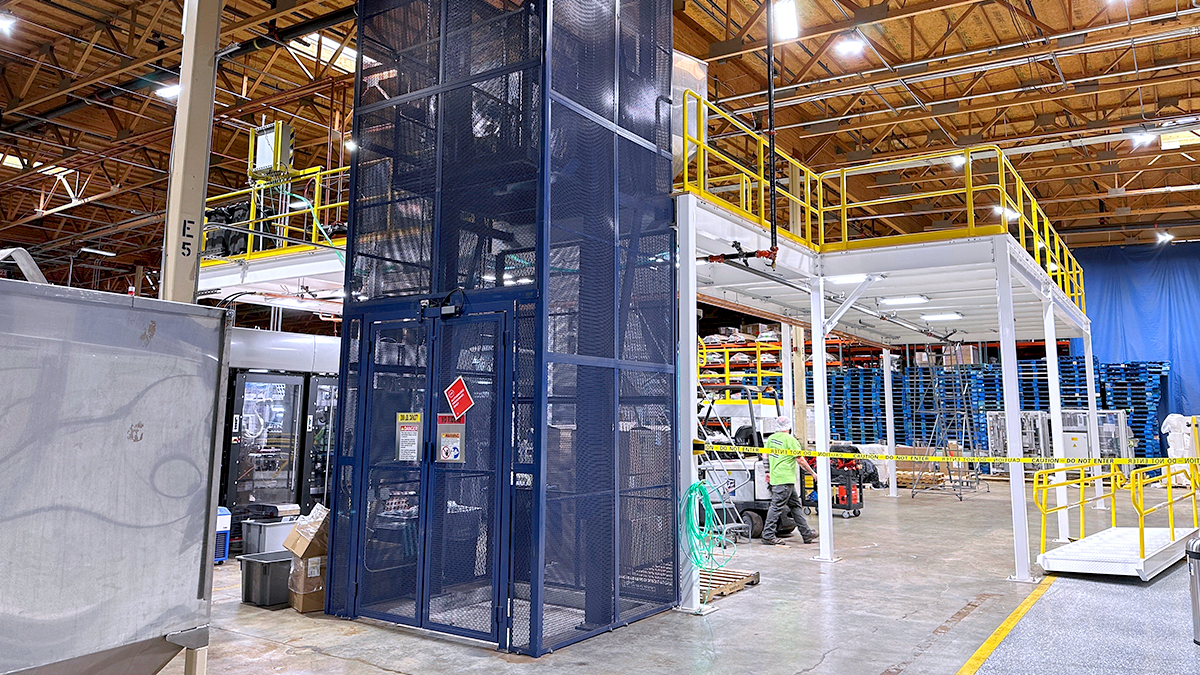
P: A mezzanine adds floor space without expanding your building, but only if material can get up and down reliably. Heavy parts, tooling, accessories, containers, and pallets headed upstairs need a lift sized for that load. Our lifts give a mezzanine a safe, repeatable way to receive material, so your team isn’t relying on a forklift to raise loads to the upper level.
Elevated Production and Storage Areas
P: Raised production lines and upper-level storage depend on a steady flow of material from below. When that flow stalls, the operation above it stalls too. We size lifts for these areas to handle the heaviest loads they’ll carry and how often they’ll need to run during peak production.
Heavy or Bulky Loads That Need Dedicated Vertical Movement
P: A large machine base, a pallet of steel bar, or a fully assembled piece of equipment may be heavier than a freight elevator can carry, or too big for its doors. For those loads, a purpose-built vertical lift sized to the load earns its floor space.
VRCs as a Solution Category
Vertical reciprocating conveyors are designed for exactly this kind of material movement. Our hydraulic VRCs offer up to 30 ft of travel and 6,000 lbs of capacity. For heavier loads or taller buildings, our mechanical VRCs can reach up to 100 ft of travel and 20,000 lbs of capacity. We can customize both for platform size, number of levels, and loading direction, which matters when a long load has to enter and exit from different sides.
Material Movement Versus Personnel Lifting
VRCs move material only. They fall under ASME B20.1, the safety standard for conveyors and related equipment, and they are not designed or rated to carry people. Moving personnel between levels requires different equipment. We draw that line early in planning, which avoids safety problems and redesigns later.
Handling Oversized and Unusually Shaped Loads
Weight gets most of the attention, but size and shape often decide the equipment. A load a lift could easily carry by weight alone may need a different solution once its length, width, or balance comes into play. Oversized load handling starts with a different question: how does the load’s shape change the approach?
Long Materials
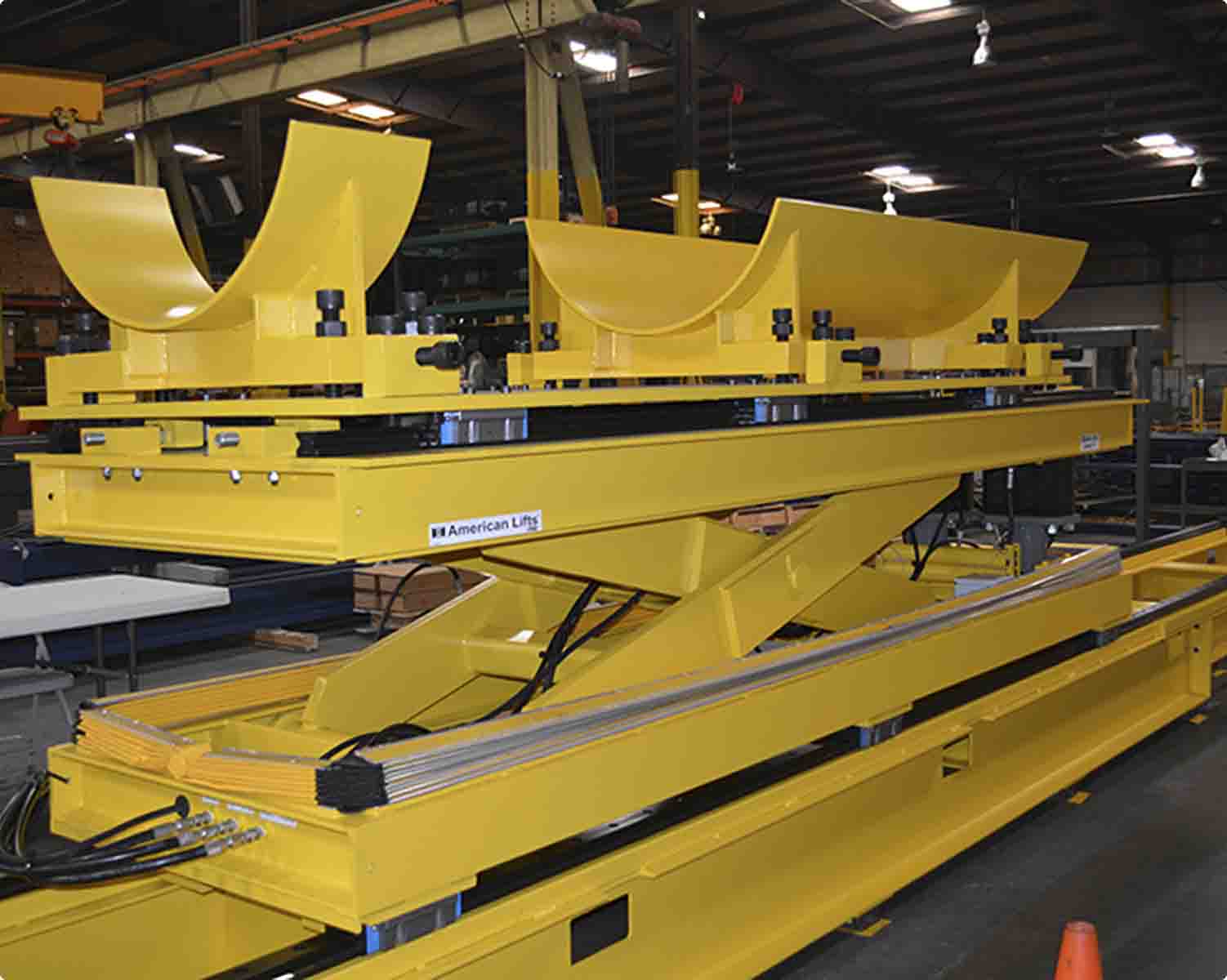
Steel bar, pipe, beams, and long welded frames act like a lever. When much of a long load’s weight sits near one end, it presses down on the edge of the platform. A lift that handles the same weight easily when it’s centered could flex or tip. Long materials may call for a longer platform or several lifts that rise together to support more of the load’s length.
Wide Assemblies
Will a wide assembly clear the guarding, building columns, and doorways along its path? Can your operators reach its middle from either side? For a wide load of bulky items, the answer might be a wider platform, a turntable that brings each side within reach, or a different loading direction entirely.
Large Fabricated Components
Large welded frames, racks, steel tanks, and machine enclosures tend to be big, bulky, and irregular in shape. Some need a custom support frame just to sit safely on a platform. For loads like these, a tilter or work positioner that holds the part at a working angle, or a platform with custom mounting points, may be a better answer.
Unusual Shapes and Offset Centers of Gravity
Engines, gearboxes, and many assemblies carry their weight off-center. That puts uneven force on the platform, scissor legs, and cylinders, and changes how the load behaves when tilted or rotated. That’s why we size equipment around where the weight actually sits. If an off-center load also needs to be turned or angled during the job, a tilter or work positioner may handle it better than a flat lift.
Platform Size and Support Requirements
Our team sizes the platform around the load and how your crew handles it, plus room for any pallet racks or holding frames. Support matters just as much. A load resting on only a few points may need a stiffer platform or added supports to hold it steady, because a platform that flexes can shift the part out of position at the worst possible moment. The answer may be a larger platform on an existing model or a custom one.
Load Stability and Orientation
A load that sits steady at ground level may not stay steady as it rises, tilts, or turns. Standing a part on end saves floor space but raises its center of gravity. Laying it flat lowers the center of gravity but uses more platform length. A tall part that’s unsteady when raised upright may be better handled laid flat on a longer platform, or stood up with a tilter only once it reaches working height.
Connecting Heavy Load Handling to the Rest of the Line
When your heavy load handling equipment takes material from one system and passes it to the next, everything has to work as one. In industrial load handling, a misaligned handoff can do real damage.
Conveyors
A lift paired with a conveyor has to line up with it and hold steady while the load moves across. We can mount powered rollers or chain conveyors on the lift platform, so the load moves on and off without a forklift or a manual push.
Automated Material Transfer
In an automated sequence, the transfer has to happen the same way every cycle. Stops, guides, and position sensors keep a heavy load exactly where it belongs. The heavier the load, the more that consistency matters, since even a slightly off-center transfer can put real strain on the machines.
Production Equipment
Lifts that feed presses, machine tools, or assembly stations have to match the height and position that equipment expects. Our engineers design around your production equipment from the beginning. That way, the lift is ready to work with your line once it’s installed, which helps keep production downtime to a minimum.
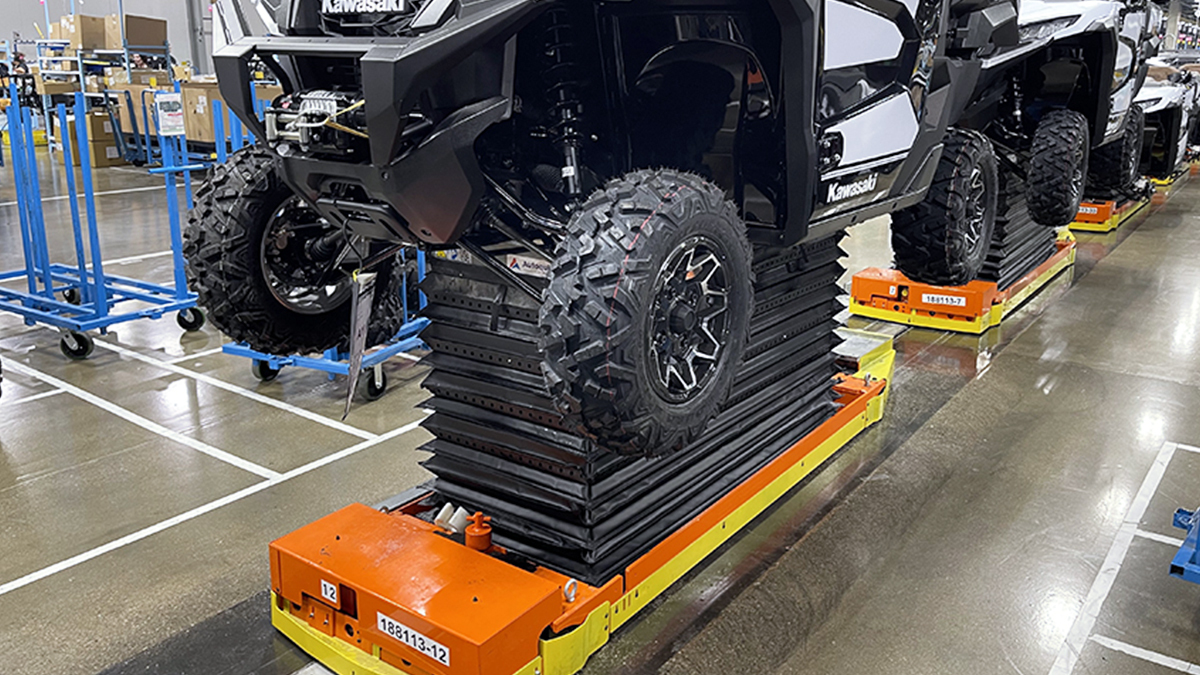
AGVs and AMRs
Automated guided vehicles (AGVs) and autonomous mobile robots (AMRs) can hand loads directly to a lift or VRC. When they do, our engineers plan the handoff height, approach direction, and confirmation signals in advance. For pallet handling between an AGV and a lift, getting those details right helps the transfer run smoothly with less manual involvement.
Sensors and Controls
Sensors keep track of what’s happening at every step. They can confirm a load is on the platform and centered, check that gates and guards are closed, stop the lift at the correct level, detect something in the lift’s path, and signal surrounding equipment when the lift is ready for the next move. For especially complex control requirements, our sister company, OSCO Controls, is available for advanced PLC programming and systems integration.
Coordinating Lift Movement With Surrounding Equipment
Before a heavy-duty lift goes in, our team gets to know the equipment around it and the work happening nearby. A second VRC, a conveyor line, or a production machine may have its own operators working close to the lift. Understanding those activities, and who else is in the area, lets us plan for safe clearances, guarding, and the right protection and safety protocols. Where the lift hands loads to or from another piece of equipment, we also make sure each one waits until the other is in position before it moves.
Get More From Proven Lift and Positioning Designs
Does a heavy-duty job automatically call for a fully custom machine? Not necessarily. Our established designs cover a wider range of capacities and configurations than you might expect.
Established Equipment for Demanding Industrial Loads
Autoquip’s existing line already includes lift tables, VRCs, tilters, turntables, and work positioners designed for demanding loads. Those designs reflect more than 75 years of applications.
High Capacity Does Not Have to Mean Custom
Capacity alone doesn’t automatically push an application into custom engineering. Loads of 10,000 or 20,000 lbs sound extreme, but they fall within the range of our established heavy duty lift table and mechanical VRC designs. Custom engineering tends to come into the picture when several challenges stack up, such as an unusually shaped load that also has to fit a tight space and work with automated equipment.
Evaluate Established Equipment First
Starting with an existing design shortens the path to a quote, cuts engineering time, and can shorten lead time. If an existing design fits, there’s little reason to pay for engineering your application doesn’t need.
Configuring and Modifying Existing Models
Between an off-the-shelf model and a fully custom system is a wide middle ground. We can often adjust platform size, travel, controls, conveyors, and guarding on one of our existing models. That gives heavy material handling equipment projects a practical option: a proven base design, modified to fit your load, facility, or process.
When More Extensive Engineering Is Warranted
Some applications do need more. Extreme load shapes, capacity beyond existing designs, unusual travel, or complex integration can push a project beyond what an existing design can handle. Even then, our engineers can start with a proven design rather than a blank page, giving the project a head start.
Choosing the Right Path for Your Heavy Material Handling Challenge
Rather than working through a long list of specifications, it helps to start with the movement the load needs. Does the load need to be lifted to a working height? Positioned for better access? Tilted or rotated so operators can reach every side? Moved between levels? Transferred into another process? Or does that movement need to be built into an automated system? Those answers will point us to the right type of equipment.
Once we understand the movement, Autoquip can identify the right equipment category and determine whether an existing model, a modified solution, or an engineered system fits best. Tell us what you’re moving, how it needs to move, and any space limits in your facility, and we’ll work through the options with you.
Contact us today and request a quote for your heavy load handling equipment.

Autoquip: Heavy and Oversized Load Handling Backed by Seven Decades of Experience
If your team is still relying on cranes, chains, and workarounds to move heavy loads, there’s a better way to approach heavy material handling. The right lift, tilter, turntable, or VRC brings the load where it’s needed, at the height and angle the work calls for. Autoquip has the high-capacity lifting equipment, the experience across heavy industry, and the in-house engineering to help you get there. And the solution you’re looking for may already be one of the designs we build today.
Talk to Autoquip about your heavy or oversized material handling application.