
Choosing the Right Industrial Lift for Your Manufacturing Process
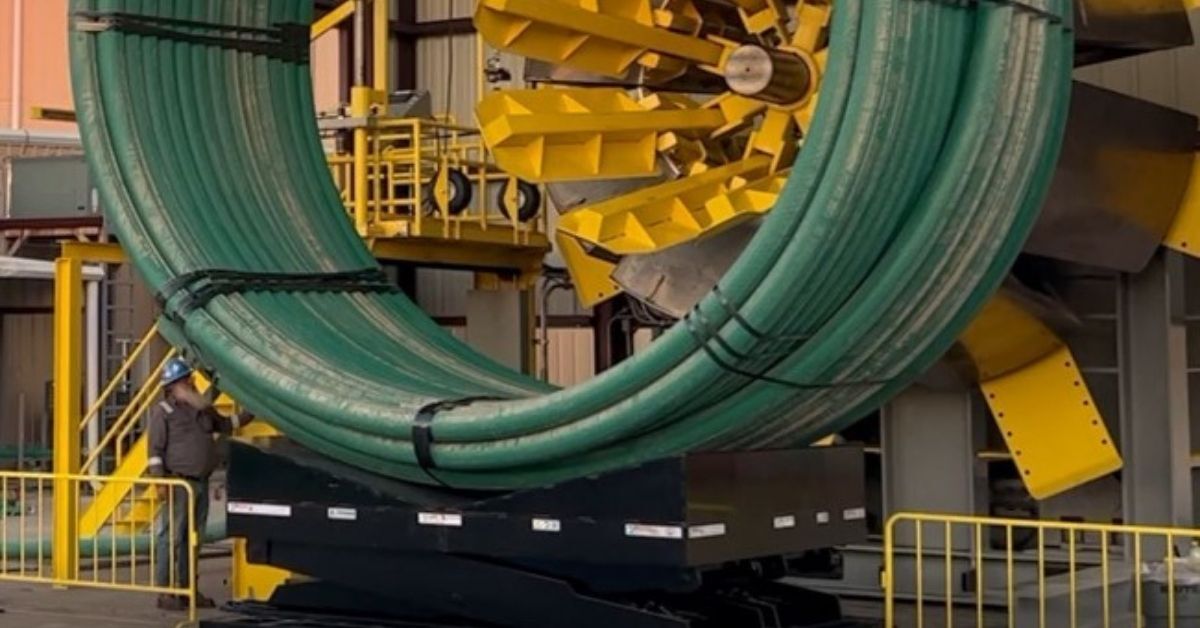


What to Consider Before Selecting an Industrial Lift for Manufacturing
Every manufacturing process has unique lifting requirements — and the lift system that works perfectly in one application can create bottlenecks, safety concerns, and maintenance headaches in another. Selecting an industrial lift for manufacturing isn’t about finding the most capable system on the market. It’s about finding the right system for your specific application, workflow, and operational goals.
The wrong lift doesn’t always fail dramatically. More often, it underperforms quietly—slowing cycle times, requiring workarounds, limiting operator efficiency, or creating maintenance demands that weren’t anticipated at the time of purchase. Getting the selection right from the start requires a clear understanding of what the application actually demands before a lift is ever specified.
This article walks through the key factors that should drive lift selection in manufacturing environments — and how matching the right system to your operational requirements improves productivity, safety, and long-term performance:
- Why application requirements should drive lift selection — not the other way around
- The key questions to answer before evaluating lift systems
- The factors that most influence which lift is right for your process
- How different operational goals point to different lift solutions
- The long-term benefits of selecting the right system from the start
- Real-world examples of how application-specific lift selection delivers measurable results across manufacturing environments
The right lift starts with a conversation with our team of experts. Contact Autoquip today and let’s discuss your application requirements.
Why Lift Selection Starts with the Application — Not the Equipment
It’s tempting to start a lift selection process by looking at products — comparing specifications, reviewing options, and identifying what’s available within a budget. The problem with that approach is that it puts the equipment before the application. A lift that meets the load and travel requirements on paper can still be the wrong solution if it doesn’t fit the workflow, the operator interaction model, or the production environment it’s being placed in.
Application requirements should drive lift selection. That means understanding what’s being lifted, how often, where in the workflow the lift operates, and what the operation needs the lift to do—before evaluating which systems are capable of doing it. Facilities that take that approach end up with lift systems that perform as expected, integrate smoothly into their workflows, and deliver long-term value. Facilities that don’t often find themselves managing a mismatch between what they purchased and what they actually need.
Understanding Your Application Requirements
Before any lift system is evaluated, the application has to be understood — in specific, operational terms. Four questions anchor that understanding.
What Is Being Lifted?
Load characteristics define the baseline requirements for any lift system. Weight is the most obvious factor, but it’s not the only one. Load dimensions, center of gravity, whether the load is uniform or variable, and how the load interfaces with the lift platform all affect which systems are appropriate. A lift rated for the right weight but configured for the wrong load profile can create positioning challenges, stability concerns, and wear patterns that reduce service life.
How Often Is the Lift Used?
Cycle frequency — how often the lift operates within a given period — has a direct impact on which systems are suitable for the application. Matching the lift’s duty cycle rating to the actual operating demand of the application is one of the most important and most frequently overlooked steps in lift selection — a topic we cover in depth in our industrial lift duty cycle blog.
Where Does It Fit Within the Workflow?
A lift doesn’t operate in isolation — it’s a node in a larger manufacturing workflow. Understanding where the lift sits in that workflow — what comes before it, what follows it, and how materials arrive and leave — is essential to selecting the right system. The cycle time constraints of surrounding processes matter just as much as the lift’s own specifications. A lift that can’t keep pace with upstream and downstream processes becomes a bottleneck. One that’s oversized for the workflow wastes capital and floor space.
Will Future Expansion Affect Requirements?
Manufacturing operations evolve. Products change, volumes increase, processes get reorganized, and automation gets added. A lift specified only for today’s requirements, without considering where the operation is going, can become a constraint faster than expected. Understanding how requirements are likely to change—and specifying a system with enough flexibility to accommodate that change—reduces the risk of an early replacement or costly retrofit.
Key Factors That Influence Lift Selection
Once the application is understood, several factors determine which industrial lift systems are appropriate — and which aren’t. These factors interact and directly influence lift system design decisions, so they have to be evaluated together rather than in isolation.
Capacity and Travel Requirements
Load capacity and vertical travel distance are the starting point for any lift evaluation — but they’re starting points, not endpoints. Capacity should be specified with a safety margin that accounts for variable loads, dynamic forces during lifting, and future requirement changes. Travel distance affects the mechanical configuration and drive system appropriate for the application. Both need to be right before other factors can be meaningfully evaluated.
Available Space
Floor space, ceiling height, pit availability, and the physical constraints of the installation environment all affect which lift configurations are viable. A lift that’s ideal on paper may not be installable in the available space without significant facility modification. Understanding the spatial envelope available for the lift—including the space needed for operation, maintenance access, and load staging—is essential before narrowing the field of appropriate solutions.
Operator Interaction
How operators interact with the lift affects both the ergonomic requirements and the control system design. Is the lift operator-controlled or process-controlled? Do operators work on or around the lift platform? What are the positioning requirements — does the lift need to stop at precise heights, or is general height adjustment sufficient? Operator safety and ergonomics should be designed in, not added on — and the operator interaction model has to be understood before control systems and guarding can be specified appropriately.
Automation Compatibility
In automated or semi-automated manufacturing environments, the lift has to integrate with the surrounding automation architecture. Conveyor interfaces, AGV handoffs, PLC communication protocols, and sensor integration requirements all affect the design of the lift and its control system. A lift that can’t communicate with the automation environment it’s placed in creates manual intervention points that undermine the efficiency gains automation is supposed to deliver.
Environmental Considerations
The physical environment where the lift operates affects material selection, sealing requirements, and component ratings. Temperature extremes, exposure to moisture, dust, chemicals, or corrosive atmospheres all require specific design responses. A lift specified without accounting for its operating environment will experience accelerated wear, component failures, and maintenance demands that a correctly specified system would have avoided.
Matching Lift Systems to Operational Goals
Different operational goals in manufacturing environments call for different lift solutions. Understanding which category of solution aligns with your primary operational objective is a useful way to narrow the field before getting into detailed specifications.
Ergonomic Work Positioning
When the goal is bringing work to the operator at the right height and orientation for efficient, low-strain assembly or inspection, scissor lift tables and positioning systems are typically the right starting point. These solutions are designed to maintain optimal working height, reduce operator fatigue, and support consistent positioning across workstations and shifts. For applications that also require tilting or rotation, custom positioning systems that combine lift, tilt, and rotate functions can address the full positioning requirement in a single integrated solution.
Vertical Material Movement
When the goal is moving materials between levels — between floors, to and from mezzanines, or between conveyor elevations — vertical reciprocating conveyors are purpose-built for the application. VRCs are among the most capable material handling lifts available for industrial environments, moving materials safely and efficiently between levels, integrating with conveyor systems and automated workflows, and meeting the ASME B20.1 standard for material-only vertical transport. For facilities where manual transfer between levels is a bottleneck or a safety concern, VRCs provide a dedicated solution that forklifts and freight elevators can’t match.
Assembly Support
Assembly environments often require lifts that can hold a work-in-progress at a precise height. At the same time, operators work around it, support rotation for multi-sided access, or interface with fixtures and tooling that are part of the assembly process. These applications frequently benefit from custom-configured solutions that address the specific geometry, weight, and access requirements of the assembly rather than adapting a standard product to fit.
Automated Production
In automated production environments, the lift has to function as an integrated component of the production system — not a standalone piece of equipment. Automated production lifts need precise positioning, reliable cycle performance, and robust integration with the surrounding automation architecture. These applications often drive toward custom-engineered solutions that are specified, designed, and built around the specific requirements of the production system rather than selected from a standard catalog.
Custom Applications
Some manufacturing applications don’t fit neatly into standard lift categories. Unusual load profiles, complex workflow integration requirements, space constraints that standard products can’t accommodate, or operational demands that exceed standard specifications all point toward custom industrial lifts engineered specifically for the application. Autoquip’s custom lift solutions are designed from the ground up around the specific requirements of the application—with the engineering depth and manufacturing capability to deliver solutions that standard products simply can’t provide.
Benefits of Selecting the Right Lift System
When an industrial lift for manufacturing is properly matched to the application, the benefits show up across the operation — not just at the lift itself. Production efficiency improves, workflows tighten, and the lift becomes an asset rather than a liability.
Improved Productivity
A lift that fits the workflow keeps production moving. Correct capacity, appropriate cycle performance, and proper integration with upstream and downstream processes mean the lift contributes to throughput rather than limiting it. Over the service life of the system, the productivity difference between a well-matched lift and a mismatched one is substantial.
Better Workflow Integration
The right lift disappears into the workflow — it does what it’s supposed to do, when it’s supposed to do it, without requiring workarounds, manual interventions, or adjustments that slow the surrounding process. That kind of seamless integration is only achievable when the lift was selected with the workflow in mind from the beginning.
Increased Safety
Properly sized Lifts, correctly configured for operator interaction, and appropriately guarded for the environment they operate in are safer lifts. Operator safety should never be an afterthought in lift selection—it’s a design requirement that has to be addressed from the start.
Greater Long-Term Value
A lift that’s correctly matched to its application runs longer, requires less maintenance, and delivers consistent performance over a longer service life than one that’s operating at or beyond its design limits. The total cost of ownership of a well-selected lift—including purchase, installation, and maintenance—is almost always lower than the ongoing cost of managing a mismatched system.
From the Field — Autoquip Solutions in Action
The following examples illustrate how application-specific lift selection translates into real operational outcomes across different manufacturing environments.
Aerospace Manufacturing — Precision Scrap Removal
- Problem: An aerospace manufacturer needed a precise, ergonomic solution for scrap removal from high-value aircraft components—with zero tolerance for positioning errors that could damage costly parts.
- Solution: Autoquip engineered a custom double-long Tork scissor work platform with synchronized vertical and horizontal positioning, pre-programmed HMI controls, and full perimeter safety systems.
- Results: Operator ergonomics improved, risk of component damage was minimized, and throughput increased through repeatable positioning and reduced setup time.
Counterweight Installation — Precision Air-Powered Positioning
- Problem: A customer needed a precise, safe method for installing counterweight and skid plates beneath heavy equipment — traditional handling methods lacked the fine control required and posed significant injury risk.
- Solution: Autoquip integrated a Series 35 scissor lift with an Aerofilm® air caster system, delivering 2,000 lbs. of lifting capacity alongside near-frictionless omni-directional movement for micro-adjustments in any direction.
- Results: Bolt hole alignment is now achieved reliably on the first attempt, operator strain is significantly reduced, and installation time has been cut substantially.
Locomotive Generator Assembly — Custom Lift, Tilt, and Rotate
- Problem: A locomotive manufacturer needed a safer, more efficient way to handle large, heavy generator assemblies—requiring precise positioning, rotation, and ergonomic access that standard equipment couldn’t provide.
- Solution: Autoquip engineered a custom 9,000 lb. capacity lift with integrated tilter and turntable built around the customer’s exact workflow.
- Results: Workflow efficiency, operator safety, and positioning repeatability all improved immediately — and the customer has since ordered multiple similar systems for several of their facilities.
Lift Selection Done Right — It Starts with Your Application
Proper lift selection begins with understanding the application — the load, the cycle demands, the workflow, the environment, and the operational goals the lift needs to support. Different manufacturing goals require different lift solutions, and both standard and custom systems play important roles depending on what the application actually demands. Getting that match right from the start is what separates a lift system that delivers long-term value from one that creates ongoing operational challenges.
Autoquip has been engineering and manufacturing lift solutions for more than 75 years. We work with manufacturing engineers, plant managers, and operations teams to understand application requirements, evaluate the right system for the job, and deliver solutions—standard or fully custom—that are built around what the operation actually needs.
Don’t leave lift selection to chance. Reach out to Autoquip and let’s make sure your next lift system is the right one for your application.
Autoquip — Engineering the Right Industrial Lift for Your Manufacturing Process
The right lift for a manufacturing application isn’t always obvious — but the right engineering partner makes the process clearer. With more than 75 years of experience and a track record that spans aerospace, locomotive manufacturing, and virtually every industrial sector in between, Autoquip brings the application knowledge and custom engineering capability to match the right lift to the right process. From standard scissor lifts to fully custom-engineered systems, we help manufacturers select solutions designed around their specific applications.