
How Material Handling Lifts Improve Manufacturing Efficiency
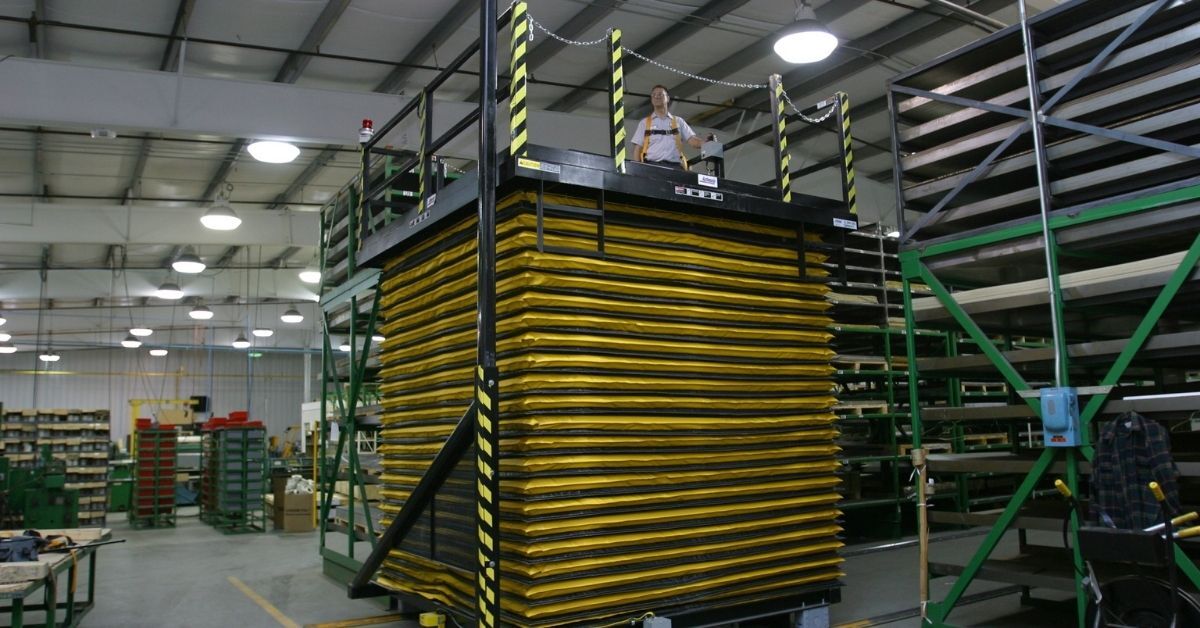


Material Handling Lifts — The Engineering Behind a Smoother Manufacturing Operation
Manufacturing efficiency depends on smooth, consistent material movement — and small disruptions in that flow have a way of becoming larger production delays. When operators spend time manually repositioning parts, waiting for material transfers, or compensating for poorly positioned workstations, cycle times stretch, quality varies, and fatigue accumulates. These inefficiencies are often treated as unavoidable. They rarely have to be.
Material handling lifts are specifically designed to address the points where manufacturing workflows lose efficiency — reducing manual handling, improving work positioning, and supporting more consistent production across every stage of the operation. Getting the right system in place is one of the most direct investments a facility can make in productivity, safety, and long-term operational performance.
In this article, we’ll explore how material handling lifts improve manufacturing efficiency — and address the key considerations that lead to better material flow, safer operations, and long-term production performance:
- Why smooth material movement is foundational to manufacturing efficiency
- How to define your operational requirements before selecting a lift system
- Where manufacturing efficiency is most commonly lost on the production floor
- Strategies lift systems use to improve material flow and reduce bottlenecks
- How to match the right lift solution to your manufacturing application
- The measurable benefits of efficient material handling across manufacturing operations
Don’t let material handling inefficiencies limit your production potential. Contact Autoquip today to discuss your application.
When Material Flow Breaks Down, Manufacturing Efficiency Follows
Every manufacturing operation depends on materials moving through the process reliably and predictably — from receiving through production, assembly, and shipping. When that movement is smooth and well-engineered, the rest of the operation can perform as designed. When it’s not—when manual handling steps slow transfers, when workstation positioning forces operators to compensate, when material flow is interrupted by bottlenecks—the effects ripple outward into throughput, quality, and workforce strain.
The inefficiencies introduced by poor material handling are often invisible in isolation. A few extra seconds per cycle. A positioning adjustment that could have been engineered out. A repetitive motion that gradually accumulates into fatigue or injury risk. But across shifts, production lines, and years of operation, these small inefficiencies represent high operational cost. Material handling lifts eliminate these losses at the source—replacing manual effort and inconsistent positioning with engineered solutions that keep production moving and support workflow optimization at every stage of the process.
Defining Your Operational Requirements
No two manufacturing operations handle material the same way — and the lift systems that work best are the ones built around how your operation actually runs. Four factors shape that picture.
Volume and Frequency of Material Movement
The volume and frequency of material movement in a manufacturing environment directly affect how much inefficiency manual handling introduces — and how much a well-specified lift system can recover. High-frequency operations where materials constantly move, feel the impact of every inefficient transfer. Lower-frequency operations may have fewer touchpoints, but each one still represents an opportunity to eliminate delay, reduce physical strain, and keep the workflow moving predictably.
Workstation and Workflow Layout
The physical layout of a manufacturing operation shapes where inefficiencies live. Workstations spaced too far apart for efficient transfer, staging areas that force operators to reposition materials multiple times, or floor layouts that create traffic bottlenecks between process steps all introduce friction that the right lift system can address. Understanding the layout — and where material movement slows down within it — is the starting point for identifying which solutions will have the most impact.
Load Characteristics and Handling Demands
The nature of the load — its weight, dimensions, orientation requirements, and how frequently it needs to be repositioned — determines where manual handling creates the most strain and variability. Heavy loads that operators are expected to move manually introduce injury risk and fatigue that compound over time. Loads that require precise orientation for each process step create inconsistency when handled without positioning equipment. Matching the lift system to the load’s actual handling demands converts that strain and variability into consistent, efficient production.
Future Capacity and Equipment Scalability Needs
Manufacturing operations rarely stay static. As production volumes grow, product lines change, or automation gets added, the material handling demands of the operation evolve with them. A lift system that handles today’s volume efficiently but has no room to grow becomes a bottleneck as the operation scales. Planning for scalability from the start means the investment continues to support efficiency as the operation changes—rather than requiring replacement or costly modification down the road.
Where Manufacturing Efficiency Is Commonly Lost
Workflow inefficiencies in manufacturing rarely announce themselves dramatically. They tend to accumulate quietly—in the form of added cycle time, operator fatigue, and production variability that gets accepted as normal. Understanding where these losses occur is the first step toward addressing them with the right solutions.
Manual Movement Between Workstations
When materials have to be manually moved between workstations — lifted, carried, repositioned, or transferred without mechanical assistance — each transfer adds time, introduces variability, and places physical demands on operators that have nothing to do with the actual production work. In high-volume environments, these manual transfer steps represent a significant share of total cycle time and a persistent source of injury risk. The goal is to move materials through the workflow mechanically, without requiring operators to absorb that physical burden.
Poor Work Positioning
When components arrive at a workstation at the wrong height, at an angle that requires reaching or bending, or without a consistent orientation for the task at hand, operators compensate with physical effort. That compensation adds up—over a shift, across multiple operators, and across the service life of the workstation. Operator ergonomics suffer when positioning requires operators to adapt to the equipment rather than the other way around—and that’s one of the most common and most correctable sources of inefficiency in manufacturing operations. For more on how ergonomic positioning improves assembly operations, see our blog on reducing manual material handling in manufacturing.
Waiting for Material Transfers
When lift capacity, cycle speed, or positioning capability can’t keep pace with the surrounding workflow, waiting becomes part of the process. Operators pause. Downstream stations sit idle. Production buffers fill and then empty inconsistently. These wait states are production bottlenecks—and in many facilities, they’re traceable to lift systems that were undersized, under-specified, or poorly positioned relative to the workflow they’re supposed to support.
Repetitive Handling Tasks
Repetitive handling — moving the same type of load through the same motion, cycle after cycle — is one of the leading drivers of operator fatigue and musculoskeletal injury in manufacturing. When these tasks aren’t mechanized, the physical toll accumulates across the shift and the workforce. Addressing repetitive handling with the right lift and positioning systems doesn’t just reduce injury risk—it sustains operator performance and consistency across the full workday.
Strategies for Improving Material Flow
Material handling lifts address manufacturing inefficiencies in several distinct ways. The right strategy depends on where efficiency is being lost and what the operational goal is.
Reduce Unnecessary Movement
Every unnecessary handling step — every manual lift, reposition, or transfer that could be eliminated — represents lost time and added risk. The right material handling lift removes those steps by bringing work to the operator at the right height, angle, and orientation for the task at hand. Whether the application calls for a scissor lift table, a tilter, a turntable, or a fully custom-engineered positioning system, Autoquip has the engineering depth and fabrication capability to design a solution around the specific movement challenges your operation is experiencing.
Improve Workstation Accessibility
Accessibility limitations — parts and accessories that can’t be reached comfortably, components that require repositioning for each process step, assemblies that present the wrong face to the operator — are a direct source of workflow inefficiency. The right positioning equipment angles, rotates, or elevates the work to meet the operator rather than forcing the operator to compensate. When workstation accessibility is designed in rather than worked around, cycle times drop and operator strain decreases.
Optimize Production Flow
Production flow breaks down wherever materials can’t move efficiently from one step to the next — whether that’s a transfer between workstations, a handoff between conveyor runs at different heights, or movement between floors and mezzanines. Lift systems address these gaps at the point where they occur, keeping materials moving through the process without the delays, manual interventions, or staging inefficiencies that interrupt flow. When every transition in the workflow is engineered rather than improvised, production run more predictably and consistently from start to finish.
Support Automated Processes
As industrial automation expands in manufacturing environments, material handling systems have to keep pace. Lift systems that integrate with conveyors, AGVs, robotic workstations, and production control systems become part of the automated services workflow rather than a gap within it—eliminating the manual handoffs that create inconsistency and interrupt throughput. Whether the application requires precise positioning for a robotic assembly cell, reliable load transfer for an AGV interface, or controlled vertical movement between automated conveyor runs, the right lift system keeps automation performing as designed.
Selecting the Right Lift Solution
Different manufacturing environments call for different lift solutions. Understanding which solution category aligns with your primary operational goal is the most direct path to improving efficiency where it matters most.
Assembly Applications
Assembly environments require lift and positioning systems that bring components to the operator at the right height and orientation — consistently, across every unit and every shift. Scissor lift tables, tilters, and turntables each address a specific dimension of assembly positioning—height, angle, and rotation—and can be combined into custom systems that address the full positioning requirement in a single integrated solution. For a look at Autoquip’s decades of assembly lift expertise in action, see how our custom Tork scissor lifts transformed the assembly workflow on a locker manufacturer’s production floor.
Vertical Transportation
When the goal is moving materials between levels — between floors, to and from mezzanines, or between conveyor elevations — vertical reciprocating conveyors are purpose-built for the application. VRCs move materials safely and efficiently between levels, integrate with conveyor systems and automated workflows, and meet the ASME B20.1 standard for material-only vertical transport. For a deeper look at VRC capabilities, see our complete guide to vertical reciprocating conveyors.
Automated Manufacturing
In automated or semi-automated production environments, lift systems have to function as integrated components of the production system — not standalone pieces of equipment. Automated manufacturing lifts need precise positioning, reliable cycle performance, and robust integration with surrounding automation architecture—from conveyor interfaces and AGV handoffs to AMR transport and AS/RS coordination. For a closer look at how Autoquip approaches automation integration in manufacturing environments, see our blog on automated lift systems for manufacturing applications.
Custom-Engineered Workflows
Some manufacturing workflows don’t fit neatly into standard lift categories. Unusual load profiles, complex integration requirements, space constraints, or operational demands that exceed standard specifications all point toward custom-engineered solutions. Autoquip’s custom lift solutions are designed from the ground up around the specific requirements of the application—with the engineering depth and manufacturing capability to deliver industrial lift solutions that off-the-shelf products can’t provide.
Benefits of Efficient Material Handling in Manufacturing
When the right material handling systems are in place, the benefits extend across the operation — not just at the individual workstation or transfer point.
Increased Productivity
Lift systems that eliminate manual handling steps, reduce cycle time, and keep materials moving through the workflow at the pace the process demands directly improve throughput. In high-volume manufacturing environments, even modest per-cycle time savings compound into significant productivity gains across a full shift and a full production year.
Reduced Manual Handling
Mechanical material handling replaces the physical effort operators would otherwise absorb — reducing the fatigue, variability, and injury risk that manual handling introduces into manufacturing workflows. Reducing manual material handling isn’t just a safety investment—it’s a productivity investment. Operators who aren’t compensating for poor positioning or absorbing repetitive physical strain perform better and more consistently throughout the workday.
Better Operator Safety
Lift and positioning systems address the root causes of musculoskeletal injury in manufacturing — awkward postures, repetitive lifting, and physically demanding transfers — by replacing manual effort with engineered solutions. Better operator safety reflects positively across injury rates, workforce stability, and the operational continuity that productive manufacturing depends on.
Improved Production Consistency
When work positioning is consistent — when every operator approaches every unit from the same ergonomic setup, with the same mechanical assistance — output quality becomes more predictable. Production consistency is closely tied to positioning consistency, and lift systems are one of the most effective tools available for standardizing the work environment across shifts and operators.
Lower Operational Costs
The cumulative cost of manual handling inefficiencies — in injury claims, lost productivity, quality variation, and workforce turnover — often exceeds the cost of the lift systems that would have addressed them. Properly specified material handling systems deliver lower total operational costs over their service life than the manual processes they replace — and that return compounds as volume grows and the operation scales.
Efficient Material Handling Supports Every Stage of Manufacturing
Efficient material handling supports every stage of manufacturing — from the first workstation to the final transfer. Lift systems help improve workflow and reduce delays by addressing the specific points where manual handling, poor positioning, and production bottlenecks cost the most. Selecting the right solution — standard or custom — creates long-term operational benefits that compound across productivity, safety, and workforce performance.
Autoquip has been engineering manufacturing lift systems for more than 75 years. We work with manufacturing engineers, operations managers, and plant managers to understand where efficiency is being lost—and bring the application knowledge, engineering depth, and fabrication capability to deliver the right solution for the job.
From standard material handling lifts to fully custom-engineered systems, Autoquip helps manufacturers improve efficiency and optimize production workflows. Contact us today to discuss your application.
Autoquip — Engineering Material Handling Lift Solutions for Manufacturing Efficiency
The right material handling lift system doesn’t just move things — it removes the friction that slows manufacturing operations down. When lift systems are properly matched to the workflow, materials move faster, operators work more efficiently, and production runs more consistently across every shift. With seven decades of application engineering experience and a product range that spans every category of manufacturing lift solution, Autoquip is the partner facilities turn to when they’re ready to improve their material movement workflow.