
When to Replace an Industrial Lift: Warning Signs You Shouldn’t Ignore
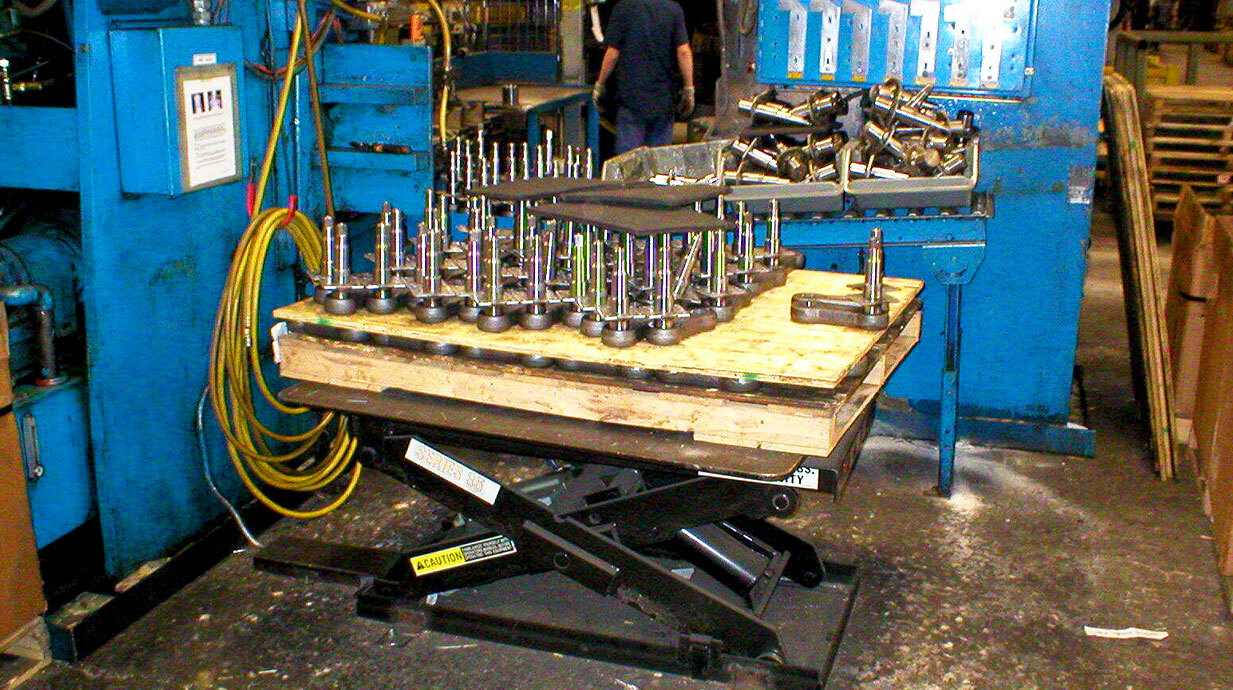


Repair or Replace? Knowing When to Replace an Industrial Lift
Industrial lifts don’t fail without warning. In most cases, the signs are there well before anything breaks — slower cycle times, recurring component failures, rising maintenance costs, subtle shifts in performance that get chalked up to normal wear. Knowing the signs an industrial lift needs replacement — versus signs pointing to routine maintenance — is one of the more important calls a facility team has to make. And it’s one that gets delayed more often than it should.
For facility and plant engineers responsible for uptime and reliability, that delay has a cost. Every month an aging lift system runs beyond its useful life is another month of compounding maintenance spend, unpredictable downtime, and risk introduced to the people and processes that depend on it. At some point, continued repair stops being a maintenance decision and starts being a liability.
This article covers the key warning signs that an industrial lift may no longer meet your operational, safety, or reliability requirements — and some important considerations to help you determine if replacement is the more effective long-term solution:
- Why aging lift systems become a hidden operational risk
- Performance degradation signs that affect throughput and operations
- Recurring issues that signal the lift has reached its limits
- Safety concerns that grow harder to manage over time
- When the lift’s design no longer supports current operational demands
- Why replacement often delivers better long-term value than continued repair
- How proper specification sets the foundation for a lift system that performs long-term
- How other facilities have navigated aging lift challenges — and what Autoquip’s engineering expertise made possible
Not sure whether your lift needs repair or replacement? Our team can help you evaluate your current system and identify the right path forward. Contact Autoquip today.
When Aging Lift Systems Become a Hidden Risk
Most industrial lift failures don’t happen all at once. They develop gradually — accumulated wear, increasing maintenance demands, performance that erodes slowly enough that it doesn’t trigger alarm until it’s already affecting operations. An aging lift system that is kept running through repeated repairs isn’t necessarily a functioning asset. In many cases, it’s a reliability risk quietly absorbing resources while the window for a planned, cost-effective response shrinks.
The distinction between routine wear and industrial lift end-of-life symptoms is one of the most important assessments in lift management — and one of the most frequently missed. Routine wear is expected. Seals age, hydraulic systems need service, and components wear on a predictable schedule. But when the same parts keep failing, when fixes don’t hold, and when performance keeps declining despite intervention, something else is happening. That’s the lift telling you it’s reached its limits — and the sooner that signal gets recognized, the more options you have.
It’s also worth reframing how you think about replacement. When critical components fail, or parts become hard to source, keeping an aging lift running can cost more than replacing it — and in some situations, a new lift may simply be the safer choice.
Lift Performance Degradation That Affects Operations
Performance degradation in a lift rarely announces itself. It builds gradually — a slower cycle here, a slight inconsistency in positioning there — until the cumulative effect starts showing up in throughput, scheduling, and the workarounds your team has quietly built into the day. These are often the earliest signs an industrial lift needs replacement rather than another repair.
Slower Cycle Times
When a lift that previously handled cycles efficiently starts taking measurably longer to complete the same movement, something has changed. Hydraulic systems lose efficiency as components wear — pump output drops, seals lose their integrity, and the system works harder to do the same job. A lift running slower than its design cycle time is drawing more energy, generating more heat, and stressing components that are already showing their age. Slower cycle times are rarely a standalone issue. They’re usually an early indicator of broader system degradation.
Inconsistent Lifting
Hesitation on the way up, drift on the way down, uneven positioning — these aren’t quirks to work around. They point to hydraulic or mechanical issues that go beyond routine maintenance. In precision applications, inconsistent lifting affects product quality and worker positioning. In any application, it’s a sign that the system is no longer performing within its design parameters. When inconsistency becomes a pattern, it warrants a serious look at where the lift actually stands.
Increasing Impact on Throughput
When lift performance starts affecting the people and processes around it — slower staging, adjusted workflows, manual workarounds — the operational cost of keeping it running starts to compound. These impacts tend to get absorbed quietly by the team closest to the lift, which is why they can go unreported longer than they should. If your team has built their day around accommodating the lift, that’s worth paying attention to.
These issues often signal fundamental system limitations, not simple wear. When a lift is consistently slower, inconsistent, or creating operational workarounds, the underlying cause is rarely something a service call will resolve. It’s the system telling you it’s running out of runway.
Recurring Issues That Never Fully Go Away
There’s a real difference between a component that wears out on a predictable schedule and one that keeps failing despite repeated repair. When maintenance stops restoring reliable performance and starts managing the same backlog of problems over and over, operational downtime becomes less predictable, and the lift is signaling something that a service call alone can’t fix.
The Same Components Failing Repeatedly
Repeated failure of the same component — a seal, a valve, a hydraulic cylinder — isn’t usually a parts quality issue. It’s a symptom of underlying system stress that the repair is addressing at the surface without getting to the root cause. When we see the same parts failing repeatedly, the question we ask isn’t just “what failed”—it’s “why does this keep failing,” and whether the answer points to a system that’s reached its design limits.
Temporary Fixes Becoming Routine
When the maintenance log starts looking like a repeat of last month — and the month before that — the lift is no longer being maintained. It’s being kept alive. Reactive maintenance is more expensive, less predictable, and more disruptive than planned service. And it rarely improves the underlying situation. At some point, the resources going into keeping an aging lift running are better invested in a system that doesn’t need them.
Rising Downtime Despite Interventions
If operational downtime keeps climbing despite active maintenance efforts, the system isn’t responding to repair the way it once did. That inflection point — where the cost and frequency of intervention exceeds the value of keeping the existing lift running — is where the replacement conversation needs to start. Waiting past it rarely makes the decision easier or less expensive.
At a certain point, repair efforts no longer restore reliability. When the maintenance history starts looking like a pattern rather than a series of isolated incidents, the lift has likely reached industrial lift end of life — the point where a replacement conversation becomes more productive than another service call.
Safety Concerns That Increase Over Time
Safety performance in an aging lift tends to decline in ways that are gradual and sometimes hard to trace directly to the equipment. But the connection is real. As mechanical and hydraulic systems age beyond their design parameters, the predictability that safe operation depends on starts to erode — and that’s not a trend that reverses itself.
Reduced Control Precision
A lift that doesn’t stop exactly where it should, that moves when it shouldn’t, or that responds differently under load than it does unloaded creates conditions that are difficult to manage through procedure alone. Control precision is a safety requirement, not a performance preference. When it starts to go, the conversation about the lift’s future needs to happen.
Structural or Stability Concerns
Fatigue cracking, bearing surfaces worn beyond acceptable tolerances, scissor arm pivot points that have developed play — these aren’t cosmetic issues. They’re structural integrity concerns that affect the safety of the load and the people working around it. When structural findings begin appearing in inspection reports, the evaluation of the lift’s remaining service life should move to the top of the priority list.
Difficulty Meeting Current Safety Expectations
Safety standards and workplace expectations evolve. A lift that was fully compliant at installation may no longer align with current requirements or your facility’s safety culture. When your lift’s design makes it difficult to add guarding, improve operator positioning, or integrate with modern safety systems, the risk it introduces doesn’t stay static — it grows. And it becomes harder to manage regardless of the lift’s mechanical condition.
Outdated Design or Inability to Support Current Operations
Operational requirements change. Loads get heavier, cycle demands increase, workflows evolve — and the lift that was right for your application five or ten years ago may no longer fit what your operation actually needs today. Outdated equipment that’s holding its own mechanically can still be the wrong lift for the job and a growing reliability risk — and in many cases, an industrial lift upgrade is the more effective path forward than trying to make do with a system that was never designed for your current demands.
Changed Loads or Usage Patterns
Running a lift beyond its original load rating — even occasionally — accelerates wear, stresses structural and hydraulic components, and shortens whatever service life remains. If your application has evolved and your lift is regularly operating near or beyond its original design parameters, it’s effectively been misspecified for its current role. That gap doesn’t close on its own.
Increased Duty Cycle Demands
A lift designed for intermittent operation that’s now running at a higher frequency is under more stress than it was built to handle. If your cycle demands have increased significantly since the original equipment was installed, the lift may simply not be rated for what your operation requires today — and that gap shows up in wear, heat, and reliability over time.
Integration Challenges with Modern Workflows
Older lift systems often lack the control interfaces, safety interlocks, and integration capabilities that modern workflows require. If your facility is incorporating automation, AGV interfaces, or systems like vertical reciprocating conveyors and scissor lifts, aging equipment that can’t keep up becomes a bottleneck — and eventually a liability.
When Replacement Becomes the More Reliable Option
There’s a point in the life of every aging lift where continued repair is no longer the most reliable or cost-effective path. Whether the decision leads to an industrial lift upgrade or a full replacement, recognizing that point before a significant failure or safety event — rather than after — is where proactive lift management pays off.
Predictable Performance
A new lift, properly specified for the current application, delivers the predictable performance that aging equipment can no longer provide. Consistent cycle times, reliable positioning, dependable response — these aren’t just operational benefits. They’re the foundation that safe, efficient material handling is built on.
Improved Safety and Compliance
A replacement lift designed to current standards eliminates the safety compromises that accumulate as systems age. Modern guarding, updated controls, improved operator positioning, and current safety compliance are built in — not retrofitted onto a platform that wasn’t designed for them.
Lower Long-Term Operational Risk
When you add up the maintenance spend, downtime cost, safety risk, and operational compromises that come with keeping an aging lift running, the total often exceeds the cost of replacement — especially when parts availability becomes a factor. When replacement components for an aging lift are hard to source, expensive, or no longer manufactured, the economics shift considerably. In those situations, a new lift isn’t just the more cost-effective choice — it’s frequently the safer one too.
Planning for a New Lift System
Knowing when to replace an industrial lift is only half the equation. Getting lift replacement right means more than finding a comparable model. It means taking an honest look at what your application actually demands now, how those demands have changed, and what needs to be different this time.
Evaluating Current Application Requirements and Future Needs
The starting point is a clear-eyed assessment of what your application requires — load, duty cycle, travel, environmental conditions, integration needs — and where those requirements are likely to go. A lift specified to yesterday’s demands will run into the same misalignment sooner than one built for where your operation is heading.
Importance of Application-Specific Design
Standard lift configurations are a starting point — not always the answer. Applications with demanding duty cycles, unusual load profiles, tight space constraints, or integration requirements often call for custom-engineered solutions built around your specific needs. At Autoquip, we take the time to fully understand your application, requirements, and operational goals before the design process begins — so the solution we deliver is built around what you actually need.
Avoiding Repeat Issues with Proper Specification
A lot of the issues that signal end-of-life in an aging lift trace back to decisions made at original purchase — a lift undersized for the duty cycle, one not designed for the environment it ended up in, or one selected on initial cost without a full picture of lifecycle performance. Partnering with Autoquip early in the replacement process helps avoid repeating those same issues—and ensures the lift solution you end up with is the right fit for your operation, now and long term.
From the Field — Proven Autoquip Solutions for Aging Lift Systems
Wondering how other facilities have navigated aging lift challenges? We’ve tapped our blog series for a couple of real-world perspectives. See how facilities are approaching modernization and lift replacement decisions in Retrofitting Warehouses with Custom Lift Systems, and how custom-engineered solutions outperform standard equipment in Custom Lifts: Design and Applications.
Both are examples of what’s possible when lift challenges are approached with the right engineering expertise and a clear understanding of what the application actually demands.
Know the Signs — and Know When It’s Time to Act
The warning signs we’ve covered don’t fix themselves — they show up in performance data, in maintenance logs, and in the workarounds your team has quietly built into daily operations. Recognizing them and acting before they become a safety event or an unplanned stoppage is what good facility management looks like.
Autoquip has been engineering custom lift solutions for more than 75 years. We work with facilities to evaluate existing lift challenges, assess current and future application requirements, and develop solutions designed for long-term reliability. If your lift is showing the signs we’ve covered here, the conversation is worth having sooner rather than later.
Don’t leave aging lift performance to chance. Reach out to Autoquip, and let’s take a look at what you’re working with.
Autoquip Helps Facilities Move from Aging Equipment to Purpose-Built Lift Solutions
Persistent issues often point to end-of-life, not maintenance needs. Performance degradation, recurring failures, growing safety concerns, parts availability challenges, and design limitations that no longer fit your operation are all signals worth taking seriously. Replacement, done right, delivers better safety, more predictable performance, and lower long-term operational risk than continued repair of equipment that has reached its limits. At Autoquip, we help facilities make that transition the right way — starting with an honest assessment of what your application actually needs and building from there.