
What to Look for in an Industrial Lift Manufacturer
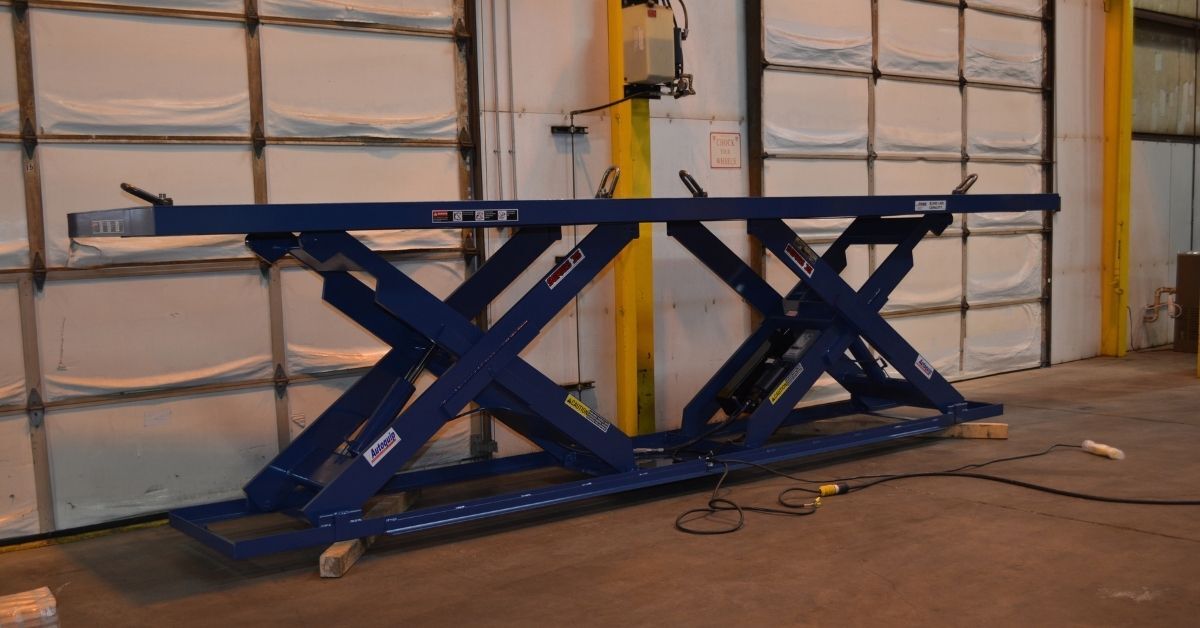


Selecting an Industrial Lift Manufacturer: What Buyers Should Evaluate
Industrial lifts aren’t a routine purchase. Once installed, they become part of a facility’s material handling infrastructure, sometimes for decades. The manufacturer behind the equipment matters more than most buyers realize until something goes wrong, or until the application turns out to be more demanding than the initial spec anticipated.
Comparing industrial lift manufacturers on capacity and price alone leaves a lot on the table. The manufacturer’s product range, application knowledge, engineering depth, manufacturing practices, and post-sale support all affect whether the material handling equipment performs as expected over its working life. Choosing well at the start is a lot easier than recovering from skipping the research.
Here’s what we think buyers should evaluate when selecting an industrial lift manufacturer:
- A broad range of proven lift solutions
- Application expertise that goes beyond load and travel
- Engineering capability for more demanding requirements
- Demonstrated experience, not just claimed longevity
- Commitment to quality and safety
- Product availability and the ability to meet the desired lead time
- Post-installation support and service
Have a lifting application you’d like to discuss with Autoquip? Contact Autoquip and let’s start with the requirements.
Why the Manufacturer Behind the Lift Matters
Any manufacturer can build a lift. The harder question is whether they understand your application well enough to recommend the right one, and whether they’ll still be a useful resource five or ten years after delivery. Industrial lifting equipment can be a long-term commitment, and the manufacturer is part of that commitment whether buyers think about it that way or not.
Autoquip has been engineering industrial lifting solutions for more than 75 years. As a vertical lift manufacturer with experience across a wide range of industries and applications, we’ve worked on everything from straightforward scissor lift replacements to high-capacity vertical transport systems in demanding operating environments. Over time, we’ve learned that equipment is only part of the answer. The other part is understanding the application well enough to recommend the right solution, and having the product range, engineering depth, and application expertise to deliver it.
Look for a Manufacturer With a Broad Range of Proven Lift Solutions
A manufacturer with a single product category has one answer for every application. That’s a problem when the application doesn’t fit the answer. Industrial lifting needs vary significantly across facilities, load types, operating environments, and workflow requirements. The manufacturer’s product range should be broad enough to accommodate that variation, not force every application into a single solution.
The Application Should Determine the Equipment
Scissor lift tables, work positioners, tilters, industrial turntables, and vertical transport systems each solve different problems. A manufacturer that offers all of them can approach an application with the full range of options in view. One that builds only scissor lifts is going to find a way to fit your application into a scissor lift, whether or not that’s the right call.
Autoquip’s Range of Industrial Lifting Solutions
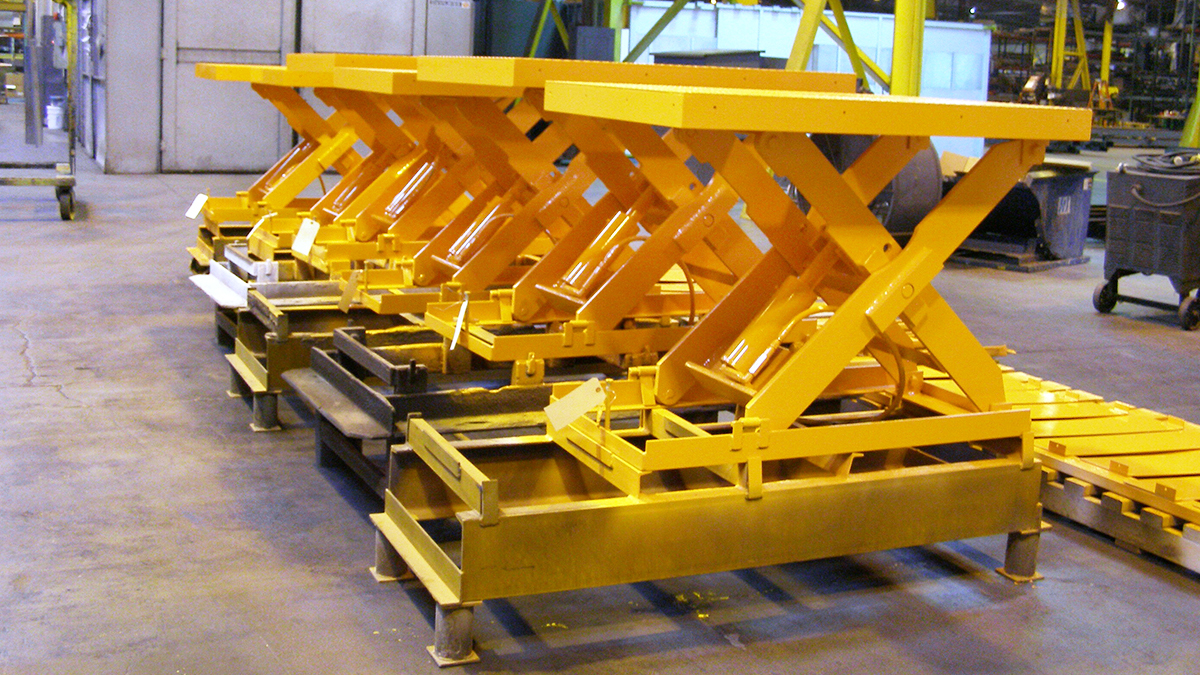
Autoquip’s extensive product line includes the Series 35 and Super Titan series of scissor lift tables, work positioners, tilters, powered and manual turntables, and both hydraulic and mechanical VRCs. As a vertical lift and lift table manufacturer in production since 1947, that breadth means we’re recommending equipment based on what the application actually needs, not what we happen to build.
Application Expertise Matters as Much as the Equipment
Equipment selection doesn’t start with the product catalog. It starts with understanding what’s being lifted, how it’s being handled, where it operates, and what the workflow looks like before and after the lift. Industrial lift manufacturers that skip that process and go straight to specifications often miss the factors that determine whether the material handling equipment will work in practice.
What a Good Specification Process Looks Like
Capacity and travel are the starting point, not the whole picture. Platform size, duty cycle, load characteristics, weight distribution, loading and unloading orientation, cycle frequency, and workflow integration all influence what the right equipment looks like. We’ve seen lifts specified correctly on paper fail in the field because the duty cycle wasn’t characterized accurately, or because the load distribution wasn’t what the customer assumed. Getting those details right upfront is what keeps that from happening.
How Autoquip Approaches Application Conversations
Seven decades of application experience means we’ve worked through most of what comes in the door. We recognize load configurations that look unusual but fit within proven designs. We know where duty cycle assumptions tend to be wrong and what that costs after installation. That depth lets us tell a customer early whether an existing configuration will meet their requirement or whether the application genuinely needs something more. Getting that answer right, before fabrication begins, is where application expertise pays off.
Engineering Capability Provides Room for More Demanding Applications
Standard configurations handle the majority of industrial lifting applications. But not every application is standard. Unusual loads, larger capacities, tight space constraints, automation requirements, and specialized operating environments can create situations where stock configurations can’t meet the application’s needs. When that happens, lift engineering capability is what separates industrial lift manufacturers that can solve the problem from those that can only supply equipment.
When Custom Engineering Becomes Necessary
The situations that drive custom engineering tend to involve combinations of requirements rather than a single extreme factor. A high-capacity lift in a confined space with an unusual loading orientation and automation integration requirements, for example, may not fit any existing configuration cleanly. That’s when engineering has to work from the application outward rather than from the product catalog inward.
Autoquip’s Engineering Depth
Autoquip combines proven lift designs with custom lift engineering capabilities. Our engineering team works directly with customers and sales on applications that require more than a standard configuration can deliver. Because we build across multiple lift types and have decades of application history to draw on, we don’t start from scratch when an unusual requirement comes in. We’re adapting from a strong base, which is faster and more reliable than building custom from the ground up.
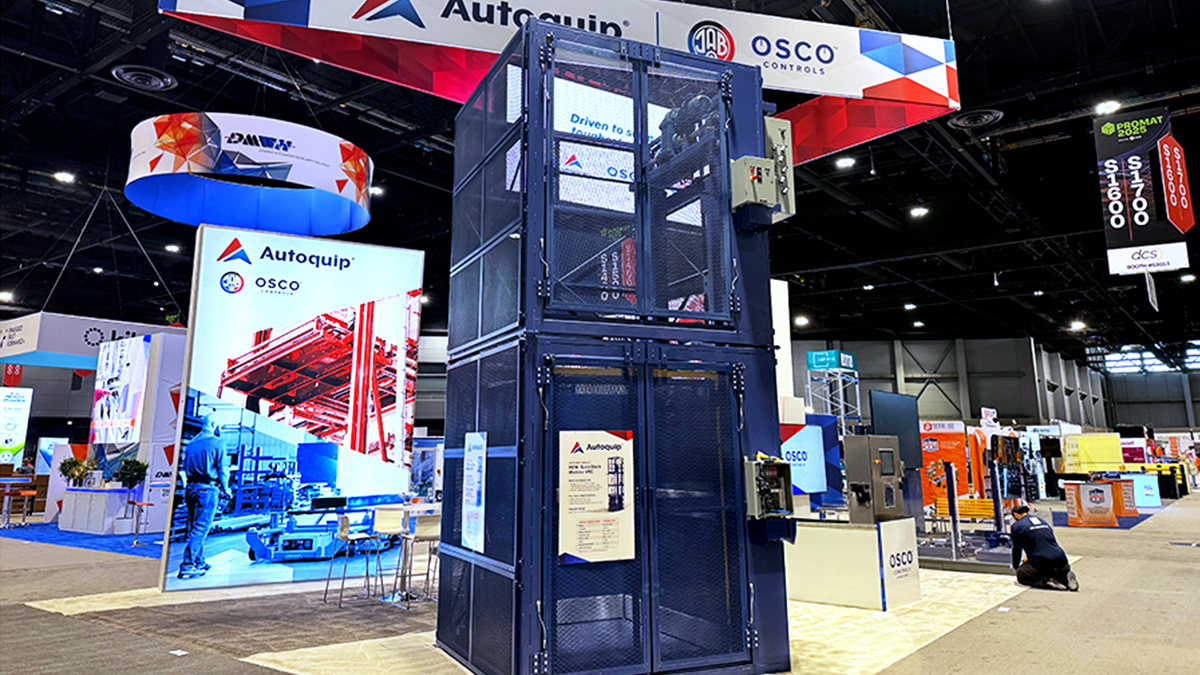
When applications involve complex controls, automation interfaces, or integrated PLC programming, we don’t send customers elsewhere to source that capability. OSCO Controls, our in-house controls division, is part of the same organization. That means controls and mechanical design are developed together, by people working from the same set of application requirements. Autoquip can also design and integrate automated lift systems with conveyors, machine-fed applications, indexing, synchronization, and other automated processes.
Experience Should Be Demonstrated, Not Just Claimed
Every industrial lift manufacturer claims experience. The useful question is what that experience looks like in practice. Application history, industries served, and specific examples of equipment solving similar challenges tell a more complete story than years in business alone.
What to Look for in a Manufacturer’s Track Record
Ask questions that require specific answers. Which industries have they served? What’s the largest capacity system they’ve built? Can they describe an application where the load configuration or operating environment pushed them outside a standard design? Vague answers to specific questions are a signal. A manufacturer with real depth can point to real examples: specific problems, specific solutions, measurable outcomes. One that responds to every question with general capability language may not have worked through anything more demanding than a straightforward application.
Autoquip’s Application History
The difference between a manufacturer with real depth and one that’s simply been around a long time shows up in the applications they’ve worked through. Seven decades covers a wide range: manufacturing, distribution, automotive, aerospace, food processing, and industrial environments where loads are heavy, duty requirements are demanding, and operating conditions aren’t always clean or predictable. High-capacity applications and unusual load configurations are part of our history, not outliers we had to figure out from scratch. When a customer brings us something that looks complicated, the first question we ask is whether we’ve seen something like it before. Usually the answer is yes.
From the Field: Customer Case Studies
The range of applications Autoquip has worked through is easier to understand through examples than through a general capability statement. Two of our projects illustrate how requirements that fall outside standard parameters get solved in practice.
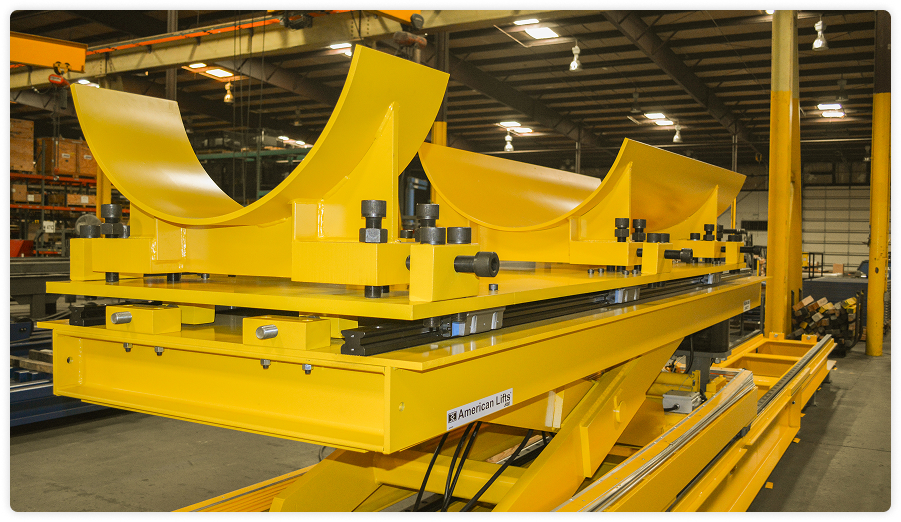
Aerospace Maintenance, Custom Helicopter Lift: A helicopter maintenance operation needed to lift, tilt, and reposition fuselages throughout a facility while keeping the entire airframe accessible to technicians, including the underside. Autoquip engineered a custom TorkLift® system with an open-frame platform, custom tooling mounts at the aircraft’s threaded attachment points, and wireless remote control for safe repositioning. The result was a single integrated solution that replaced manual handling and kept the maintenance workflow moving.
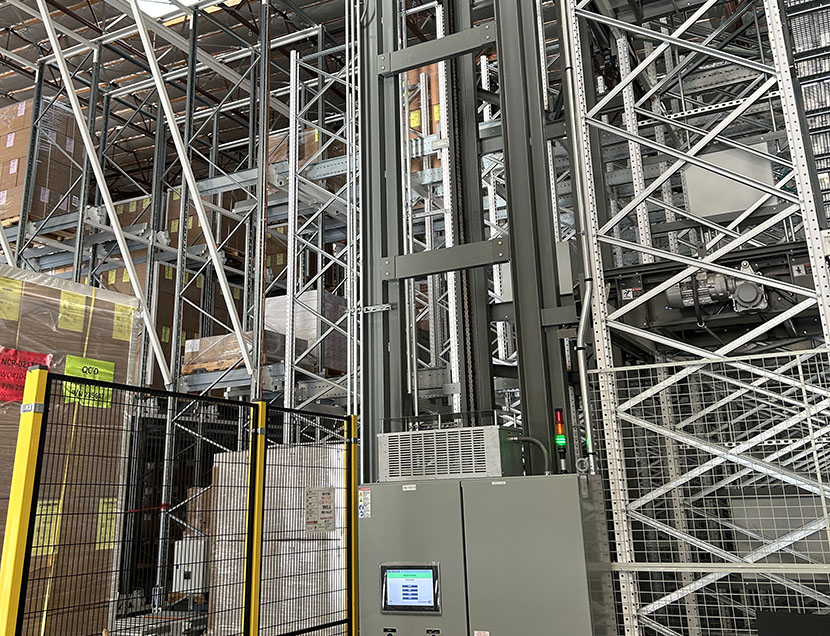
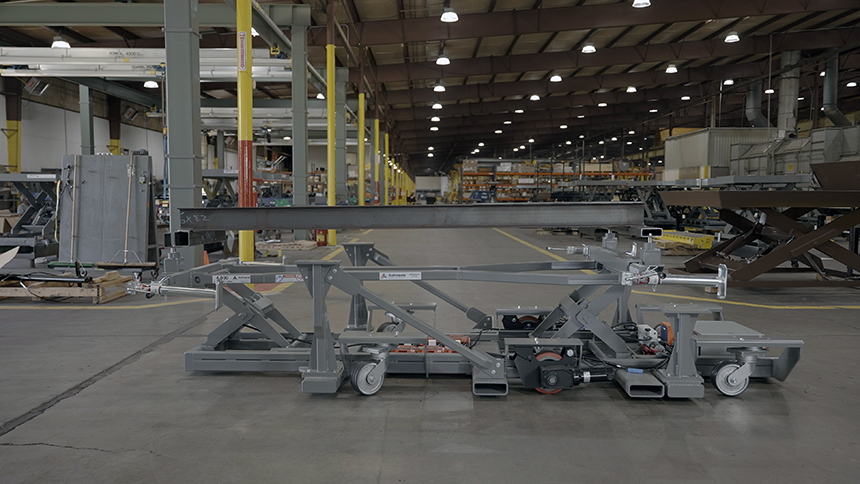
Automated Logistics, VRC Integration with AGV and Rack System: A manufacturer of automated liquid handling systems needed to connect their AGV fleet to a multi-story rack system for pallet retrieval and storage with no manual intervention in the transfer sequence. Autoquip engineered a compact 4-post mechanical VRC with dual-strand drag chain conveyors, photo-eye pallet centering, and linearly actuated stops. OSCO Controls integrated the system with the warehouse management system, inbound and outbound conveyors, and the AGV controllers. The lift operates autonomously on network commands and manages 15 staging lanes within the rack system. See the automated VRC and AGV rack system case study.
Quality and Safety Should Be Built Into the Equipment
A spec sheet shows capacity and travel. It doesn’t show how the welded steel frame is designed, how the controls handle a fault condition, what the guarding is actually made of, or whether the manufacturer tested the complete system before it shipped. Two lifts with identical ratings can perform very differently over time depending on how they were built and what went into the controls and safety architecture. Buyers who evaluate the complete system, not just the numbers, are better positioned to make that distinction.
Construction, Controls, and Safety Devices
The complete system includes the structural assembly, the drive and controls, guarding, safety devices, and documentation. Controls integration matters more than buyers often realize. Gate interlocks, safety stop devices, operating logic, and fault handling all affect how the lift behaves in a real production environment, not just in a demonstration. Equipment that’s been designed with those considerations from the start operates differently than equipment where controls were added at the end to meet a requirement.
Autoquip’s Manufacturing and Testing Standards
All of Autoquip’s manufacturing and testing is performed in the United States. Our engineering and manufacturing teams are involved throughout the build process, not just at the design stage. The controls architecture and the lift design are aligned from the start rather than reconciled after the fact. When equipment leaves our facility, it’s been through a defined testing process. We don’t make that claim generically. It’s how our manufacturing operation runs.
Consider Availability and Lead Time Alongside Capability
More engineering isn’t automatically better. It adds lead time and cost to a problem that may not require it. Before any engineering conversation, ask whether an existing configuration can meet the application as it actually is, not as a worst-case version of it. We’ve seen applications that looked complex on the surface fall cleanly within a proven design once the requirements were worked through carefully. Starting there is better for everyone.
When a Proven Configuration Is the Right Answer
The question we start with on every application is straightforward: if we were designing a solution for this from scratch, would we end up somewhere close to what we already build? There’s often more than one way to solve a lifting problem, and working through the options is part of the process. Standard scissor lift configurations, proven Vertical Reciprocating Conveyor (VRC) designs, and established work positioner solutions cover a significant share of what industrial buyers actually need. Identifying those applications correctly, and not adding engineering cost and lead time they don’t require, is part of what application expertise is supposed to deliver.
Quick Ship and Readily Available Solutions
For applications that fit within standard parameters, Autoquip offers Quick Ship options on select lift products. Shorter lead times matter when a facility is replacing failed equipment, meeting a production deadline, or working within a constrained project schedule. Delivering a proven solution quickly, without sacrificing quality or safety, is a practical advantage that doesn’t show up in specification comparisons. For applications that fall outside standard parameters, our engineering team is available to develop the right solution. We don’t default there when a proven configuration can do the job.
Choose a Manufacturer That Supports the Equipment After Installation
The sale is not the end of the relationship. Industrial lift ownership includes maintenance, occasional repairs, parts sourcing, and eventually decisions about refurbishment or replacement. Manufacturers who treat the sale as the finish line leave customers without support when the equipment needs attention.
Parts, Service, and Technical Support
Parts availability and technical support are the baseline, but they’re not always delivered consistently. The test isn’t whether a manufacturer says they offer support. It’s whether you can reach someone who actually knows the equipment when something goes wrong. For production-critical lifting systems, that distinction matters. A parts delay or a support dead-end during a breakdown has real operational cost.
Autoquip’s Post-Sale Support
Autoquip provides industrial lift parts and service support after the sale. When customers have questions about maintenance, troubleshooting, or repair, they’re reaching people who know the equipment. We can also provide honest technical input on when aging equipment reaches the point where continued repair stops making sense, and replacement becomes the better answer. Not every manufacturer is willing to have that conversation. We think it’s part of the job.
Why Choose Autoquip as Your Industrial Lift Manufacturer
The right material handling lift manufacturer brings more than a product catalog to the conversation. Product range, application expertise, lift engineering capability, manufacturing quality, and post-sale support all determine whether the equipment delivers what the application requires over its full operating life.
Autoquip has been building industrial lifting solutions since 1947. Our product line spans lift tables, positioners, tilters, turntables, and VRC systems. Our engineering team supports applications that go beyond standard configurations, and our service team supports the equipment after it’s installed. If you have a lifting application to evaluate, we’d like to be part of that conversation.
Talk to Autoquip about your lifting application.
Autoquip: Industrial Lifting Solutions Built on Decades of Application Experience
Proven lift solutions, application expertise, in-house lift engineering capability, U.S. manufacturing and testing, and post-sale support. That’s what Autoquip brings to the industrial lift selection process. Seven decades of work across multiple industries, including aerospace, logistics, and manufacturing, means we’ve seen most of what comes through the door. When custom lift manufacturer capabilities are needed, we have the engineering depth to go there. When a proven configuration fits, we start there instead. Either way, we work from the requirements toward the right solution for your organization.