
Why Work Positioning Matters in Industrial Assembly


The Role of Work Positioning in Industrial Assembly — Equipment, Ergonomics, and Efficiency
In industrial assembly, the way work is positioned is just as important as the tools used to perform it. When parts are too high, too low, or oriented at an angle that forces operators to reach, bend, or twist repeatedly, the consequences show up quickly — in operator fatigue, slower cycle times, inconsistent quality, and workstations that never quite run the way they should.
Work positioning in industrial assembly isn’t a secondary concern. It’s a fundamental factor in how efficiently an operation runs, how consistently it performs, and how safely operators can do their jobs over the course of a full shift. Ergonomic positioning systems — lift tables, tilters, turntables, and custom positioning solutions — are the tools that bridge the gap between how work naturally happens and how it needs to happen to keep production moving.
This article covers what facilities need to understand about work positioning and how lift and positioning systems help optimize assembly workflows:
- Why poor work positioning creates inefficiencies and safety challenges in assembly operations
- The most common positioning challenges facilities encounter on the assembly floor
- The types of positioning solutions available and what each one does best
- The operational benefits of proper work positioning in industrial assembly
- How Autoquip designs and builds positioning solutions for complex assembly applications
The right lift starts with a conversation with our team of experts. Contact us today to discuss your work positioning requirements and learn how the right solution can benefit your operation.
When Work Positioning Works Against You
Assembly operations are designed around repeatable processes — the same movements, the same sequence, the same output, shift after shift. When work is poorly positioned, repeatability breaks down. Operators adjust. They reach a little further, bend a little lower, twist a little more than they should. Over time, those adjustments accumulate into fatigue, inconsistency, and increased injury risk, affecting both the people doing the work and the quality of the work itself.
Poor work positioning in industrial assembly is one of the more common — and more preventable — sources of operational inefficiency. Reaching, bending, and repetitive movements increase operator fatigue and reduce the precision and consistency that assembly line ergonomics depend on. Ergonomic work positioning systems address these issues at the source — bringing the work to the operator rather than forcing the operator to adapt to the work. The result is a safer, more productive, and more consistent assembly environment.
Common Work Positioning Challenges in Assembly Operations
Work positioning challenges in assembly show up in predictable ways. The specifics vary by application, but the underlying issues tend to be consistent across facilities and industries.
Parts Positioned Too High or Too Low
When components are presented at the wrong height — whether on a fixed-height fixture, a pallet, or a conveyor — operators are forced to work above or below the ergonomic range that supports efficient, low-strain assembly. Working too high causes shoulder and arm fatigue. Working too low causes back and neck strain. Neither is sustainable over a full shift, and both introduce variability into the assembly process that affects quality and throughput.
Limited Access to Multiple Sides of Components
Many assembly tasks require access to more than one face of a component. When parts can’t be rotated or tilted, operators are forced to reposition themselves — or the part — manually, which takes time, creates inconsistency, and often puts operators in positions that increase strain risk. Limited access to multiple sides of a component is one of the most common drivers of inefficient assembly workflows.
Repetitive Reaching, Bending, or Twisting
Repetitive motion is one of the leading contributors to operator fatigue and musculoskeletal injury in assembly environments. When workstations aren’t designed to keep work within the operator’s natural reach and comfort zone, the cumulative effect of repeated reaching, bending, and twisting adds up over the course of a shift — slowing cycle times, increasing error rates, and creating injury risk that affects attendance, productivity, and morale.
Inconsistent Operator Positioning Between Workstations
When work positioning varies from station to station — or even from operator to operator at the same station — consistency suffers. Assembly quality becomes dependent on individual technique rather than workstation design. Standardizing work positioning through ergonomic positioning equipment is one of the most effective ways to reduce variation and improve output consistency across an assembly operation.
Types of Work Positioning Solutions
Industrial positioning equipment covers a range of solutions, each designed to address specific positioning challenges in assembly environments. From industrial lift tables to tilters, turntables, and material positioning systems, understanding what each type does best helps facilities match the right solution to the right application.
Lift Tables
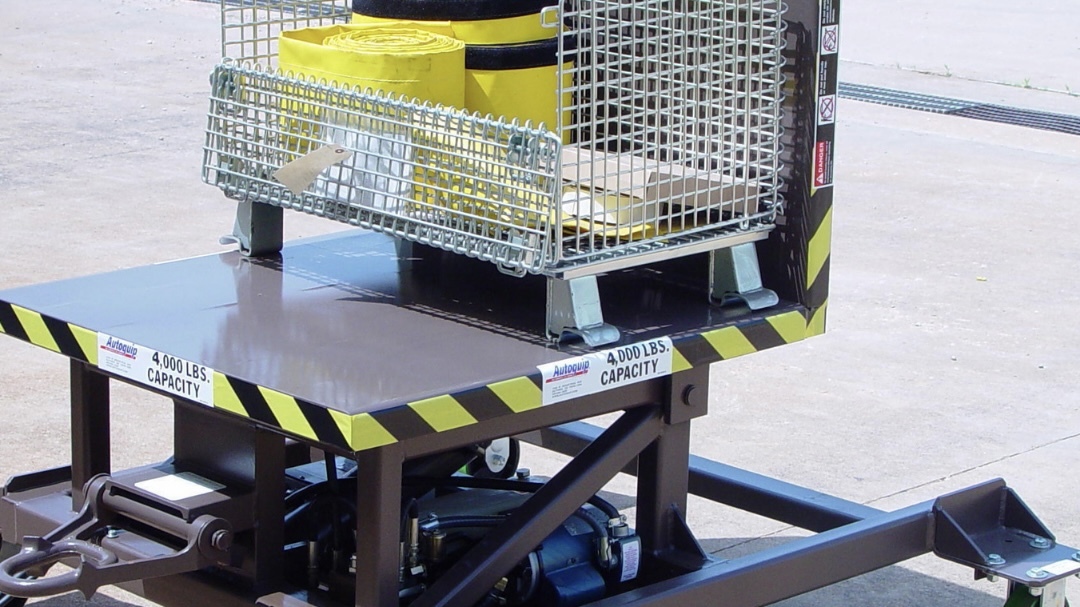
Scissor lift tables are the workhorse of industrial work positioning. By raising or lowering a work surface to the operator’s optimal working height, lift tables eliminate the need to reach down to floor-level pallets or stretch up to elevated fixtures. They maintain ergonomic access during assembly, support consistent operator positioning, and can be integrated into existing workflows without significant facility modification. For applications where height adjustment is the primary need, a lift table is often the most direct and cost-effective solution.
Tilters
Tilting work platforms angle parts toward the operator, improving visibility and accessibility without requiring the operator to reposition around the component. For assemblies that require access to angled surfaces, fasteners in recessed locations, or components that need to be presented face-up for inspection or detailed work, tilters reduce awkward operator positioning and bring the work into a more natural working zone. As one of the most effective positioning solutions for manufacturing environments with complex component geometry, they’re particularly effective in applications where operators need consistent access to a specific face of a component across multiple units.
Turntables
Turntables allow operators to rotate components without manual repositioning — eliminating the need to walk around a part, reposition a fixture, or lift and turn heavy components by hand. By bringing each face of a component to the operator rather than moving the operator around the component, turntables improve multi-sided access, reduce cycle time, and support more ergonomic assembly workflows. They’re well-suited for applications with larger or heavier components where manual rotation isn’t practical or safe.
Controls and Programmable Positioning
Controls technology adds a level of precision and repeatability that manual positioning simply doesn’t offer. Positioning equipment can be programmed to return to the same height, angle, or orientation automatically — eliminating setup variations between operators and shifts and reducing the time spent adjusting equipment between production runs.
Custom Positioning Systems
When standard lift, tilt, or rotate solutions don’t fully address the requirements of a specific assembly application, custom positioning systems bring all three functions together in a single, purpose-built solution. Custom systems are designed around the workflow — the specific component geometry, the assembly sequence, the operator’s range of motion, and the production rate — rather than adapted from a standard product. For complex assembly applications with demanding positioning requirements, custom-engineered solutions often deliver performance that off-the-shelf equipment can’t match. Autoquip’s precision positioning expertise and extensive custom design options give us the ability to build your system from the ground up — engineered specifically around your application.
Benefits of Proper Work Positioning in Industrial Assembly
When work positioning is addressed correctly — through the right combination of lift, tilt, rotation, and custom solutions — the benefits show up across the operation, not just at the workstation level.
Improved Operator Ergonomics
Ergonomic work positioning systems bring work to the operator’s natural working zone — reducing the reach, bend, and twist that drive fatigue and injury risk. When a worker maintains proper posture throughout their shift, they perform better, remain more consistent, and are less likely to experience cumulative strain that leads to injury and absence.
Increased Productivity and Throughput
Positioning equipment that keeps work at the right height and orientation reduces the time operators spend adjusting their position, repositioning components, or working around access limitations. Faster setups, smoother workflows, and fewer interruptions add up to meaningful throughput improvements — particularly in high-volume assembly environments where cycle time efficiency matters.
Reduced Fatigue and Repetitive Strain
Repetitive strain reduction is one of the most direct benefits of proper work positioning. When operators aren’t fighting their workstation to get work done, fatigue accumulates more slowly, energy is preserved for the actual assembly task, and the cumulative physical toll of a full shift is significantly reduced. Over time, this translates to lower injury rates, better attendance, and a workforce that can sustain performance across longer production runs.
More Consistent Assembly Quality
Consistency in assembly quality is closely tied to consistency in operator positioning. When every operator approaches every unit from the same ergonomic position — because the workstation consistently brings the work to them — the variability introduced by individual adjustments and improvisation is reduced. Positioning equipment is one of the most effective tools for standardizing the human element of assembly quality.
Better Workflow Efficiency
Assembly productivity improvement goes beyond individual workstation performance. When positioning equipment is integrated into the broader workflow — coordinated with upstream and downstream processes, sized and configured for the specific production rate, and designed to support efficient changeover between products — the efficiency gains multiply. Proper work positioning isn’t just about making individual operators more comfortable. It’s about building assembly workflows that run the way they’re supposed to, shift after shift.
Work Positioning Solutions Built for Your Assembly Application
Work positioning in industrial assembly directly impacts efficiency, safety, and output quality — and the right solution depends on the requirements of your application. From standard scissor lift tables to fully custom positioning systems that combine lift, tilt, and rotation, Autoquip designs and builds positioning solutions for industrial assembly environments across a wide range of industries.
Our team works closely with customers to understand their assembly workflows, operator requirements, and production goals before recommending an approach. Whether the need is a single lift table for an existing workstation or a custom-engineered positioning system for a complex assembly application, we bring the same application-focused engineering to every project.
Don’t leave work positioning to chance. Reach out to Autoquip and let’s figure out the right solution for your assembly operation.
Autoquip — Positioning Solutions That Support Better Assembly Operations
Work positioning directly impacts assembly efficiency, operator safety, and production consistency. Ergonomic positioning systems improve operator performance and reduce fatigue and strain, which can affect quality and throughput over time.
Lift and positioning solutions — from standard equipment to totally custom-engineered options — help optimize industrial assembly processes. When applications are complex, custom-engineered systems can support even the most demanding positioning requirements. At Autoquip, we help facilities get work positioning right from the start — with solutions designed around your application, your operators, and your production goals.
From standard lift tables to fully custom positioning systems, Autoquip has the solution to improve assembly efficiency in your facility. Contact us today to discuss your application.