
Integrating Material Handling Lifts with Automated Warehouse Systems
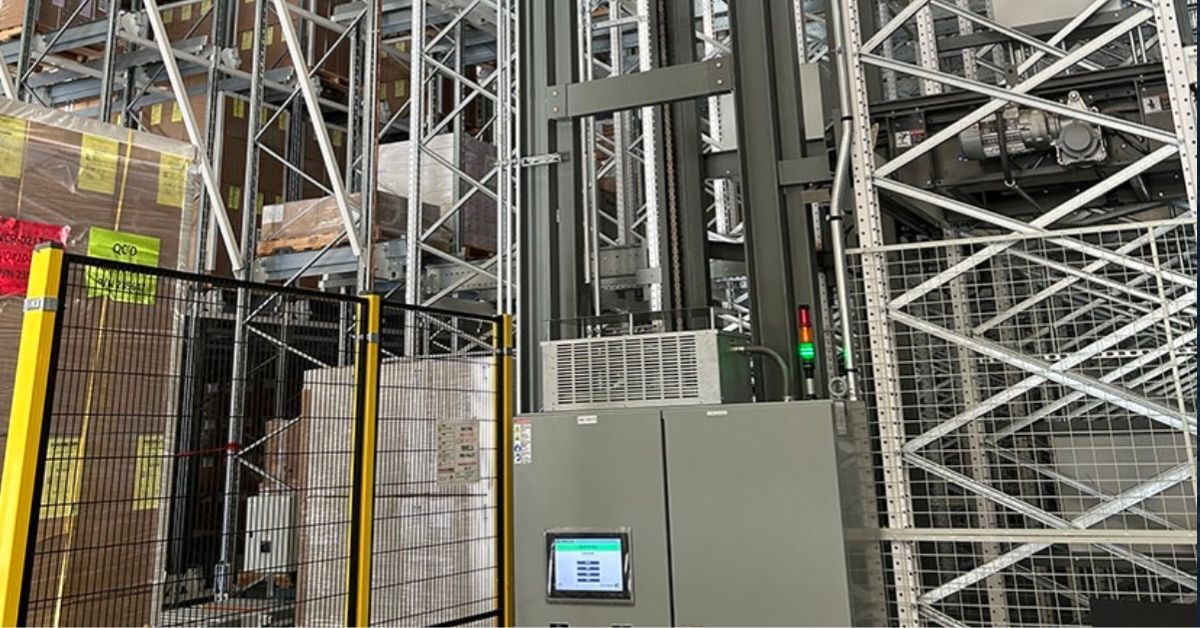


Automated Material Handling Lifts: Bridging Vertical Movement and Warehouse Automation
Warehouse automation has come a long way. Conveyors, AGVs, AMRs, AS/RS systems, and warehouse management software can now coordinate material flow across a facility with speed and precision that would have been impractical a decade ago. But the horizontal sophistication hits a hard limit the moment materials need to move between levels. If the vertical movement component isn’t designed to integrate with the rest of the system, it becomes the gap everything else has to work around.
Automated material handling lifts aren’t just lift systems with more buttons. They’re engineered to communicate with surrounding platforms, execute precise load transfers on command, and support the coordinated, system-level material flow modern intralogistics operations depend on. Getting that integration right is what separates a lift that fits into an automated workflow from one that interrupts it.
This article covers how lift systems integrate with automated warehouse environments, where they add the most value, and what it takes to make the integration work:
- Why vertical movement is the critical gap in most warehouse automation investments
- Where lift systems support warehouse automation across the operation
- The key integration considerations that determine system performance
- How integrated lift systems improve throughput, reduce manual transfers, and support continuous operation
- The operational benefits of well-integrated lift systems in automated warehouses
- Real-world examples of automated material handling lifts in warehouse and distribution environments
Vertical movement shouldn’t be the gap in your automated operation. Contact Autoquip to discuss integration solutions for your facility.
Vertical Movement in the Age of Warehouse Automation
Most warehouse automation investments focus on horizontal flow. That’s where the high-visibility technologies live: conveyors that span the facility, AGV fleets navigating the floor, AS/RS systems retrieving pallets from dense storage arrays. But the facilities running those systems aren’t single-level. Mezzanines, elevated storage areas, multi-level pick zones, and split-level receiving and shipping operations all require materials to move vertically. That vertical movement has to keep pace with everything happening around it.
Treating lift systems as standalone equipment can create problems throughout an automated operation. Manual handoffs and cycle time gaps can disrupt material flow and limit throughput. Automated material handling lifts help solve these issues by integrating vertical movement with conveyors, AGVs, and warehouse management systems.
Where Lift Systems Support Warehouse Automation
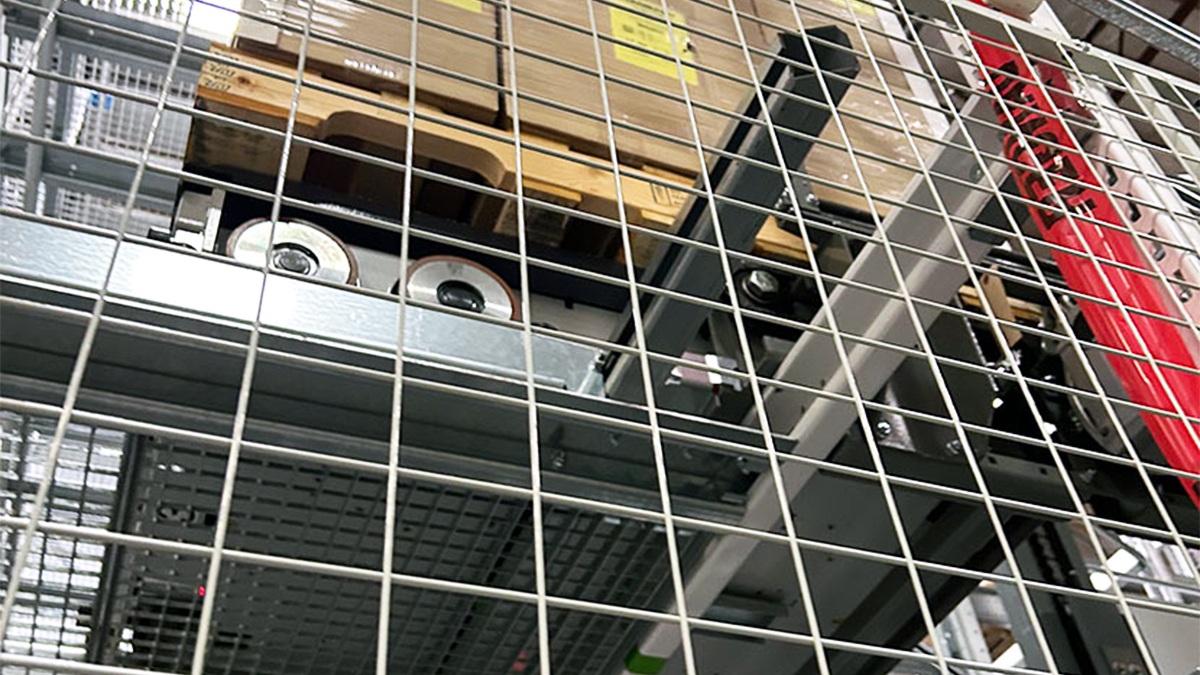
Lift systems contribute to automated warehouse operations at multiple points in the material flow. Understanding where they fit helps clarify what integration actually needs to accomplish at each location.
Receiving and Staging
Inbound material flow in automated warehouses often starts with conveyor or AGV-based staging that gets disrupted the moment materials need to move from a receiving dock to a different level. Lift systems at receiving and staging areas bridge that gap, accepting loads from inbound conveyors or AGV transfer points and delivering them to the appropriate level without manual intervention. Getting this right at the front of the flow keeps everything downstream from starting with a deficit.
Storage and Retrieval
AS/RS systems and AMR-based storage operations depend on precise, repeatable load positioning. ASRS integration with lift systems requires the Vertical Reciprocating Conveyor (VRC) or scissor lift table to meet the same positioning accuracy and cycle time requirements as the rest of the system. In some of our more complex integration projects, the coordination between AMRs and VRCs goes well beyond simply moving a load from one floor to another.
Order Fulfillment
High-throughput order fulfillment operations require materials to move quickly and accurately between pick zones, packing stations, and outbound staging. When those zones span multiple levels, vertical movement is part of the critical path. A lift system that can’t maintain the cycle frequency the fulfillment operation demands creates a constraint that affects every order that flows through it.
Multi-Level Facilities
In facilities where production, storage, and shipping occupy different levels, the lift system connects the entire operation. Vertical material flow automation must support AGV and conveyor integration across multiple levels. It must also communicate with facility management systems and provide reliable performance across continuous shifts.
Key Lift Integration Considerations
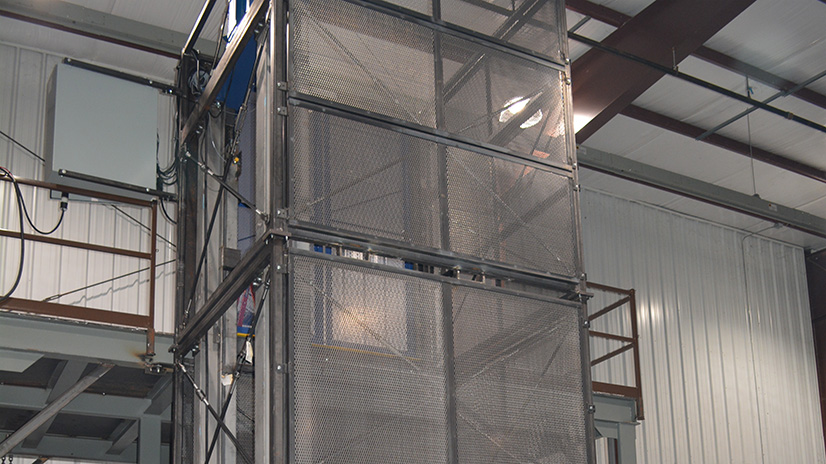
Integrating a lift system into an automated warehouse isn’t just a controls exercise. Several factors determine whether the integration actually delivers on its promise.
Automation Controls
The control system is where integration lives. Autoquip’s automation-ready lifts can be configured with PLC interfaces, HMI controls, and programmable motion profiles. That means the lift receives commands from and reports status to the surrounding automation architecture in real time. The control system has to be built for the specific communication protocols and handshaking requirements of the broader system, whether that’s a warehouse management system, an AGV management platform, or a conveyor line controller.
For the most complex integration projects, Autoquip can draw on OSCO Controls, our controls division, to serve as the integration layer between lift equipment and higher-level automation software. That means developing the control logic that coordinates lift movements with system commands, managing load and unload event sequencing, and ensuring reliable state feedback between the VRC and the broader automation architecture.
Material Flow Sequencing
Automated load transfer isn’t just about moving a load from point A to point B. The load must move at the right time and in the right sequence without disrupting material flow. This requires careful coordination at the lift interface. Systems must manage load arrival, lift readiness, transfer execution, and downstream communication. Getting that sequencing right allows the lift to function as part of the automated flow rather than becoming a bottleneck.
Safety Systems
Automated environments add safety complexity that manually operated lifts don’t face. When loads move without direct human guidance, the safety system must account for conditions an operator would normally observe and respond to. Autoquip’s automation-ready lifts incorporate sensors, interlocks, light curtains, and load monitoring systems designed for automated operation. In AMR integration projects, safety logic extends to physically restraining the AMR during vertical transport, confirming safe positioning before allowing exit, and handling fault conditions that could otherwise result in equipment damage or loss of positional awareness.
Future Scalability
The automation landscape doesn’t stay static. Throughput requirements increase, facilities add new technology, and flexible automation infrastructure makes it easier and less costly to adapt. Lift systems with open control architecture, standard communication interfaces, and adequate capacity can scale with the operation instead of limiting future growth.
Supporting a Connected Intralogistics Operation
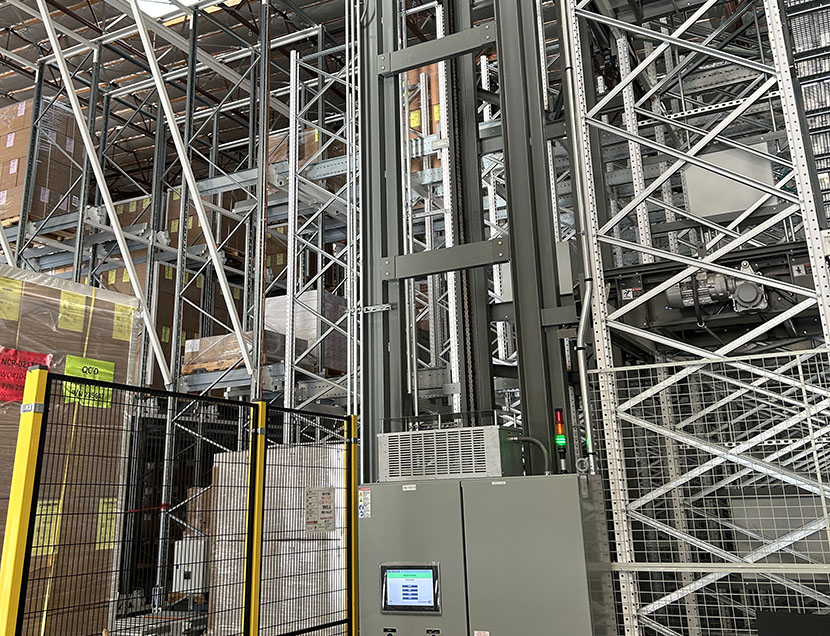
The real value of integrated automated material handling lifts shows up at the system level, not just at the individual lift. When vertical movement is a coordinated part of the intralogistics operation, the whole system performs better.
Improving Throughput
Vertical reciprocating conveyors are the backbone of multi-level automated material flow. Our VRCs can be configured with automated controls, conveyor integration features, and precision positioning. This allows them to receive loads automatically, transfer to downstream conveyors, and communicate with facility control systems without manual intervention. When vertical movement keeps pace with the horizontal systems around it, the entire operation runs at the throughput it was designed to deliver.
Reducing Manual Transfers
Every manual handoff at a vertical transfer point is a gap in an otherwise automated workflow. Lift systems that integrate with existing conveyors, AGVs, and production control platforms eliminate those handoffs. Whether that’s a VRC transferring pallets between levels, a lift table interfacing with a robotic workstation, or a custom-engineered solution coordinating with an AGV fleet, the goal is the same: materials move automatically, on schedule, without an operator in the loop.
Increasing System Reliability
Integration reliability starts with how well the lift system communicates with everything around it. Our automation-ready lifts include the sensors, interlocks, and control interfaces automated environments require. Consistent positioning, predictable cycle times, and robust fault handling are what allow the lift to function as a dependable node in the automated flow. When one component in an integrated system behaves unpredictably, the disruption ripples through everything downstream. Building reliability into the lift from the start is what keeps that from happening.
Supporting Continuous Operation
Some integration challenges don’t fit standard product configurations. Unusual load geometries, complex multi-system coordination requirements, or applications where the lift must participate in a highly specific control sequence all point toward custom-engineered solutions. Our automation and integration solutions are purpose-built to connect with existing systems and workflows. Custom control panels, HMI interfaces, built-in safety logic, and configurable motion profiles are all on the table, designed around what the application actually demands, so the system runs continuously without manual intervention or unplanned stops.
Benefits of Integrated Lift Systems in Automated Warehouses
When lift systems are properly integrated into automated warehouse operations, the benefits compound across the entire material flow.
Better Automation Performance
Lift systems that communicate with and respond to the automation architecture around them allow the entire system to operate at its designed performance level. Cycle times become more consistent, load transfer sequences execute reliably, and the automated flow that warehouse management systems try to orchestrate plays out as planned.
Reduced Bottlenecks
Manual handoffs at vertical transfer points commonly interrupt material flow in otherwise automated warehouses. Automated material handling lifts eliminate those handoffs, reducing delays and variability throughout the operation. When the lift keeps pace with conveyors, AGVs, and automated storage systems, the entire operation can maintain its intended throughput.
Improved Material Flow
Material flow automation across a multi-level facility requires every component to contribute to the flow rather than interrupt it. Lift systems integrated into the control architecture and designed for the specific sequencing requirements of the operation don’t just move materials; they keep materials moving. That’s the difference between a lift that fits into an automated workflow and one that the workflow has to accommodate.
Increased Operational Flexibility
Integrated lift systems built with open architecture and configurable controls are significantly easier to adapt as the operation evolves. Adding a new pick zone, reconfiguring a storage level, or integrating a new AGV fleet doesn’t require rebuilding the vertical movement component from scratch when the lift system was designed with flexibility in mind from the start.
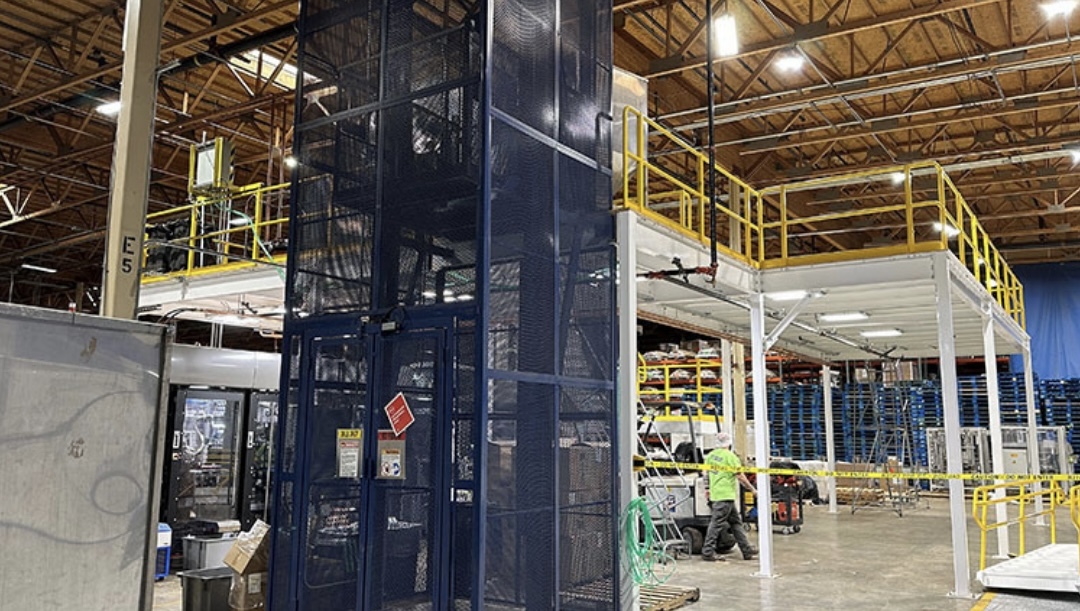
From the Field: Real-World Automated Warehouse Integration
The following examples show how automated material handling lifts perform in real-world warehouse and distribution environments. These applications often involve complex integration requirements where reliable performance is critical.
AMR-Integrated VRC System for Automated Storage and Retrieval
- Problem: A precision instrumentation manufacturer needed a fully automated solution for moving AMRs and pallets between storage levels in their facility, requiring precise coordination between VRC controls, an AGV management platform, and a warehouse management system.
- Solution: Autoquip engineered a custom VRC system where AMRs ride the lift between storage levels, with OSCO Controls developing the integration layer that manages load sequencing, state feedback, and real-time communication between the VRC and the broader automation architecture.
- Results: The system operates as a fully autonomous node in the automated workflow, with the VRC receiving commands from and reporting status to the surrounding systems without manual intervention. See the full project: Integrating VRCs and AMRs for Automated Storage and Retrieval.
Automated VRC System for Retail Distribution
- Problem: A major retailer converting store backrooms to local fulfillment centers needed seven VRCs integrated with robots, AGVs, and conveyor systems to move inventory between levels at the speed their multi-channel order fulfillment operation demanded.
- Solution: Autoquip engineered five AGV-integrated VRCs for the rack and track system and two conveyor-integrated VRCs for the loading dock, each configured to work in tandem with the surrounding automated systems and robotic assistance.
- Results: Inventory movement became significantly faster and more consistent, with VRCs operating in continuous coordination with the AGV and conveyor systems to keep pace with order demand. See the full project: Integrated Automated VRC System for Distribution Center.
Vertical Movement Works With Your Automation, Not Against It
Properly integrating lift systems into automated warehouse operations improves efficiency, reduces manual intervention, and supports scalable intralogistics. The right lift solution depends on the facility’s automation goals, the systems it needs to interface with, and the throughput demands it must meet. Having that conversation early helps ensure the lift solution fits the application before teams finalize equipment or lock in other systems.
With more than 75 years of engineering experience, Autoquip designs and builds automated material handling lifts that connect with the systems around them. Whether the application calls for a VRC with full AGV integration, a lift table configured for conveyor interface, or a fully custom automation solution built around a specific workflow, we engineer the system around what the operation actually requires.
With fully integrated material handling lift solutions, Autoquip helps facilities improve warehouse efficiency and material flow. Contact us today to discuss your application.
Autoquip: Building Automated Material Handling Lifts To Keep Operations Moving
Lift systems are an important part of modern warehouse automation. When they’re properly integrated, they improve efficiency, reliability, and scalability across the entire operation. The right solution depends on the facility’s automation goals. Autoquip brings the engineering experience, product depth, and controls capability to make vertical movement a connected, contributing part of your automated warehouse system.