
Common Intralogistics Material Flow Challenges (and How to Solve Them)
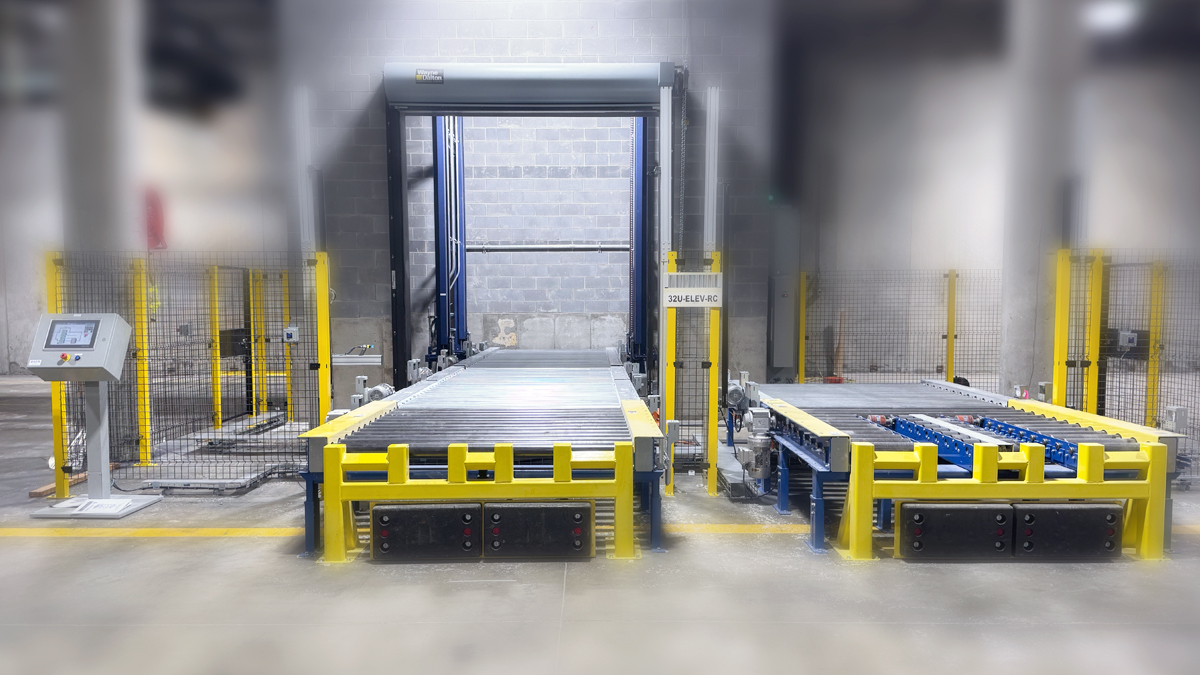


Intralogistics Material Flow Challenges — And the Lift Solutions That Solve Them
Modern intralogistics operations are more interconnected than ever — automated conveyors, AGVs, AS/RS systems, robotic picking stations, and multi-level storage all working in concert to move product from receiving to shipping as efficiently as possible. But when material flow breaks down between those systems, the whole operation pays the price. Bottlenecks form. Throughput drops. Automation investments that look strong on paper underperform in practice. The most common culprit isn’t the systems themselves — it’s the gaps between them. In this article, we’ll cover:
- Why intralogistics material flow challenges are more common than they should be
- The most common material flow challenges and where they tend to occur
- The lift solutions best suited for intralogistics and warehouse environments
- The measurable benefits of material flow optimization in warehouse and distribution operations
Ready to improve material flow across your operation? Talk to an Autoquip engineer today.
Why Intralogistics Material Flow Challenges Are More Common Than They Should Be
Intralogistics systems depend on efficient, continuous material flow. When products move smoothly between receiving, storage, picking, packing, and shipping — without manual intervention or unplanned delays — the operation performs as designed. But in practice, most facilities encounter bottlenecks that disrupt that flow, reduce throughput, and increase operating costs, which compound over time. These bottlenecks often occur not within individual automation systems, but between them — at the intersections where conveyors hand off to storage systems, where materials need to move between levels, or where AGVs deliver loads that still require manual positioning. Those are the points where the right lift and integration solutions make the biggest difference.
Inefficient material movement at these connection points reduces throughput, increases reliance on manual labor, and limits the return on the automation investments surrounding them. Integrated lift systems address exactly these gaps — providing the vertical movement, load positioning, and system connectivity that keep intralogistics operations running at full capacity. Understanding the most common bottlenecks in intralogistics environments is the first step toward identifying the right solutions for your facility.
Common Intralogistics Material Flow Challenges
While every facility has its own layout and operational requirements, certain material flow challenges appear consistently across warehouse, distribution, and fulfillment environments. Recognizing these patterns — and understanding their root causes — is essential for operations teams pursuing material flow optimization across the warehouse and seeking to improve efficiency without adding headcount or expanding their footprint.
Vertical Movement Between Floors or Mezzanines
Multi-level facilities face a fundamental challenge: material that flows smoothly on a single floor hits a hard stop the moment it needs to move between levels. Forklifts introduce safety risks and interrupt automated workflows. Freight elevators lack the control interfaces required by modern automation systems. Manual carrying creates injury risk and throughput limitations that scale poorly with volume.
For facilities with mezzanine storage, multi-floor operations, or elevated pick modules, the vertical movement gap is often the single largest constraint on overall throughput. Without a dedicated vertical material handling solution integrated into the broader system, the efficiency gains from horizontal automation are consistently undermined by the vertical bottleneck. Multi-level material handling isn’t an optional add-on in these environments — it’s a core operational requirement.
Inefficient Transfer Between Conveyors and Zones
Conveyor systems are designed to move material continuously — but they can’t always accommodate the elevation changes, direction shifts, or load transfer requirements that real facility layouts demand. When a conveyor line ends at the wrong height for the next process, when loads need to be raised or lowered to match downstream equipment, or when products must transition between zones with different handling requirements, the result is manual intervention that breaks the automated flow.
These transfer points are among the most common sources of inefficiency in intralogistics systems, and they’re often the last to receive engineering attention during facility design. Each manual step at a conveyor intersection adds time, introduces variability, and creates a potential failure point in an otherwise automated workflow. Lift systems configured for conveyor integration eliminate these manual steps by automatically handling elevation changes and load transfers, keeping the conveyor flow uninterrupted from zone to zone.
Delays in Automated Systems Due to Inconsistent Positioning
Automation depends on consistency. Robotic picking systems, AS/RS systems, and AGV fleets all assume loads will arrive at a predictable height, orientation, and location. When that consistency breaks down — when loads arrive at variable heights, when positioning varies between cycles, or when handoffs between mobile and fixed systems require manual correction — cycle times extend, error rates increase, and the automation investment delivers less than its designed throughput.
Inconsistent positioning is often a symptom of gaps in the integration between systems, and it’s one of the more difficult problems to diagnose because it manifests as a performance issue rather than a visible failure. Addressing it requires lift and positioning solutions that deliver repeatable, precise load placement cycle after cycle — integrated with the control systems that surround them to ensure consistent performance across the entire workflow.
Lift Solutions for Improving Intralogistics Material Flow
Our lift and integration solutions are engineered to address the specific challenges of intralogistics environments — from vertical movement between levels to precise load positioning for automated material handling systems. Every solution can be configured to match the specific requirements of the application, the facility layout, and the automation systems it needs to support.
Vertical Reciprocating Conveyors (VRCs)
Vertical Reciprocating Conveyors are the primary solution for multi-level material transport in intralogistics environments. Unlike freight elevators, VRCs are engineered for automation integration — with control interfaces that communicate directly with conveyor systems, warehouse management platforms, and AGV management software. They move materials between floors and mezzanine levels consistently and automatically, without requiring operator intervention at each cycle. As a vertical material handling solution purpose-built for demanding intralogistics environments, VRCs remove the bottlenecks that forklift-dependent vertical transport creates in otherwise highly automated facilities.
Autoquip VRCs are available in mechanical and hydraulic configurations across a wide range of capacities, travel heights, and platform sizes — and every system can be configured to match your facility’s specific load requirements, floor layout, and integration needs. Mechanical VRCs support high-volume, multi-level applications with vertical travel up to 100 feet and capacities up to 20,000 lbs. Hydraulic models offer a cost-effective solution for two-level applications with loads up to 6,000 lbs. Every Autoquip VRC includes AQ Connect, Autoquip’s proprietary cloud-based remote monitoring and control platform, providing real-time diagnostics, IoT connectivity, and seamless integration with facility automation systems.
Lift Systems for AGVs and AS/RS
AGVs have transformed horizontal material flow in warehouse and distribution environments — but horizontal movement alone doesn’t complete the automation picture. When an AGV delivers a load that still needs to be raised, lowered, or precisely positioned for an AS/RS system or a storage rack, the automation benefit is only partially realized. Our engineers design lift and automation integration solutions that interface directly with AGV fleets. This enables automated load transfer between mobile robots and fixed equipment without manual intervention.
For facilities using ASRS systems, integrated lift solutions support high-density storage and automated retrieval workflows by providing the precise vertical positioning that AS/RS equipment requires. Autoquip has engineered complex integrations where VRCs, AGVs, and AS/RS systems operate as a single unified workflow — with real-time communication between the lift control system and the AGV management platform, ensuring that every load arrives at the right position, at the right time, every cycle. For a closer look at how these integrations work in practice, see our related blog posts on AGV lift integration and AS/RS integration with custom lift systems.
Scissor Lifts and Transfer Systems
Not every material flow gap requires a full VRC or AGV integration. Scissor lift tables and transfer systems solve a wide range of intralogistics challenges at the conveyor and workstation level — bridging elevation gaps between conveyors, supporting staging and load positioning, and enabling smooth handoffs between automated and manual processes. Autoquip’s scissor lift table family includes more than 1,000 designs and configurations, from compact low-profile models to high-capacity platforms engineered for the heaviest industrial loads — all customizable to meet the specific requirements of your application.
In conveyor applications, scissor lifts with integrated powered conveyor beds automatically raise or lower loads to match downstream equipment heights, maintaining continuous flow without manual adjustment. In staging areas, lift tables hold loads at the optimal height for picking, packing, or transfer operations. And when loads need to be rotated or reoriented as part of the handling process, turntables and tilters can be integrated into the same system to provide a complete, multi-function positioning solution configured specifically for your application.
The Benefits of Optimized Intralogistics Material Flow
When lift systems are properly integrated into intralogistics operations, the impact extends well beyond the individual lift. The entire material flow architecture becomes more efficient, more consistent, and better able to support growth. Warehouse efficiency improvement shows up in measurable ways across throughput, labor utilization, space efficiency, and automation performance — and those gains compound as volume scales.
Here’s what optimized material flow typically delivers across intralogistics operations:
- Increased throughput and operational efficiency — Integrated lift systems eliminate the manual handling steps and wait times that interrupt automated workflows, allowing the entire intralogistics system to operate at its designed capacity rather than being constrained by gaps between processes. When every connection point moves material automatically and consistently, the throughput ceiling rises across the entire operation.
- Reduced bottlenecks and delays — Dedicated vertical transport and automated load positioning eliminate chokepoints that cause downstream delays across picking, packing, storage, and shipping. When every intersection in the material flow is engineered rather than improvised, the entire system runs more predictably — and production planning becomes more reliable as a result.
- Improved automation performance — Consistent, precise load positioning enables robotic systems, AS/RS equipment, and AGV fleets to perform at their designed accuracy and cycle time. When automated material handling systems receive loads in the right position every cycle, they deliver the throughput and reliability that automation investments are expected to provide — and the facility gets the full return on those investments.
- Better use of vertical and horizontal space — Vertical material handling solutions like VRCs make mezzanine storage and multi-floor layouts operationally viable, allowing facilities to expand capacity without expanding their footprint. In environments where floor space is a constrained resource, the ability to use vertical space effectively is a significant competitive advantage — and one that becomes more valuable as operational demands grow.
Partner with Autoquip to Solve Your Intralogistics Material Flow Challenges
Material flow optimization in warehouse and intralogistics environments requires lift and integration solutions engineered for the specific demands of the application — not standard catalog equipment adapted to fit. Since 1947, our team has been designing and manufacturing custom lift systems for logistics and warehouse storage operations of every scale — from regional distribution centers to the largest e-commerce fulfillment networks in the country. That depth of experience means our engineers have solved virtually every material flow challenge that intralogistics environments present, and they bring that accumulated knowledge to every new project.
From standard scissor lifts and VRCs to fully custom-engineered multi-system integrations, every solution we design is built around the specific requirements of the facility it serves — the loads, the layout, the automation systems, and the throughput goals. Whether you need vertical transport between levels, precise positioning for AGV and AS/RS integration, conveyor transfer systems that eliminate manual handling at key intersections, or a complete material flow architecture engineered from the ground up, we have the experience and the product range to deliver it. Every solution can be customized to fit your specific application — because no two intralogistics operations are exactly alike, and no two solutions should be either.
From standard lift systems to fully integrated solutions, Autoquip helps businesses optimize material flow across intralogistics operations. Contact us today to discuss your application.
Autoquip — Engineering Lift Solutions for the Demands of Modern Intralogistics
The material flow bottlenecks that limit intralogistics performance almost always occur at the integration points between systems, not within them. Our integrated lift solutions improve connectivity across processes, eliminate bottlenecks at critical connection points, and ensure that material moves consistently and accurately through every stage of the operation. VRCs, AGV-ready lift systems, and automation-integrated scissor lifts are not peripheral equipment in a modern intralogistics facility — they are essential infrastructure for warehouse efficiency improvement and long-term operational scalability. With the right solutions in place, your facility can realize the full potential of its automation investment and build a material flow architecture that scales with your business. We have the engineering experience, the product range, and the integration expertise to make that happen.
Ready to improve material flow across your intralogistics operation? Let’s talk about what we can engineer for your facility.