
How to Integrate Lift Systems into Automated Production Lines
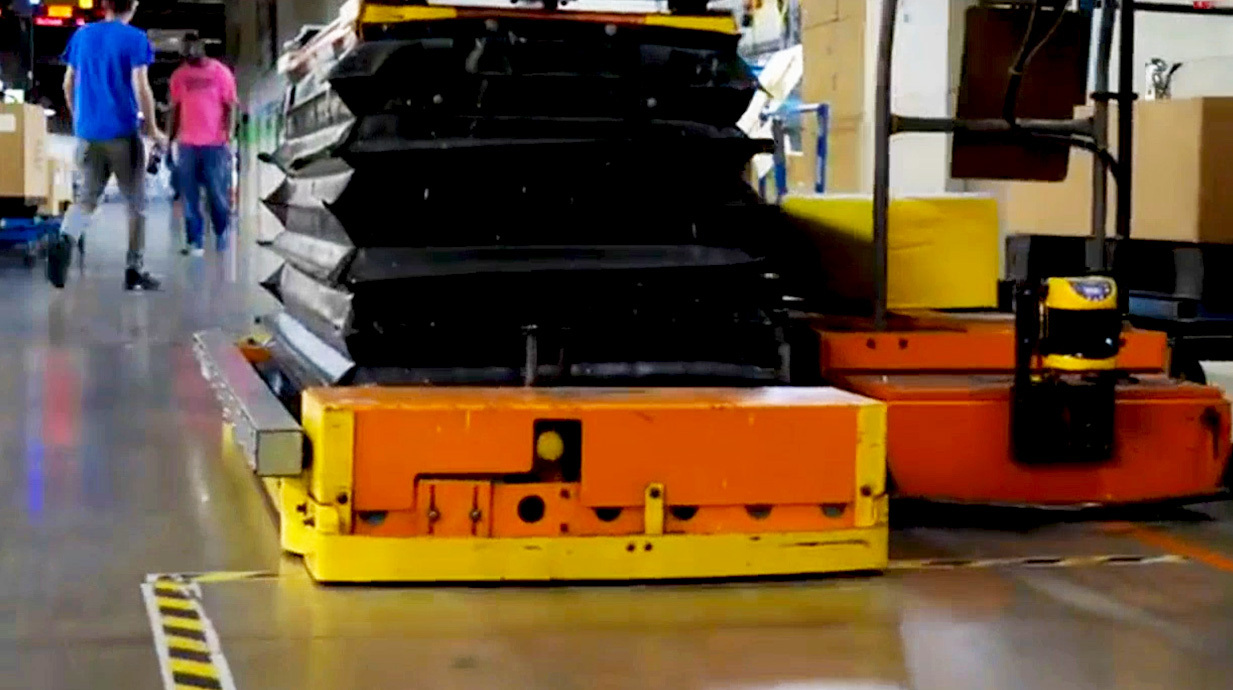


Lift System Integration: Connecting the Gaps in Your Automated Production Line
Manufacturing is moving faster than ever toward full automation — conveyors route materials with precision, robotics handle complex assembly tasks, and AGVs navigate facility floors without human intervention. But in many otherwise highly automated facilities, material handling remains the bottleneck. Parts are positioned at the wrong height. Components need to move between levels. Workstations sit idle waiting for materials that should already be there. Lift system integration is how manufacturers close those gaps — connecting conveyors, robotics, AGVs, and AS/RS systems into a continuous, efficient production flow. In this article, we’ll cover:
- Where lift systems fit within automated production lines and why they matter
- The types of lift systems used in automation and what each one does best
- The key integration points where lift systems connect with other automated equipment
- The measurable benefits lift system integration delivers across your operation
Ready to connect the gaps in your automated production line? Talk to an Autoquip engineer today.
Why Lift System Integration Is the Missing Piece in Many Automated Facilities
Manufacturing is rapidly shifting toward automated production lines — and for good reason. Automation improves throughput, reduces labor costs, and creates the consistency that modern production demands. But even in heavily automated facilities, material handling often lags behind. Conveyors stop at elevation changes. Robots wait for parts that aren’t positioned correctly. Workstations sit idle because components arrive at the wrong height or orientation. AGVs deliver loads that still require manual adjustment before assembly can begin. These gaps don’t reflect a failure of the automation systems themselves — they reflect the absence of lift system integration that connects those systems into a unified workflow.
Lift systems act as the connection point between automated processes, ensuring materials move efficiently and arrive in the correct orientation at every stage of production. When lift system integration is engineered correctly — with automated lift systems that communicate directly with conveyors, robots, and facility-wide controls — the result is a production line where materials flow continuously from receiving through assembly, inspection, and shipping, without the stops, delays, and guesswork that manual handling introduces.
Where Lift Systems Fit in Automated Production Lines
Lift systems aren’t peripheral equipment in an automated facility — they’re structural components of the material flow architecture. Understanding where they fit helps identify integration opportunities and the gaps most likely to create bottlenecks.
Managing Elevation Changes Between Conveyor Systems
Conveyor systems are the backbone of many automated production lines, but they rarely operate at a single elevation throughout a facility. When materials need to move between conveyor heights — transitioning from one production level to another, accessing mezzanine storage, or feeding into assembly cells — lift systems provide controlled vertical movement to keep the conveyor flow uninterrupted. Without an integrated lift at these transition points, materials either require manual handling or the entire conveyor sequence has to be redesigned around a single elevation.
Feeding Parts into Workstations and Assembly Cells
Automated assembly depends on parts arriving at the right place, at the right time, and at the right height. When components are delivered to a workstation at the wrong elevation or orientation, operators must manually adjust them before assembly can begin — introducing exactly the kind of non-value-added activity that automation is designed to eliminate. Lift systems integrated into workstation delivery ensure that parts arrive positioned for immediate use, keeping assembly cells running at their designed cycle times.
Supporting Robotic Operations with Precise Positioning
Robotic assembly and automated fastening systems require exact, repeatable component positioning. A robot programmed to interact with a part at a specific height and orientation cannot compensate for variability in how that part is presented. Lift systems that deliver components with sub-millimeter repeatability enable robotic cells to operate reliably at full speed — and make lights-out operation in automated cells a practical reality rather than an aspiration.
Positioning Components for Assembly or Inspection
Not every integration point in an automated line is about moving materials between locations. Sometimes the need is simply to present a component at the right angle or at the right height for an assembly step or inspection process. Lift and tilt systems that position parts precisely for these operations reduce cycle time, improve quality, and eliminate the manual repositioning that would otherwise interrupt the production flow.
Types of Lift Systems Used in Automation
Different automation applications call for different lift solutions. As part of a comprehensive set of manufacturing automation solutions, Autoquip’s product line covers the full range of lift and positioning needs within automated production environments — from standard vertical movement to complex multi-axis positioning and multi-level transport. And because no two facilities are identical, every Autoquip lift solution can be customized to integrate lift systems into your production line exactly as your application requires.
Scissor Lifts — Vertical Movement
Scissor lifts provide controlled vertical movement to raise or lower parts between conveyor heights or work zones. In automated production lines, scissor lifts enable smooth transitions across production stages — presenting components at the correct elevation for robotic interaction, workstation assembly, or downstream conveyor transfer. Autoquip’s scissor lift solutions include more than 1,000 designs and configurations, from compact low-profile models to high-capacity platforms engineered for the heaviest industrial loads — and every model can be customized to meet the specific load, height, speed, and integration requirements of your application.
Tilters — Angular Positioning
Tilters adjust part orientation for ergonomic access or robotic handling, improving visibility and reducing repositioning steps within automated workflows. When a component needs to be presented at a specific angle for robotic assembly, automated fastening, or quality inspection, a tilter delivers that orientation with the repeatability that automation requires. Autoquip’s tilter product line — the most diverse in the industry — includes hydraulic, pneumatic, and mechanical configurations engineered for high-capacity loads, fast cycle times, and seamless integration into automated production environments.
Turntables — Rotation and Indexing
Turntables rotate parts for multi-sided access and support indexing for sequential operations within automated lines. In robotic welding cells, assembly stations, and inspection systems, turntables allow automated equipment to access multiple faces of a component without repositioning the part or the robot. Autoquip’s industrial turntables are available in manual and powered configurations, with programmable indexing capabilities that integrate directly with facility automation controls.
Vertical Reciprocating Conveyors (VRCs) — Multi-Level Transport
Vertical Reciprocating Conveyors are the primary solution for moving materials between multiple levels within automated systems — connecting production floors, mezzanines, and storage levels into a single integrated material flow. Unlike forklifts or freight elevators, VRCs are engineered specifically for automation integration, with control interfaces that communicate directly with conveyor systems, AGV management software, and facility-wide PLCs. Autoquip VRCs are available in mechanical and hydraulic configurations across a range of capacities, travel heights, and platform sizes — and each system can be configured to match your facility’s specific load requirements, floor layout, and integration needs. Every Autoquip VRC also includes AQ Connect, Autoquip’s proprietary cloud-based remote monitoring and control platform, enabling real-time diagnostics, IoT connectivity, and seamless integration with facility automation systems.
Lift Systems for AGVs and AS/RS
Automated Guided Vehicles (AGVs) have transformed horizontal material flow in manufacturing and warehousing — but AGVs alone don’t complete the automation picture. When an AGV delivers a load that still needs to be raised, lowered, or positioned for use, the automation benefit is only partially realized. Autoquip engineers lift systems that interface directly with AGV fleets, enabling automated load transfer between mobile robots and fixed equipment — and allowing AGVs to operate across multiple levels without manual intervention.
For facilities using Automated Storage and Retrieval Systems (AS/RS), Autoquip lift solutions provide vertical movement to keep storage and retrieval operations running at full speed, connecting AS/RS equipment with ground-level receiving, shipping, and production areas. Precise load positioning is built into every integration — ensuring that materials arrive at the exact height, orientation, and location required by automated handling equipment, cycle after cycle. Autoquip has covered both topics in detail — check out our blog to learn more about AGV lift integration and AS/RS integration with custom lift systems.
Key Integration Points for Lift Systems in Automated Production
Effective lift system integration isn’t just about selecting the right lift — it’s about engineering the connection between the lift and every system it needs to work with. The decision to integrate lift into production line workflows is a commitment to making vertical and positional movement as automated and reliable as every other step in the process. These are the integration points that matter most in automated production environments.
Conveyor Systems
Integrating lift systems with conveyor networks requires synchronizing lift movement with conveyor flow to maintain continuous material handling without gaps or accumulation. Scissor lifts and VRCs that communicate directly with conveyor controls can trigger automatically when loads arrive, match conveyor speeds during handoff, and confirm load delivery before returning to position. This level of integration keeps the conveyor line moving without manual oversight at transition points.
Robotics and Automation Cells
Delivering parts in consistent positions for robotic interaction is one of the most demanding lift integration requirements in automated production. Robots operate with precision tolerances that leave no margin for positioning variability — which means the lift system must deliver repeatable performance cycle after cycle. Autoquip lift systems engineered for robotic integration incorporate precision positioning controls, load confirmation sensors, and communication interfaces that coordinate lift operation with robotic cell cycle times, improving cycle time reliability and enabling higher levels of automation.
AGVs and AS/RS Systems
Integrating lift systems with AGV fleets requires real-time communication between the lift control system and the AGV management software — coordinating lift cycles with vehicle arrivals and departures to enable fully automated load transfer without human intervention.
For facilities using Automated Storage and Retrieval Systems (AS/RS), lift integration supports high-density storage and automated retrieval workflows by connecting AS/RS equipment with receiving, shipping, and production areas across multiple levels — keeping inventory moving efficiently without the bottlenecks that manual vertical handling creates.
Autoquip has extensive experience engineering both types of integrations, including complex projects where VRCs, AGVs, and AS/RS systems operate as a single unified workflow — with OSCO Controls, Autoquip’s in-house controls division, managing the control architecture that ties it all together. Autoquip has covered both topics in detail — check out our blog to learn more about AGV lift integration and AS/RS integration with custom lift systems.
PLC and Control Systems
PLC controlled lift systems are the foundation of true automation integration. When a lift operates on PLC-based controls that communicate with facility-wide automation networks, it becomes a node in the production system rather than a standalone piece of equipment — receiving commands, reporting status, and responding to system-level conditions in real time. The result is precise, repeatable lift operation that automation systems can depend on — the same positioning, the same timing, and the same performance cycle after cycle. Autoquip engineers PLC controlled lift integration across the full range of automation environments, from simple two-device interfaces to complex multi-system architectures that coordinate lift operation with conveyors, robots, AGVs, and warehouse management platforms simultaneously.
Sensors and Safety Systems
Safe operation within automated environments requires lift systems that detect part position, confirm load presence, and monitor system status continuously. Sensors integrated into Autoquip lift systems verify that loads are correctly positioned before lift cycles begin, confirm delivery at the destination level, and communicate status to connected systems. Safety interlocks prevent operation when access gates are open, when loads exceed rated capacity, or when connected automation systems are not in a ready state — ensuring that the lift operates safely as part of a larger automated environment without requiring manual oversight at each cycle.
The Benefits of Lift System Integration in Automated Production
When lift systems are properly integrated into automated production lines, the impact extends well beyond the lift itself. The entire production system runs more efficiently, more safely, and more consistently.
- Reduced manual handling and operator intervention — Automated lift operation eliminates the need for operators to manually move, position, or adjust materials at integration points, freeing personnel for higher-value tasks.
- Improved throughput and cycle times — Lift systems that communicate with connected automation keep materials moving at the pace the production line was designed to run, eliminating the wait times and bottlenecks introduced by manual handling.
- Greater process consistency and repeatability — Automated positioning delivers the same result every cycle, removing the variability that manual handling introduces and supporting the quality standards that automated assembly requires.
- Enhanced workplace safety — Removing manual handling from high-cycle, high-weight operations significantly reduces injury exposure, and automated safety interlocks ensure lift systems operate safely within the broader automation environment.
- More efficient use of floor space — Vertical movement enabled by integrated lift systems — particularly VRCs — allows facilities to use mezzanines and multi-level layouts effectively, reducing the floor space required for ramps, staging areas, and manual handling equipment.
Partner with Autoquip for Lift System Integration That Works
Lift system integration is not a product purchase — it’s an engineering challenge that requires deep experience with automation systems, control platforms, and the specific demands of industrial production environments. Our team has spent decades delivering manufacturing and material handling automation solutions for OEMs, warehouses, and distribution facilities across automotive, aerospace, retail, energy, and industrial sectors. From standard scissor lifts and VRCs to fully custom-engineered multi-system integrations, Autoquip delivers solutions that work as designed — from day one and throughout the equipment’s service life.
Every Autoquip integration project begins with a thorough understanding of your production workflow, your automation systems, and the specific requirements your application demands. Whether you need a scissor lift synchronized with a robotic cell, a VRC integrated into an AGV and AS/RS network, or a complete automated material handling system engineered from the ground up, Autoquip has the engineering depth and manufacturing capability to deliver it.
From standard scissor lifts to fully custom systems, Autoquip helps facilities integrate lift and positioning solutions into automated production lines. Contact us today to discuss your application.
Autoquip — Engineering Lift System Integration for the Demands of Automated Production
Lift system integration is essential for eliminating the material handling bottlenecks that limit throughput, introduce variability, and constrain the return on your automation investment. Properly integrated lift systems support conveyors, robotics, AGVs, and AS/RS equipment — delivering the consistent, automated positioning that improves consistency, throughput, and safety across modern manufacturing operations.
When facilities strategically integrate lift capabilities into production line workflows, the results are measurable — fewer bottlenecks, higher productivity, and a production system that performs the way it was designed. Standard solutions address many applications effectively, but the most demanding automation environments require custom engineering that aligns with your exact workflow, your existing systems, and your production goals. We have the experience, the product range, and the engineering capability to deliver both.
Ready to take the next step in your automation strategy? Let’s talk about what lift system integration can do for your facility.