
Vertical Reciprocating Conveyors: Everything You Need to Know About Safe, Efficient Material Handling


The Complete Guide to Vertical Reciprocating Conveyors for Safe Industrial Material Handling
Forklift accidents on ramps remain a persistent safety challenge in multi-level facilities. The physics create real problems—loads shift on inclines, operators lose sight lines at ramp crests, and elevated loads amplify the consequences of minor errors. That’s why we engineer vertical reciprocating conveyors to remove forklifts from vertical travel entirely. Our systems keep forklifts on level floors where they operate safely, while dedicated lifts handle material movement between levels. In this guide, we’ll cover:
- What vertical reciprocating conveyors are and how they differ from passenger elevators
- The key advantages VRCs deliver in safety, efficiency, and space optimization
- When facilities should consider adding a VRC to their operations
- How vertical reciprocating conveyors work and the difference between hydraulic and mechanical systems
- Why modular VRC lifts offer faster installation and future flexibility
- Critical safety considerations for VRC operations and ASME B20.1 compliance
- How to choose the right vertical reciprocating conveyor for your specific application
- How vertical reciprocating conveyors are engineered to match your facility’s exact requirements
See how Autoquip’s VRC solutions eliminate forklift accidents and speed installation.
Why Vertical Material Movement Matters
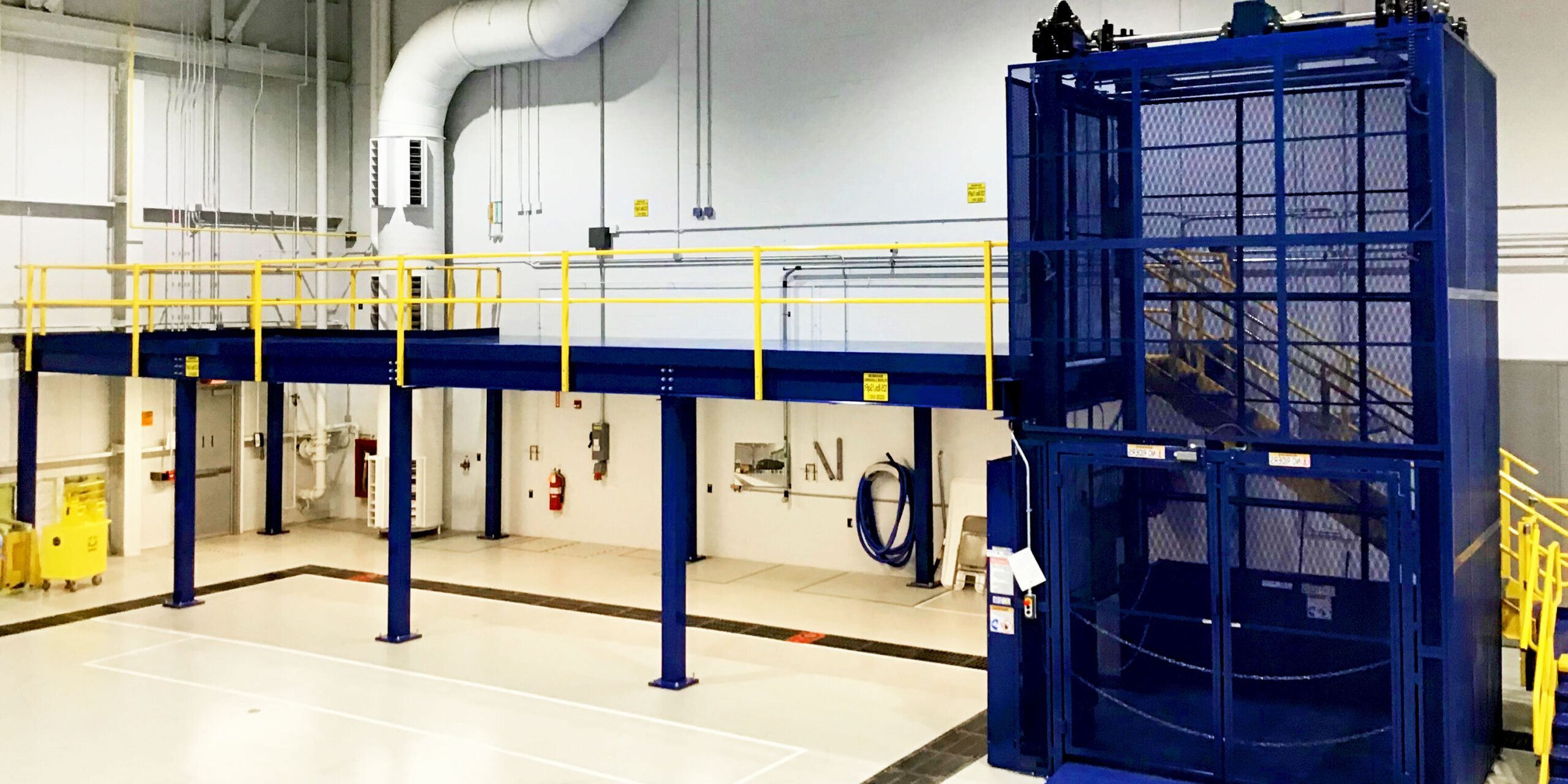
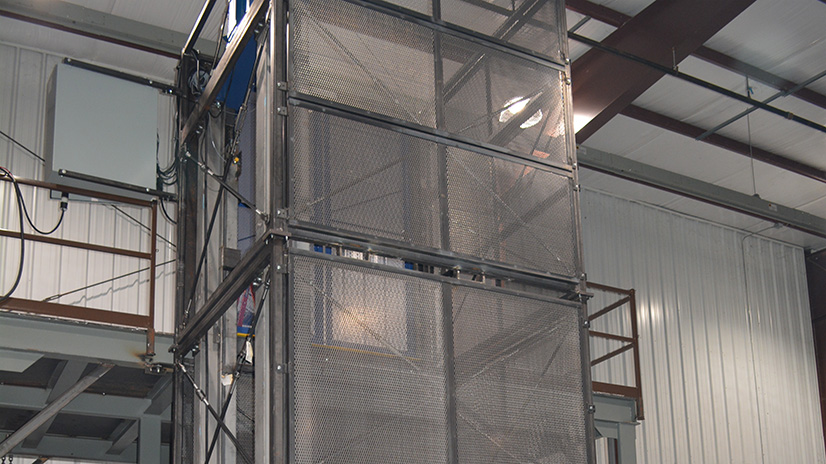
Vertical reciprocating conveyors are material handling systems we engineer to lift loads between two or more levels. Unlike passenger elevators, our VRCs move materials only—never people—and we build them to ASME B20.1 safety standards for industrial lifting equipment.
Core Function and Components
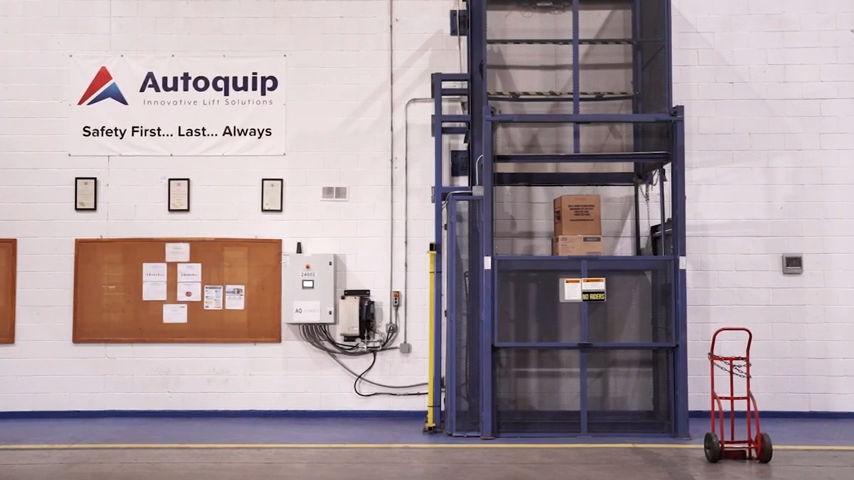
A vertical reciprocating conveyor uses a guided platform that travels vertically along masts or guide columns. We power them with either hydraulic cylinders or mechanical drive systems, depending on your application. The platform picks up loads at one level, travels to the destination height, and delivers materials to the next floor or mezzanine. Our control systems manage the lifting sequence while safety interlocks prevent operation when gates are open or loads exceed capacity. We can configure platform surfaces with roller conveyors, chain transfers, or turntables for automated load handling and smooth integration with your existing material handling equipment.
Mechanical vs Hydraulic Systems
We offer vertical reciprocating conveyors with two primary drive types matched to different operational needs. Our hydraulic systems use fluid pressure for smooth, controlled lifting—we recommend these for moderate heights where quiet operation matters. The hydraulic approach provides inherent load control, protecting sensitive loads.
Our mechanical systems use chain, cable, or screw-driven mechanisms for heavier loads, taller heights, and higher duty cycles. If you’re running continuous production, mechanical drives scale better. When facilities need three or more levels, especially with heavy loads and tall travel heights, we usually specify mechanical drive systems because they handle those requirements more effectively.
ASME B20.1 Compliance and What It Means
We build our systems to ASME B20.1 rather than elevator codes. ASME B20.1 addresses specific industrial safety considerations, including guarding, emergency stops, load capacity ratings, and maintenance protocols. The standard recognizes that material handling equipment operates differently from passenger elevators, with higher cycle frequencies, varying loads, and automation integration. Our ASME B20.1 compliance delivers safety features proven across thousands of installations.
Key Advantages of Vertical Reciprocating Conveyors
Facilities consistently report improvements in safety, throughput, and space utilization when they replace forklifts or manual handling with our vertical reciprocating conveyors.
Improved Safety
Forklifts on ramps create problems you can’t train away. Loads shift during incline travel, operators lose visibility approaching ramp crests, and the physics of elevated loads increase accident severity. Our systems can eliminate forklift vertical movement entirely, confining them to level-floor transport where they operate safely. Once forklifts don’t need to travel between levels, you can optimize horizontal traffic patterns without compromising vertical material flow.
When workers carry materials up stairs or repeatedly load freight elevators, they’re accumulating strain that eventually shows up as injury claims and lost time. Our vertical reciprocating conveyors eliminate awkward lifting positions and stair climbing with loads, reducing the physical demands that lead to chronic injury patterns.
Greater Workflow Efficiency
Dedicated vertical transport runs independently of your facility traffic. You get consistent capacity that doesn’t compete with horizontal movement. When material availability at each level becomes predictable instead of dependent on forklift scheduling or elevator access, production planning becomes more reliable. This matters most in operations with time-sensitive workflows or just-in-time delivery requirements.
Space Optimization
Our vertical lift systems need minimal floor space compared to ramps that consume hundreds of linear feet of facility space. The vertical approach enables material handling strategies that weren’t practical before, making mezzanines viable for storage or processing operations while reclaiming unused space.
Flexibility & Customization
We engineer platform sizes, capacities, and travel heights specifically for your application. No two facilities have identical requirements, so we don’t build one-size-fits-all systems. Whether you need a compact 48-inch platform handling 2,000 pounds or a 12-foot platform moving 20,000 pounds across 100 feet of travel, we configure the system to match your loads, your building structure, and your operational demands. Our engineering team works through your specific load types, cycle frequencies, and integration requirements to deliver a vertical reciprocating conveyor that solves your particular material handling challenges.
When Should Facilities Consider a VRC?
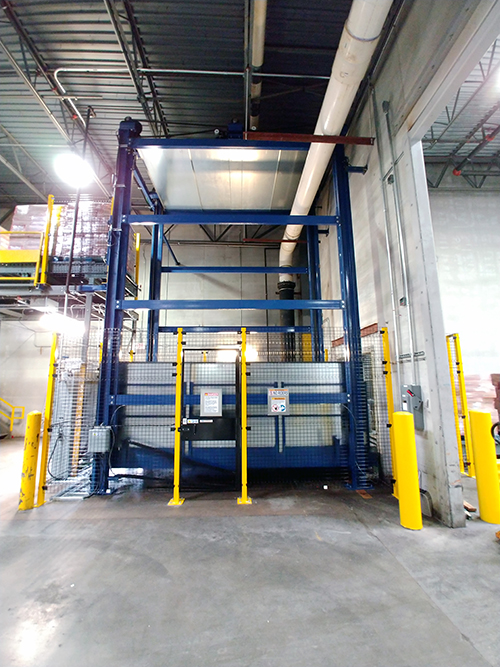
After decades of installations, we’ve learned to recognize the operational patterns that indicate where our vertical reciprocating conveyors generate immediate returns.
Frequent Multi-Level Material Movement
If you’re moving materials between floors more than 10 times per shift, or if freight elevators create bottlenecks during peak periods, you’ll likely see measurable throughput improvements by using dedicated vertical transport.
Forklift Traffic Reduction and Safety Improvement
When safety programs identify vertical forklift travel as high-risk, installing our vertical reciprocating conveyors removes that exposure. It also frees your forklifts for safer horizontal transport. Eliminating forklift vertical travel with dedicated vertical transport systems addresses safety risks that training and enforcement alone can’t solve.
Mezzanine Storage Integration
High-volume manufacturing operations with mezzanine storage depend on efficient vertical material flow to keep production running. Our vertical reciprocating conveyors provide reliable access between production floors and mezzanine storage levels, supporting inventory strategies that leverage vertical space without disrupting workflow. Facilities expanding capacity or adding mezzanine storage also benefit from our VRC solutions—we engineer systems that integrate with existing structures without significant modifications, transforming mezzanines from supplementary storage into integral parts of primary material flow.
Ecommerce and Fulfillment Centers with Multi-Level Pick Modules
Ecommerce fulfillment operations with multi-level pick modules require fast, reliable vertical transport to maintain order throughput. Our vertical reciprocating conveyors integrate with automated picking systems, conveyor networks, and warehouse management systems to move products between pick levels without creating bottlenecks. When you’re processing hundreds or thousands of orders daily across multiple floors, consistent vertical material flow becomes critical to meeting shipping windows and customer expectations.
How Vertical Reciprocating Conveyors Work
Vertical reciprocating conveyors combine platforms, masts, drive systems, and control logic into integrated lifting systems. Understanding how these components work together helps you specify the right solution and plan integration with your facility’s equipment.
Carriage/Platform and Masts
Our platforms accept loads—pallets, carts, bins—with capacities from hundreds to tens of thousands of pounds. We configure surfaces with roller conveyors or chain transfers for automated load handling. Masts or guide columns provide a structural framework for precise vertical travel, guiding the platform through its full range of motion.
Drive Systems
Our hydraulic systems use pressurized fluid for smooth, quiet operation. We recommend these for moderate heights and applications where noise control matters. Our mechanical drives use chain or cable mechanisms for higher speeds, greater heights, or extended duty cycles. When you need three or more levels or continuous operation, mechanical drives typically provide the most effective solution.
Control Systems and Safety Interlocks
Our modern controls manage the lifting sequence while safety interlocks prevent platform movement when gates are open and verify loads stay within capacity. We offer everything from simple push-button operation to sophisticated integration with facility automation platforms.
Modular Vertical Reciprocating Conveyor Solutions
Traditional vertical reciprocating conveyors may require complete custom engineering and on-site fabrication, which extends timelines. Our modular vertical lift systems address this with pre-engineered components that arrive ready for assembly.
What Is a Modular Vertical Lift?
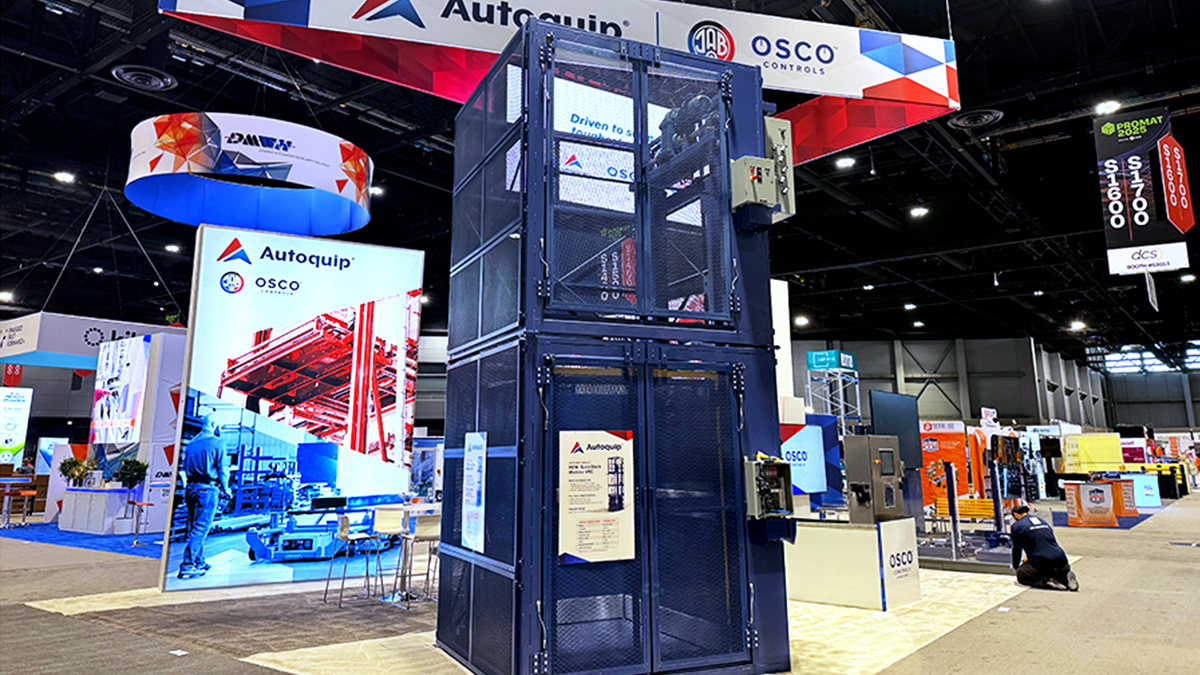
A modular vertical lift uses pre-engineered, sectionalized components rather than fully custom fabrication. Our modular designs use standardized structural sections and platform configurations fabricated in controlled manufacturing environments. This approach delivers faster manufacturing, shorter lead times, and easier delivery and installation at your facility compared to traditional stick-built systems.
Why Modular Matters
Modular construction reduces on-site disruption—you can maintain operations during installation with minimal interference. The standardized connections simplify multi-level installations, whether you need two levels or five. When your facility needs change, our vertical reciprocating conveyors can be reconfigured, relocated, or expanded more readily than fully custom systems, protecting your capital investment and enabling future adaptability.
The QuickStack VRC
QuickStack represents one application of modular VRC principles. The system uses sectionalized mast construction that ships in manageable components, pre-wired control panels that reduce on-site electrical work, and standardized connection points that speed assembly. The modular approach delivers the durability and safety performance required for industrial applications while reducing typical installation timelines from weeks to days. This design philosophy—pre-engineering what can be standardized while maintaining flexibility for application-specific requirements—demonstrates how modular systems can balance consistency with customization.
Safety Considerations for Vertical Reciprocating Conveyors
Vertical reciprocating conveyors eliminate many material handling risks associated with forklifts and manual carrying. With the use of well-designed operational protocols, VRCs can help maintain safe environments throughout their service life.
Guarding, Gates, and Access Control
We require proper guarding that prevents personnel access to lift shafts during operation. Loading points use interlocked gates—the platform can’t move while the gates are open. This interlock system creates physical barriers that represent your primary safety protection.
Load Adherence and Rated Capacities
Every system we engineer has a specific load capacity based on structural calculations and ASME B20.1 requirements. We include load sensors that help your operators verify loads stay within specifications, with controls that prevent overload operation. Adhering to rated capacities isn’t just about avoiding equipment damage—exceeding capacity compromises the structural integrity and safety systems the entire design depends on. Operators need clear capacity markings and straightforward verification procedures to maintain load discipline consistently.
Regular Inspection and Preventive Maintenance
Scheduled preventive maintenance keeps our systems operating safely throughout their service life. Inspection schedules cover lubrication points, structural wear indicators, brake functionality, control systems, and safety device operation. We provide maintenance protocols that identify which components need regular attention and at what intervals. Documented inspection records create the compliance trail ASME B20.1 requires and help your team catch wear patterns before they create operational or safety issues.
Preventing Falls, Impacts, and Mechanical Failures
Our design approach addresses the primary hazards in vertical material handling. Full perimeter guarding prevents personnel from falling into lift shafts. Platform safety edges detect obstructions and stop motion before impacts occur. We engineer mechanical redundancy into critical systems—brake mechanisms, support structures, and control circuits include failsafe features that prevent uncontrolled descent or unexpected movement. Regular inspection of wear components, structural connections, and safety devices catches potential mechanical failures before they create hazardous conditions.
ASME B20.1 Compliance in Daily Operations
Our vertical reciprocating conveyors are designed and built to ASME B20.1 standards, but compliance extends beyond initial installation. This standard defines operational safety requirements, including regular inspections, load testing protocols, and maintenance documentation. We work with your team to establish inspection schedules and operational procedures that maintain ASME B20.1 compliance throughout the system’s service life, ensuring your facility meets both regulatory requirements and industry best practices for industrial lifting equipment.
How to Choose the Right Vertical Reciprocating Conveyor
Effective vertical reciprocating conveyor specification starts with understanding your material handling requirements and operational constraints. Use this checklist to define your system requirements:
- Required capacity and platform size: What’s your maximum load weight? What are your largest load dimensions (length, width, height)? Do you handle standard pallets, custom carts, bins, or machinery?
- Travel height and number of stops: What’s the vertical distance between your levels? Do you need a simple two-level system or a multi-stop system serving three or more floors?
- Load type: Are you moving pallets, wheeled carts, bins, totes, or machinery? Do loads arrive oriented consistently or in varying configurations?
- Duty cycle: Will the system operate continuously throughout shifts, handle high-volume intermittent loads, or serve occasional transport needs? Continuous operation requires more robust specifications.
- On-site installation factors: What floor space is available at each level? What’s your overhead clearance? Do you have structural constraints? What utilities (electrical, compressed air) are accessible?
- Integration needs: Do you need the VRC to connect with conveyors, automated guided vehicles, warehouse management systems, or other facility automation? What control integration is required?
Working through these factors systematically helps us engineer a vertical reciprocating conveyor that matches your specific application rather than trying to adapt a generic solution to your needs.
Partner with Autoquip for Engineered Vertical Material Handling Solutions
We’ve been engineering vertical reciprocating conveyors for manufacturing, automotive, warehousing, and distribution operations for decades. We understand the operational realities of industrial material handling—the safety requirements, integration challenges, and performance standards your facility demands. Whether you need a straightforward two-level hydraulic system or a complex modular vertical lift serving multiple production levels, we engineer VRC lifts matched to your specific application. Our QuickStack modular vertical lift platform delivers the installation speed and future flexibility modern facilities require.
Get a custom VRC solution engineered for your facility’s exact requirements—talk to our team today!
Autoquip Delivers the Vertical Reciprocating Conveyors Industrial Facilities Depend On
Vertical reciprocating conveyors represent proven technology for creating safer, more efficient material flow in multi-level facilities. They eliminate forklift vertical travel hazards, reduce physical demands on workers, and provide predictable transport capacity independent of horizontal material movement. Our modular vertical lift systems, like QuickStack, extend these advantages with faster installation timelines and greater reconfiguration flexibility, helping protect your capital investment as operational requirements evolve. When your facility needs reliable vertical material movement engineered for industrial environments, our systems deliver the performance and safety characteristics forklifts and freight elevators can’t match.