
How to Position Heavy Parts for Assembly Efficiency
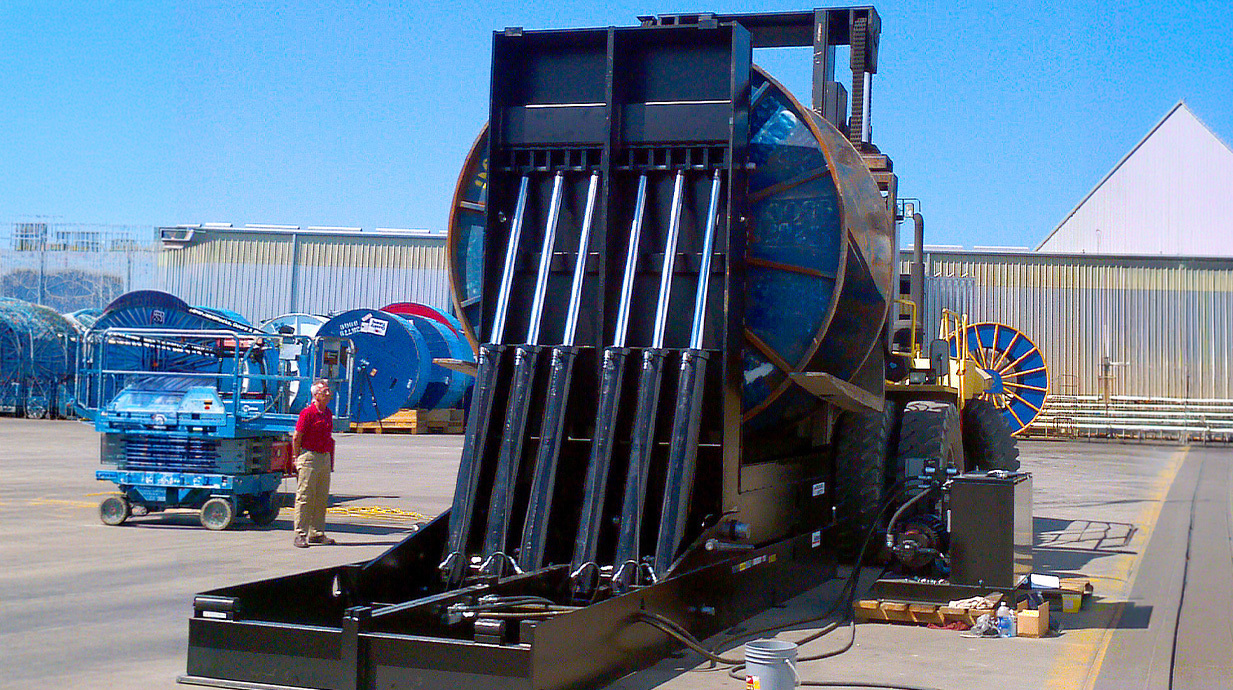


Heavy Parts Positioning for Assembly: How the Right Setup Changes Everything
Ask any plant engineer about bottlenecks on the assembly floor, and positioning almost always comes up. Heavy parts that are awkward to access, difficult to rotate, or presented at the wrong height don’t just slow operators down — they introduce fatigue, inconsistency, and injury risk that compounds across every shift. The fix isn’t always more equipment or more people. Often, the answer lies in a smarter approach to how parts are positioned at the workstation. In this article, we’ll cover:
- Why heavy parts positioning for assembly is one of the most overlooked drivers of efficiency
- The most common positioning challenges manufacturers face on the assembly floor
- How ergonomic positioning directly impacts throughput, quality, and operator safety
- The key solutions — lift tables, tilters, turntables, and integrated systems — and when to use each
- The business case for proper positioning and the benefits that follow
- When standard equipment isn’t enough, and custom engineering is the right call
- Real-world examples of how custom-engineered positioning systems transformed assembly workflows
Ready to improve how heavy parts are handled in your facility? Contact us to explore our work positioning solutions.
Why Heavy Parts Positioning for Assembly Deserves More Attention
Efficient assembly depends on more than just speed — it depends on how materials are presented to operators at every stage of production. When heavy parts are improperly positioned, workers compensate with awkward movements, excessive reaching, or manual lifting that was never part of the intended workflow. Over time, that leads to slower production, inconsistent quality, and increased injury risk on your floor.
Proper heavy parts positioning for assembly allows operators to work within optimal ergonomic zones, improving both productivity and safety simultaneously. Assembly efficiency improvement starts at the workstation level — when parts are presented correctly, operators move less, fatigue more slowly, and produce more consistent results. For manufacturers focused on throughput, quality, and keeping good people on the floor, getting positioning right is one of the most practical things a facility can do.
How Improper Positioning Slows Down Your Assembly Operation
Positioning problems rarely announce themselves. They show up as slower cycle times, higher error rates, more frequent injury reports, and operators exhausted by mid-shift. If any of those sound familiar, the root cause may be closer to the workstation than you think.
Wasted Motion and Operator Fatigue
When operators must constantly adjust their posture, manually reposition components, or compensate for parts at the wrong height or angle, every task takes longer than it should. A few extra seconds per cycle — multiplied by hundreds of assemblies per day — adds up to measurable lost productivity. Fatigue accelerates as the shift progresses, creating a second wave of slowdowns in the hours when output should still be strong.
Injury Risk from Repetitive Strain and Overexertion
Manual lifting and repositioning of heavy components exposes the workforce to movements that lead to musculoskeletal injuries — bending, twisting, overreaching, and sustained awkward postures. These injuries accumulate quietly until they sideline experienced operators, resulting in lost productivity, workers’ compensation costs, and the difficult task of replacing skilled people who know your process well.
Inconsistent Assembly Quality
Positioning affects more than operator comfort — it directly influences the quality of the work coming off the line. When operators are forced into non-ideal positions, precision suffers. Fasteners get improperly torqued, alignments drift, and inspection steps get rushed. Consistent positioning creates the conditions for reliable, repeatable assembly quality, and removing variability in how parts are presented is one of the most effective ways to reduce it in your finished product.
Common Challenges with Heavy Part Handling on the Assembly Floor
The specific challenges vary by industry and application, but certain positioning problems show up consistently — and if your facility handles heavy parts in assembly, there’s a good chance your work positioning systems aren’t fully keeping up with demand.
Manual Lifting and Repositioning
Relying on manual handling for heavy components introduces both inefficiency and injury risk to any operation. When forklifts or overhead cranes are used for small adjustments that a dedicated positioning system could handle, cycle times extend, and production flow gets interrupted. Assembly positioning is most efficient when it’s built into the workstation rather than improvised with general-purpose equipment.
Fixed Work Surfaces
Fixed-height work surfaces force operators to adapt to the equipment rather than the other way around. When part sizes vary across a production run, a surface that works well for one assembly may be completely wrong for the next. Operators end up bending, standing on platforms, or working at angles that compromise both comfort and precision. Adjustable-height solutions eliminate this mismatch, putting the work at the right level instead of forcing the operator to adapt.
Limited Part Accessibility
Large or complex assemblies often require access to multiple sides, angles, or faces of a component. When a part can’t be rotated or tilted easily, operators either work from uncomfortable positions or spend time manually repositioning the load — sometimes requiring additional personnel. Both outcomes slow the process and increase the risk of handling errors. Positioning systems that allow controlled rotation and tilting give operators full, safe access to every area of the assembly.
The Role of Ergonomic Positioning in Assembly Efficiency
Ergonomics is sometimes treated as a safety checkbox — something you address after an injury incident or during an audit. But manufacturers who have invested in proper work positioning know that the productivity gains are just as real as the safety benefits. Operator ergonomics and assembly efficiency are directly linked — effective heavy parts positioning for assembly keeps operators working productively without wearing them down, and that directly affects what gets built, how fast, and how consistently.
Keeping Operators in the Optimal Work Zone
There’s a range of motion where operators can work comfortably, accurately, and with full control. Parts presented outside that zone — or at angles that force compensating movements — push operators out of it immediately. Work positioning systems that keep parts within that zone mean operators aren’t fighting the workstation to do their jobs. Bending, stretching, and twisting decrease significantly, resulting in better speed, greater precision, and less physical wear across the shift.
Reducing Fatigue Across the Full Shift
An operator who starts the day working ergonomically will still be productive at hour eight. One who has been compensating for a poorly positioned workstation since the first hour won’t be. Fatigue doesn’t just slow people down — it introduces errors, increases incident risk, and drives absenteeism. Ergonomic material handling equipment is one of the most direct investments your facility can make in sustained daily output.
Throughput and Repeatability as Direct Outcomes
Assembly line productivity improves when ergonomic positioning is built into the process — not because operators are working harder, but because they’re working under conditions that let them perform consistently. Cycle times tighten, quality holds, and every operator on every shift works from the same reliable setup. That kind of repeatability doesn’t happen by accident. It’s engineered into the workstation.
Positioning Solutions That Improve Assembly Efficiency
The right positioning solution depends on the industry and application — part size and weight, assembly complexity, cycle time requirements, and available floor space all factor into the decision. Autoquip’s work positioning systems cover the full range of assembly positioning needs, from standard lift tables to fully integrated custom systems.
Lift Tables
Scissor lift tables are the foundation of ergonomic work positioning. By allowing the work surface to be raised or lowered to match the operator’s optimal working height, lift tables eliminate the need to bend or stretch to access parts at a fixed elevation. Autoquip’s scissor lift table family spans more than 1,000 designs and configurations — from compact lifts for smaller parts to heavy-duty Titan and Super Titan models engineered for extreme loads — ensuring the right solution is available for virtually any assembly application.
Tilter Tables
Tilters angle parts toward the operator, improving visibility and access without requiring the operator to lean, reach, or reposition. For assemblies that need to be accessed from specific angles — fastening on an underside, inspecting a recessed area, or applying materials at a precise orientation — tilters put every surface of the assembly within comfortable reach. Autoquip offers the most diverse tilter product line in the industry, including hydraulic, pneumatic, and mechanical options rated for high-capacity loads and fast cycle times.
Turntables
Turntables rotate parts up to 360 degrees, giving operators complete access without repositioning the load. This is particularly valuable for large assemblies where multiple faces or sides require attention during a single production step. Autoquip’s industrial turntables are available in manual and powered configurations. When combined with a scissor lift table, they further enhance ergonomics and workflow efficiency by allowing simultaneous height and rotation control.
Integrated Positioning Systems
For applications with complex positioning requirements, integrated systems that combine lift and tilt solutions — along with rotation — deliver the most complete solution. These systems are custom-designed for specific applications and workflows, built around the exact part geometry, cycle requirements, and floor layout of your facility. Rather than adapting the workflow to fit standard equipment, an integrated positioning system is engineered to fit the workflow — eliminating multiple handling steps and keeping the assembly process moving as it was designed to. Autoquip’s work positioning solutions include integrated controls, optional automation, and custom motion configurations tailored to your application.
The Business Case for Proper Positioning — Benefits That Go Beyond the Workstation
We’ve seen it across hundreds of applications — when facilities invest in the right positioning equipment, the impact shows up well beyond the workstation. Output increases, quality tightens, and the floor runs more smoothly.
Increased Assembly Speed and Throughput
When parts arrive at the right height, angle, and orientation every time, operators spend less time adjusting and more time building. In high-volume environments, shaving even a few seconds off each positioning cycle adds up to meaningful throughput gains across a full shift — without adding headcount or changing the process.
Reduced Operator Fatigue and Injury Risk
Lift tables, tilters, and turntables do the physical work that operators shouldn’t have to do themselves. Less bending, less reaching, less manual repositioning — conditions that reduce physical wear, improve morale, and make your facility a better place to work every day. Over time, that translates into fewer injuries, lower workers’ compensation exposure, and better retention of the experienced people who know your assembly process best.
Improved Product Quality and Consistency
When positioning isn’t consistent, quality isn’t either. When operators are improvising around a fixed workstation, the quality of their work varies with it. Purpose-built positioning locks in a consistent setup across every operator and every shift — so torque gets applied correctly, alignments hold, and the assembly comes out right the first time.
Lower Reliance on Manual Handling Equipment
The right positioning system reduces or eliminates the need for forklifts, cranes, and extra personnel just to keep parts accessible during assembly. When purpose-built equipment handles the lifting, rotating, and tilting, operators stay focused on the assembly itself — and the floor runs with fewer interruptions and less dependence on general-purpose handling equipment.
Enhanced Overall Workflow Efficiency
Workstations become more self-contained, production flow becomes more predictable, and material handling optimization becomes a built-in feature of the process rather than something managed separately. That’s the kind of efficiency that shows up on the bottom line.
Going Beyond Standard — When Custom Engineering Is the Right Call
Standard lift tables, tilters, and turntables solve a wide range of assembly positioning challenges. But some applications introduce requirements that ready-made solutions simply weren’t designed to meet — unusual part geometries, multi-axis positioning needs, integration with automated systems, or workflow constraints that demand a solution engineered from the ground up.
Signs That a Custom Solution May Be the Right Fit
Several conditions consistently point toward a custom-engineered approach. If your parts vary significantly in size or weight across production runs, configurable fixturing or programmable positioning may be needed that standard equipment can’t provide. If the existing process involves multiple manual handling steps, a single integrated system could consolidate those steps into one controlled workflow.
When operators are frequently adjusting positions manually, or when safety concerns and injury incidents are increasing despite standard ergonomic material handling equipment in place, it’s a signal that the workstation needs to be redesigned around the application — not the other way around.
What Custom Engineering Makes Possible
Autoquip’s custom lift solutions are engineered from the ground up for specific applications, with over 75 years of design experience and one of the industry’s largest design libraries behind every project. Custom systems can combine lift, tilt, rotate, and conveyor functions in a single platform; integrate with AGVs, robotics, or automated workflows; and incorporate advanced control systems — including precision positioning capabilities with programmable stops and repeatable accuracies as precise as one-tenth of an inch. For facilities where the assembly process demands more than a standard catalog can offer, custom engineering is the path to a solution that fits the operation exactly.
Case Study Spotlight — Positioning Solutions in Action
The right positioning system looks different for every application. These three projects illustrate how Autoquip has engineered solutions that directly addressed the assembly challenges of each customer.
Generator Assembly — Lift, Tilt, and Rotate for a Locomotive Manufacturer
A locomotive manufacturer needed a safer, more efficient way to handle large, heavy generator assemblies — requiring precise positioning, rotation, and ergonomic access throughout the build process. Autoquip engineered a custom system combining a 9,000 lb. capacity lift, an integrated hydraulic tilter, and a powered ring-bearing turntable with fully custom yoke-style fixtures. The solution worked so well that the customer has since ordered multiple similar systems for additional facilities. See how it came together.
Aerospace Tooling — Custom PacMan Non-Intrusive Tilter
An aerospace industry supplier needed to upend a massive piece of tooling within the constraints of its own footprint — a requirement that ruled out every conventional tilter configuration. Autoquip’s answer was a chain-driven mechanical tilter with a 10,000 lb. capacity that tilts 90 degrees while rotating entirely within a 112-inch base footprint — keeping the load centered throughout the cycle. Take a closer look.
Medical Equipment Assembly — Track-Mounted T2 Lift with Manual Turntable
A medical equipment manufacturer needed to assemble two large sections of a diagnostic machine with very precise component alignment. Autoquip modified the T2 scissor lift with horizontal track mobility, a lateral hand wheel for fine adjustment, and a custom turntable with an infinite-position braking mechanism — plus a safety interlock that prevents lowering under negative load. This is a solid example of how precision assembly demands can benefit from creative engineering. See the full solution.
Partner with Autoquip to Improve Heavy Parts Positioning in Your Facility
Positioning is one of the highest-leverage improvements a facility can make. The right system reduces manual handling, improves operator ergonomics, and creates the consistent, repeatable conditions that efficient assembly depends on — whether the application calls for a standard lift table or a fully custom-engineered solution.
Autoquip has been engineering lifting and positioning solutions for over 75 years, serving manufacturers across automotive, aerospace, medical, defense, and other industrial sectors. With more than 1,000 standard designs and full custom engineering capabilities, Autoquip delivers the solution that fits your specific parts, your workflow, and your production goals.
From standard lift tables to fully custom systems, Autoquip helps facilities improve how heavy parts are handled in assembly. Contact us today to get started.
Autoquip — Engineering Better Assembly Efficiency Through Smarter Positioning
Efficient assembly operations depend on how well materials are positioned at every stage of the process. By reducing manual handling and ensuring optimal ergonomic access, facilities can significantly improve productivity, safety, and product quality. Investing in the right positioning solutions — whether standard or custom — helps create a more controlled, repeatable, and efficient assembly environment. Autoquip has the engineering depth, product range, and decades of hands-on experience to help you get there.
Ready to improve how heavy parts are handled on your assembly floor? Autoquip engineers are ready to help you evaluate your options.