
Design Considerations for Multi-Level Material Handling Systems


Multi-Level Material Handling Systems: Design Considerations That Drive Better Outcomes
Multi-level facilities present vertical material handling system challenges that single-floor operations simply don’t. When materials have to move between floors, mezzanines, elevated storage areas, and production zones, every transfer point is an opportunity for the workflow to slow down, back up, or break down entirely. Getting vertical movement right isn’t a detail; it’s a design requirement that directly affects safety, productivity, and the long-term scalability of the entire operation. Poorly designed systems don’t just create bottlenecks; they create conditions where manual workarounds introduce injury risk that a properly engineered solution would eliminate.
Multi-level material handling systems that work well aren’t assembled from off-the-shelf parts and positioned wherever space allows. They’re designed around the facility’s specific material flow: the loads, transfer points, production demands, and operational goals the system must support. That design discipline is what separates a vertical movement solution that works with the operation from one that simply shifts the problem to a different point in the workflow.
>
This article covers the key design considerations for multi-level material handling systems: what to plan for, what factors drive system performance, and how to integrate vertical movement into the broader operational environment:
- Why multi-level facilities require a deliberate approach to material handling system design
- How to plan for vertical material flow across the facility
- The design factors that most influence system performance
- How to integrate vertical movement into the overall operational system
- The operational benefits of well-planned multi-level systems
From standard VRCs to fully custom-engineered lift systems, Autoquip helps facilities design efficient, multi-level material handling solutions. Contact us today to discuss your application.
Why Multi-Level Facilities Require a Deliberate Design Approach
In a single-level facility, material flow is largely a horizontal challenge. In a multi-level facility, vertical movement adds complexity that affects every part of the operation: from how materials arrive at each level to how quickly they move between process steps, and how well the system adapts as operational requirements change. Vertical transportation isn’t just logistics; it’s an operational constraint that shapes production output, labor demands, and the facility’s capacity for growth.
Efficient vertical movement is critical to maintaining workflow across multi-level manufacturing and intralogistics environments. When vertical transfer points are undersized, poorly positioned, or disconnected from the surrounding workflow, the entire operation pays the price in slower cycle times, increased manual handling, and bottlenecks that compound over time. Safety suffers too; without engineered solutions, manual workarounds fill the gap, and those workarounds carry real injury risk. System design that addresses safety, productivity, and future operational needs before selecting or installing equipment prevents those problems from developing in the first place.
Planning for Vertical Material Flow
Before any equipment is specified, the material flow through the facility has to be understood in specific terms. Where do materials originate? Where do they need to go? How do they move between levels, and at what volume and frequency? We work through these questions with every customer before recommending a solution. The answers define the requirements the system has to meet; they’re the foundation on which every design decision is built. For a closer look at where material flow challenges most commonly occur in manufacturing and intralogistics environments, see our blog on common intralogistics material flow challenges.
Understanding How Materials Move Through the Facility
Material flow mapping, which traces the path materials take from receiving through production, storage, and shipping, reveals where vertical movement occurs naturally in the workflow and where it’s being handled through workarounds. In many of the facilities we work with, vertical transfers that should be engineered solutions are instead handled by forklifts, manual carries, or improvised lift equipment, creating safety risks and operational inefficiencies. Understanding the actual flow of materials is the first step toward identifying where a properly designed system would have the most impact.
Identifying Transfer Points Between Floors and Work Areas
Transfer points, where materials move from one level to another or from one process area to the next, are the critical nodes in a multi-level material handling system. Each transfer point has its own requirements: the loads it needs to handle, the frequency at which it operates, the space available for the lift system, and the interface requirements with the surrounding workflow. Identifying every transfer point in the facility and characterizing each one in operational terms allows the system design to address the operation’s actual demands rather than generic assumptions about what a multi-level facility needs.
Eliminating Unnecessary Handling Steps
Every manual handling step that can be eliminated through good system design is a reduction in labor demand, injury risk, and cycle time variability. Multi-level material handling systems designed with the full workflow in mind, rather than vertical movement in isolation, identify and remove unnecessary handling steps instead of building them into the permanent operation. The savings show up immediately and keep showing up for the life of the system.
Design Factors That Influence System Performance
Once the material flow requirements are understood, the design factors that shape system performance have to be evaluated together. A lift that’s right on capacity but wrong on cycle frequency, or perfect for the load but incompatible with the workflow, isn’t the right solution. They interact, and the system that performs best is the one that gets all of them right.
Building Layout and Available Space
Facility layout, including floor plan, ceiling height, column placement, pit availability, and the location of existing equipment, constrains which system configurations are viable at each transfer point. A vertical reciprocating conveyor ideal for a given application may not fit within the available footprint without facility modification. Before you can proceed with system design, you must understand the space available at each transfer point, including the approach area, the vertical travel zone, and the exit area on each level. Mezzanine operations present their own layout considerations, especially when the mezzanine structure limits vertical clearance or the footprint available for lift equipment.
Throughput and Load Requirements
Load capacity, cycle frequency, and throughput requirements define what the system has to deliver reliably. An undersized vertical material handling system becomes a bottleneck, limiting the productivity of every process that depends on it. When we design a system, we account for peak demand conditions and reasonable growth projections, not just the average day, because that’s what ensures the system performs when it matters most.
Safety and Code Considerations
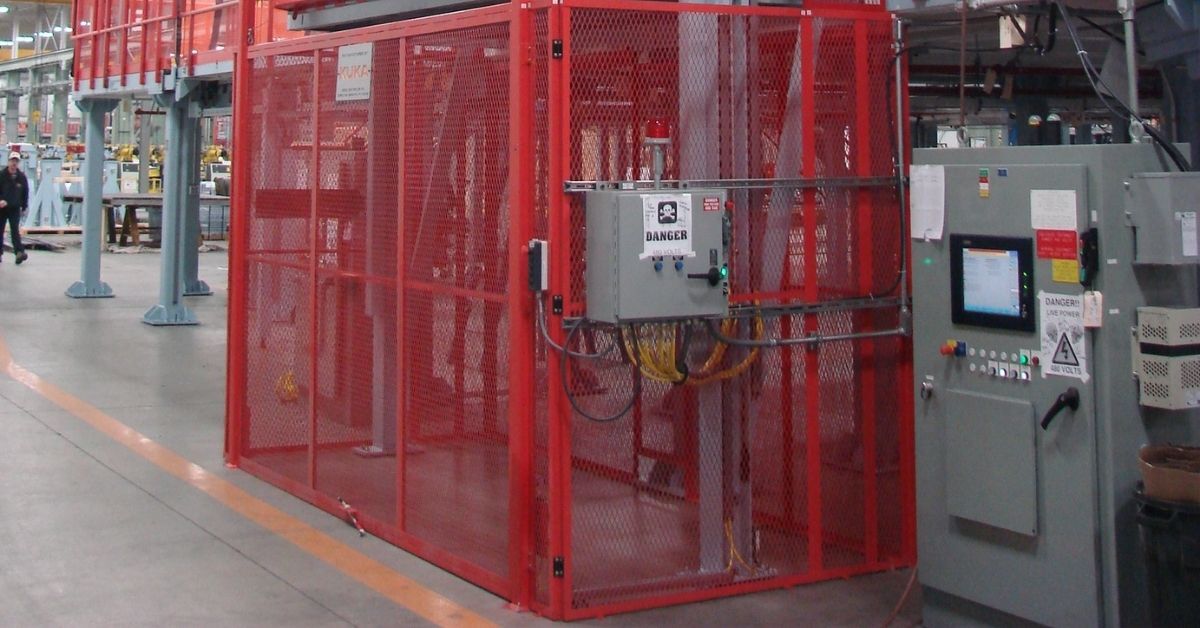
Vertical material handling equipment in manufacturing and warehouse environments is subject to safety standards that affect both the design and the installation of the system. Autoquip’s vertical reciprocating conveyor systems are purpose-built vertical material handling systems designed and manufactured to meet ASME B20.1 safety standards for material-only vertical transport. That distinction matters for code compliance, insurance requirements, and Authority Having Jurisdiction (AHJ) approval. Safety considerations also extend to the interface between the lift system and the surrounding workflow: guarding, access control, interlocks, and load positioning must be addressed as part of the system design, not added as afterthoughts.
Integration with Existing Workflows
A vertical transportation solution that operates independently from the surrounding workflow doesn’t eliminate manual handling; it just relocates it. Systems that integrate with existing conveyors, AGVs, and production control platforms close that gap, allowing vertical movement to become a working part of the operation rather than a break in it.
Integrating Vertical Movement into the Overall System
Vertical movement doesn’t exist in isolation; it’s a component of a larger operational system, and its design has to reflect that. The goal isn’t just to move materials between levels; it’s to move them in a way that supports the production workflow, connects warehouse and manufacturing areas effectively, and positions the facility to grow and adapt.
Supporting Manufacturing Operations
In multi-level manufacturing environments, vertical movement connects process steps that would otherwise operate independently. When materials move efficiently between production levels and keep pace with the surrounding process cycle time, manufacturing operations run more smoothly and predictably. In these environments, our lifts often need to accommodate varied load types, interface with production tooling or fixtures, and meet cycle time requirements that match the pace of the surrounding operation. Custom-engineered solutions are frequently the right answer when standard lift configurations can’t meet the specific demands of the manufacturing process.
Connecting Warehouse and Production Areas
In combined warehouse and manufacturing facilities, warehouse material handling systems that connect storage and production across multiple levels are among the highest-impact points in the material flow. When that interface is well-designed, materials flow from storage into production and back efficiently, with minimal manual handling and consistent cycle times. Getting it right requires understanding the volume, frequency, and load characteristics of that connection at the design stage, before selecting equipment, so the system is sized and positioned to support the operation’s actual demands.
Preparing for Automation and Future Expansion
Automation compatibility and future expansion are design considerations that have to be built in from the start, not addressed once everything else is locked in. Lift systems and vertical transfer points that are designed with flexibility in mind, including adequate spare capacity, open control architecture, and standard interfaces, are significantly easier and less expensive to integrate into more automated workflows as those requirements develop. Planning for future expansion at the system design stage reduces the cost and disruption of future upgrades and keeps the facility’s options open as operational demands evolve.
Benefits of Well-Planned Multi-Level Systems
The benefits of a well-designed multi-level material handling system don’t stop at the lift. They run through the whole operation.
Improved Material Flow
Systems designed around actual material flow requirements keep materials moving through the facility predictably and efficiently. When vertical transfer points are correctly sized, positioned within the workflow, and integrated with surrounding systems, material flow across levels becomes as smooth as material flow within a level; removing one of the most common sources of operational friction in multi-level facilities.
Better Use of Facility Space and Storage
Efficient vertical movement enables facilities to use vertical space productively. Mezzanine operations, elevated pallet rack storage, and multi-level production layouts all become fully accessible without the operational inefficiency that comes from poor vertical transportation. When materials move reliably and at the pace the operation demands, every level’s storage and production capacity becomes fully accessible, and facilities can expand vertically rather than requiring additional floor space.
Reduced Manual Handling
Well-designed multi-level systems replace manual vertical transfers; forklift moves, manual carries, and improvised handling with engineered solutions that move materials automatically and consistently. That reduction in manual handling lowers injury risk, decreases labor costs, and removes the variability manual handling introduces into production and logistics workflows.
Greater Operational Efficiency
The cumulative effect of improved material flow, better space utilization, and reduced manual handling is a more efficient operation across the board. Throughput increases because materials move faster and more reliably. Labor is redirected from handling tasks to higher-value work. Production scheduling becomes more predictable because material supply to production is consistent. The facility is also better positioned to scale: adding capacity, expanding automation, or accommodating new product lines without material handling infrastructure becoming the constraint.
Multi-Level Material Handling Systems Built for How Your Facility Actually Works
Multi-level material handling systems require thoughtful planning; from mapping material flow and identifying transfer points to selecting the right vertical transportation solutions and integrating them into the broader operational environment. Efficient vertical movement supports productivity and future growth, and the right combination of standard and custom lift solutions can be tailored to meet the specific requirements of virtually any facility.
Autoquip has been engineering vertical material handling solutions for more than 75 years. We work with manufacturing engineers, facility engineers, warehouse operations managers, and systems integrators to design multi-level systems that address the specific flow, load, and integration requirements of each application, whether that means a single VRC installation or a fully engineered solution built from the ground up.
Don’t let vertical movement be the weak link in your material handling system. Reach out to Autoquip and let’s design the right solution for your facility.
Autoquip: Engineering Multi-Level Material Handling Systems That Keep Facilities Moving
From standard vertical reciprocating conveyors to fully custom-engineered lift systems, Autoquip helps facilities design efficient, multi-level material handling solutions. Proper planning, thoughtful integration, and the right equipment make the difference between a vertical movement system that limits your operation and one that enables it. With the engineering depth, product range, and application experience to address virtually any multi-level material handling challenge, we’re the partner facilities turn to when vertical movement matters.
From standard Vertical Reciprocating Conveyors (VRC) to fully custom-engineered lift systems, Autoquip helps facilities design efficient, multi-level material handling solutions. Contact us today to discuss your application.