
Industrial facilities are under rising pressure to move more materials and support higher production volumes without increasing labor costs or expanding facility footprints. To achieve these goals, many manufacturers, warehouses, and distribution centers are investing in automation lift applications that streamline material movement and boost operational efficiency.
While technologies such as automated guided vehicles (AGVs), autonomous mobile robots (AMRs), automated storage and retrieval systems (ASRS), robotics, and conveyor systems are gaining attention, these solutions are only as effective as the infrastructure that connects them. For many facilities, one of the most crucial components of an automated workflow is vertical material movement.
Materials frequently need to move between floors, mezzanines, storage levels, production cells, and fulfillment areas. Manual processes can be labor-intensive and time-consuming. But without a reliable method for vertical transport, even the most sophisticated automation system can experience bottlenecks that limit throughput and disrupt workflow continuity. Industrial lift automation solves this issue by integrating lift systems directly into larger material handling environments, allowing products, components, and inventory to move seamlessly throughout a facility.
Autoquip engineers their lift systems to function as fully integrated elements within automated operations. The company’s automated lift solutions communicate with conveyors, robotics, warehouse systems, AGVs, AMRs, and PLC controls to support coordinated material flow. This approach helps enterprises enhance efficiency, reduce manual handling, maximize facility space, and support automation initiatives.
Autoquip provides engineered lift automation integration solutions, automation design capabilities, and control options tailored to the specific requirements of each workflow and application.
What Is Industrial Lift Automation?
Industrial lift automation is the integration of lift systems into automated material-handling environments, where equipment, controls, and software work together to move materials with minimal human intervention. Instead of relying on operators to manually transport products between elevations, automated lift systems are integrated into a larger coordinated workflow that manages material movement throughout a facility.
Within industrial operations, automated material flow is the process of moving products, inventory, or components through a facility using interconnected equipment and controls. Conveyor systems, robotic cells, warehouse software, AGVs, and AMRs all contribute to this process. Lift systems provide the vertical connection between these technologies, ensuring materials can move efficiently between levels while maintaining workflow continuity.
Automated storage and retrieval systems, commonly known as ASRS solutions, rely heavily on vertical movement. These systems automatically store and retrieve inventory from densely packed storage locations to maximize space utilization and improve inventory accessibility. Lift systems play a vital role in connecting storage levels, conveyor networks, and picking operations within these environments.
AGVs and AMRs have also become increasingly ubiquitous in manufacturing and warehouse facilities. AGVs follow predetermined routes to transport materials throughout a facility, while AMRs use sensors and intelligent navigation systems to move dynamically through changing environments. Both technologies typically require vertical transfer solutions when workflows extend across multiple levels.
The biggest difference between standalone lifting equipment and industrial lift automation is integration. A standalone lift performs a specific lifting task independently. An integrated lift system communicates with surrounding equipment, responds to workflow demands, and participates in coordinated automation sequences. This level of integration allows facilities to achieve greater efficiency, consistency, and throughput while reducing reliance on manual material handling.
How Lift Systems Support Automated Material Handling
Automated material handling systems are designed to move products as efficiently as possible from one point to another. While conveyors and mobile transport technologies are highly effective at horizontal movement, many times industrial facilities require materials to travel vertically as well, making lift systems essential.
Warehouse lift systems move inventory between storage levels, mezzanines, picking areas, and shipping operations. Without automated vertical transport, employees may need to manually transport materials between elevations, which can create delays and increase labor requirements. Integrated lift systems eliminate these inefficiencies by providing reliable vertical transfer capabilities that better support operational pace.

In manufacturing facilities, lift systems often support production workflows by moving components between workstations, assembly areas, and storage locations. Automated lifts can coordinate with conveyors, robotics, and production equipment to ensure materials arrive exactly when needed. This synchronization helps reduce downtime, improve production consistency, and support lean manufacturing objectives.
Lift systems also play a critical role in fulfillment operations where order volumes fluctuate, and throughput demands remain high. By automating vertical transport, enterprises can accelerate order processing speeds while reducing repetitive manual handling tasks that contribute to labor challenges and workplace injuries.
Additionally, lift systems enable facilities to maximize vertical space. As industrial real estate costs continue to rise, many organizations are expanding upward rather than outward. Multi-level storage systems, mezzanines, and vertical automation solutions help facilities increase capacity without requiring larger building footprints. Integrated lift systems provide the infrastructure necessary to make these strategies possible.
Autoquip's Automation Integration Approach
Effective automation and integration require a deep understanding of facility operations, material flow patterns, throughput requirements, and long-term business objectives.
Autoquip approaches every automation project from an engineering perspective, focusing first on understanding the workflow before developing a solution.
System Integrations
Autoquip focuses on understanding how lifts will interact with and integrate with existing systems and workflows.
For facilities utilizing AGVs, AMRs, conveyors, or ASRS systems, planning also involves determining how lift systems will communicate with surrounding equipment while maintaining workflow efficiency and safety.
Controls & Automation Engineering
The performance of an automated lift design depends on the control technology that powers it. Autoquip provides lift control systems, including PLCs, HMIs, sensors, and safety controls, engineered specifically for each application. These systems serve as the operational foundation enabling lifts to function safely and reliably in automated environments.
Autoquip’s controls can act as independent systems or connect with existing facility automation platforms. By integrating with PLCs, warehouse management systems, and other material-handling equipment, the company’s lifts can exchange key operational data and respond to workflow demands in real-time.
Integration with Existing Systems
Many automation projects take place within operating facilities where new equipment must coexist with existing infrastructure. Autoquip regularly works with customers to integrate lift systems into established warehouse operations, production environments, and material handling networks.
Careful consideration of available space, existing control platforms, workflow constraints, and future expansion plans is necessary. By designing around real-world operational requirements, Autoquip helps enterprises modernize facilities without disrupting business operations.
Fabrication, Installation Support, & Validation
Once engineering is complete, successful implementation depends on proper fabrication, installation support, and testing. Autoquip validates automation performance through controls testing, commissioning procedures, workflow verification, and operational safety evaluations. This process helps ensure lift systems perform reliably under actual operating conditions and meet customer expectations before entering full production.
Core Industrial Lift Automation Capabilities
As automation technologies become more sophisticated, enterprises need material handling infrastructure that can accommodate increasingly connected workflows.
Autoquip’s automation solutions are engineered to function within a larger operational ecosystem, helping facilities coordinate movement across storage, production, fulfillment, and transportation systems.
ASRS Integration Solutions
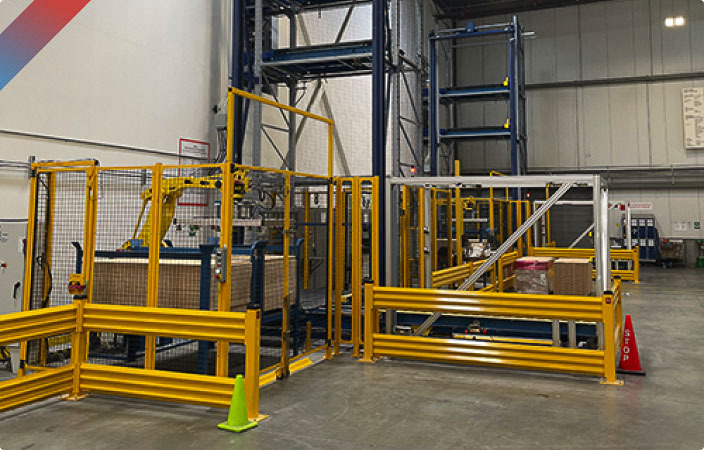
Automated storage and retrieval systems have revolutionized how warehouses and distribution centers manage inventory. By maximizing vertical storage density and reducing manual handling requirements, ASRS environments can improve space utilization and operational efficiency. However, these systems depend on reliable movement between storage levels, conveyors, picking stations, and shipping areas.
Autoquip’s lift systems help bridge the gap between automated storage infrastructure and the broader material handling network. Integrated lift solutions support vertical inventory movement while maintaining coordination with conveyor systems, warehouse management software, and automated retrieval processes, ensuring materials remain accessible without slowing throughput.
Lift integration can play an important role in reducing bottlenecks and maintaining inventory flow throughout the warehouse for facilities operating multi-level storage environments. By supporting efficient transfers between storage and fulfillment operations, automated lift systems help enterprises get more value from their ASRS investments.
AGV-Integrated Lift Systems
Automated guided vehicles are a common feature in modern manufacturing and warehouse environments. These systems help automate repetitive transport tasks, reduce labor requirements, and improve consistency across material handling operations. While AGVs excel at moving materials horizontally, they require additional infrastructure to move materials between elevations.
Autoquip designs lift systems that work directly with AGV workflows. Through integrated controls and sequencing logic, lift systems can communicate with AGVs to coordinate pickup and drop-off activities, manage transfer timing, and support safe load movement. Coordination helps eliminate delays that can occur when vertical movement is disconnected from the rest of the workflow.
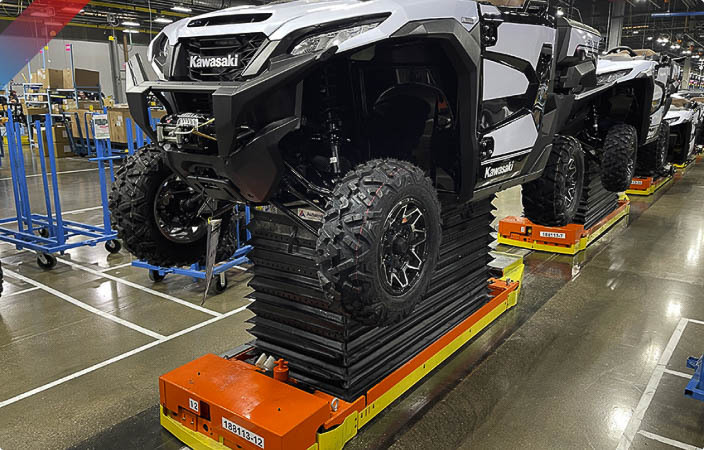
AGV-integrated lift systems help create a more continuous flow of materials throughout the operation. Organizations can automate the entire transfer process, enabling more efficient production schedules.
AMR Integrated Material Handling Systems
Unlike AGVs, autonomous mobile robots navigate facilities and adapt to changing conditions in real-time. AMRs are valuable for enterprises seeking scalable automation solutions that can evolve as workflows change.
Because AMRs operate in evolving environments, lift systems must be designed with flexibility in mind. Autoquip engineers automated lift solutions that accommodate communication with AMR platforms while supporting varying traffic patterns and routing decisions, resulting in a vertical transfer solution that supports adaptive material-handling strategies without compromising efficiency.
Integrated lift systems serve as a key connection point among storage levels, picking operations, and shipping activities. Together, these technologies help create responsive automation environments capable of handling fluctuating business demands.
Conveyor-Integrated Lift Systems
Conveyors are among the most widely used material-handling technologies in industrial facilities. They provide efficient horizontal transport, but many workflows require products to move between floors, mezzanines, or elevated work areas. Lift systems help extend conveyor functionality by creating vertical transfer points.
Autoquip’s lift solutions integrate directly into conveyor networks, allowing products to move continuously throughout the facility. Through coordinated controls and automated sequencing, lift systems can receive loads from conveyors, transport them between elevations, and deliver them to downstream equipment without interrupting processes.
PLC-controlled Lift Systems
Autoquip builds PLC-controlled lift systems equipped with advanced control architecture that provides the intelligence, safety, and visibility required for modern automated environments.
The company’s engineering expertise and partnership with OSCO Controls ensure that Autoquip’s lift systems can be integrated with existing PLC networks, centralized monitoring systems, and other material-handling technologies.
Autoquip’s ability to integrate lift systems into broader control design options empowers enterprises pursuing long-term automation strategies. Rather than functioning as isolated equipment, PLC-controlled lifts become active participants in material handling processes.
Explore an Automation Solution for Your Facility
Every automation environment has different equipment, workflows, controls, and material-handling requirements. Autoquip can help determine how an integrated lift system can fit into your existing operation.
Talk with Autoquip’s engineering team about your application, automation goals, and facility requirements to begin identifying the right approach.
Types of Automated Systems Autoquip Supports
Industrial automation applications vary significantly from one facility to another. Some enterprises focus on warehouse automation and inventory management, while others prioritize manufacturing efficiency, robotics integration, or fulfillment optimization. Autoquip supports a broad range of applications by engineering lift systems around specific operational requirements.
These applications include:
- Vertical reciprocating conveyors
- Conveyor-integrated lift systems
- Automated pallet-handling systems
- Multi-level transfer systems
- Automated work-positioning equipment
- Mezzanine transfer solutions
- AGV and AMR transfer stations
- Automated warehouse environments
- Manufacturing automation systems
- Fully integrated material-flow networks
Because every operation has unique throughput requirements, facility constraints, and workflow objectives, Autoquip works closely with customers to develop solutions that align with both current operational needs and future growth plans.
Automation Challenges Autoquip Can Help Solve
Many automation projects begin with a specific operational challenge that is limiting productivity, increasing costs, or creating inefficiencies. In many cases, these challenges are caused by gaps in how materials move between systems, including:
- Inefficient Material Flow: Products may move quickly through portions of a facility only to encounter delays when transitioning between departments, storage levels, or production areas. These interruptions can reduce throughput and create cascading delays throughout the operation.
- Vertical Transport Bottlenecks: Facilities often invest heavily in conveyors, robotics, and mobile automation technologies but continue relying on manual processes when materials need to move between elevations. This mismatch can limit the effectiveness of the entire automation strategy.
- Labor-Intensive Transfer Processes: Repetitive lifting, transporting, and positioning activities consume valuable labor resources and increase the risk of injuries and workflow inconsistencies. Automated lift systems help reduce these manual tasks while creating more predictable material movement.
- Warehouse Congestion & Limited Floor Space: As facilities expand vertically to accommodate growth, efficient movement between levels becomes more important. Integrated lift systems support these strategies by providing reliable access to storage areas, mezzanines, and production spaces.
Autoquip helps enterprises address these challenges through customized solutions that improve coordination between equipment, optimize material flow, and support safer, more efficient operations.
Intralogistics & Warehouse Automation Applications
The growth of e-commerce, same-day fulfillment expectations, and increasingly complex supply chains have spurred investment in intralogistics automation. Enterprises are seeking ways to move materials more efficiently while optimizing facility utilization and maintaining flexibility for future growth.
Warehouse Automation Systems
Warehouse automation hinges on the ability to move inventory quickly and accurately between storage locations, picking stations, and shipping operations. Lift systems provide the vertical linkage necessary to support these activities while helping facilities maximize available storage space.
By integrating with conveyors, ASRS environments, and warehouse management systems, automated lift solutions contribute to more efficient inventory movement and improved throughput.
E-commerce Fulfillment
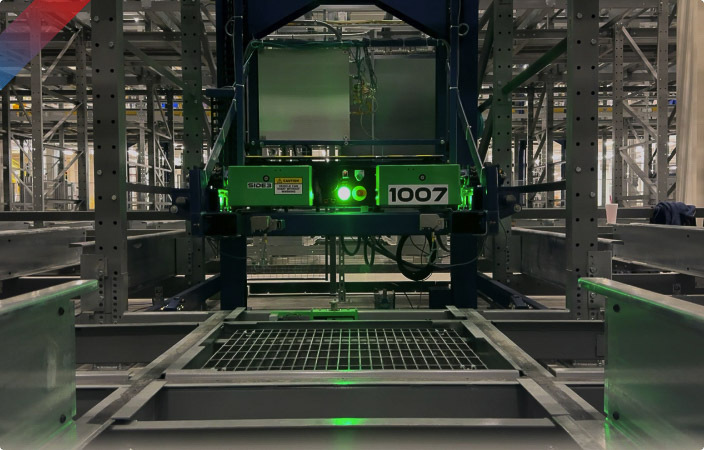
Fulfillment operations face fluctuating order volumes, high throughput requirements, and customer expectations for rapid delivery. Automated lift systems help support these environments by reducing delays associated with vertical transport and enabling more efficient use of warehouse space.
When integrated into fulfillment workflows, lift systems can support faster order processing, improved inventory accessibility, and more consistent material movement across multiple levels.
Manufacturing Automation
Manufacturing environments require materials to arrive at the right place and time to assist production schedules. Lift systems help coordinate movement between storage locations, assembly areas, robotic cells, and production lines while minimizing manual handling.
Integrated solutions can improve workflow consistency, support lean manufacturing initiatives, and help facilities maintain productivity as production volumes increase.
Automotive Automation Systems
Automotive manufacturers continue to expand their use of AGVs, robotics, and automated production systems. Lift systems play a vital role in supporting these technologies by providing vertical transfer capabilities that connect different stages of production.
Autoquip’s integrated lift solutions help improve coordination throughout the manufacturing process.
Aerospace & Specialty Automation Applications
Highly specialized industries require custom-engineered solutions that handle unique products, components, and workflows. Aerospace manufacturers, defense contractors, and other specialty operations need lift systems designed around precise performance requirements and facility constraints.
Autoquip’s engineering capabilities allow the company to develop solutions that address these complex applications while supporting automation objectives and operational efficiency.
Have an Automation Challenge?
Whether you’re improving warehouse throughput, automating a production line, expanding vertically, or integrating new material-handling technology, Autoquip can help develop a lift solution around your operational requirements.
Connect with an Autoquip expert to review your workflow, facility constraints, automation equipment, and performance goals.
Real-World Automation Integration Examples
Automation projects are most successful when technology is applied to solve specific operational challenges.
Autoquip’s experience across diverse industries, including warehouse, manufacturing, and distribution environments, has resulted in numerous integrated lift solutions that support material flow optimization, automation coordination, and throughput improvements.
Automated VRCs for AGV Rack System Retrieval & Storage
Challenge
A customer operating a highly automated storage environment needed a way to support efficient vertical inventory movement while maintaining coordination with an AGV-based retrieval system. Materials were stored across multiple levels, and automated guided vehicles transported inventory throughout the facility. The challenge was creating a reliable connection between horizontal AGV movement and vertical storage access.
Solution
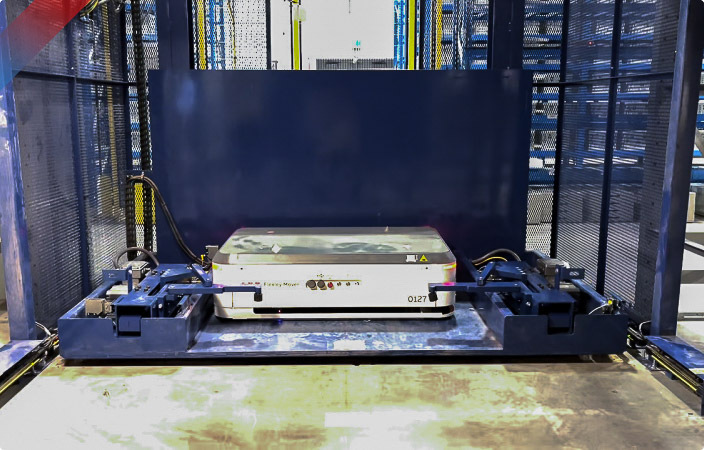
Autoquip engineered a series of automated vertical reciprocating conveyors that integrated directly into the storage and retrieval workflow. The VRCs communicated with the surrounding automation systems, enabling automatic inventory transfers as AGVs arrived at designated transfer points.
Outcome
By synchronizing vertical and horizontal material movement, the customer improved inventory accessibility, reduced transfer delays, and increased overall throughput.
Integrated Automated VRC System for a Distribution Center
Challenge
A large distribution operation needed to move inventory efficiently between multiple levels while maintaining the speed required to support high-volume order fulfillment. Existing processes created bottlenecks that slowed material movement and limited overall productivity.
Solution
Autoquip designed and integrated an automated VRC system that worked in coordination with conveyor equipment and other material handling technologies throughout the facility. The lift system became part of a cohesive workflow that moved products between storage areas, picking locations, and shipping operations.
Outcome
The customer achieved a more streamlined distribution process with improved material flow, fewer manual transfer requirements, and better utilization of available warehouse space.
Integrating VRCs & AMRs for Automated Storage Retrieval
Challenge
As autonomous mobile robots (AMRs) become more common in warehouse environments, organizations are increasingly seeking ways to integrate AMR workflows with multi-level storage systems. One customer needed a solution that would allow AMRs to access inventory on different levels without disrupting the automated workflow.
Solution
Autoquip engineered an integrated VRC solution that served as the vertical connection point within the automated storage environment. The lift system coordinated with AMR traffic while supporting reliable inventory movement between elevations.
Outcome
This integration allowed the customer to enhance storage accessibility while maintaining the flexibility that made AMRs valuable in the first place.
Heavy-Duty Scissor Lift Integrated with Robotic Stacking Operations
Challenge
In a manufacturing environment, a customer required precise material positioning to support an automated robotic stacking line. Robotic equipment depended on accurate load placement and consistent material presentation to maintain production efficiency.
Solution
Autoquip developed a heavy-duty powered scissor lift that integrated directly into the robotic workflow. The lift system provided controlled positioning capabilities while coordinating with surrounding automation equipment.
Outcome
The customer improved workflow consistency, reduced manual intervention, and supported uninterrupted automated production.
When Do You Need an Automated Lift Solution?
As operations become more complex and throughput demands increase, many organizations reach a point where manual material movement becomes a limitation rather than a viable solution.
Repetitive Material Movement between Elevations
If employees regularly transport inventory, pallets, components, or products between floors, mezzanines, or workstations, an automated lift solution may provide significant efficiency gains.
Repetitive manual handling consumes labor resources, increases the risk of injuries, and can compromise productivity.
High-Throughput
As warehouses and manufacturing facilities process larger volumes of materials, delays associated with manual transfer processes can quickly become bottlenecks.
Automated lift systems help maintain consistent material flow and ensure vertical transport keeps pace with surrounding operations.
What to Consider
Enterprises implementing AGVs, AMRs, conveyor systems, robotics, or ASRS environments should also evaluate their vertical movement requirements early in the planning process. These technologies often depend on integrated lift systems to bridge elevation changes and support coordinated workflows.
Facilities pursuing warehouse modernization initiatives frequently encounter similar challenges. As inventory volumes grow and storage density increases, maximizing vertical space becomes increasingly important. Automated lift systems help support multi-level inventory strategies while improving accessibility and operational efficiency.
Safety considerations are another important factor. Reducing repetitive lifting, carrying, and transporting activities can improve workplace safety and support employee productivity.
Why Autoquip for Lift Automation & Integration
Automation projects require a thorough understanding of material flow, facility operations, controls integration, and the practical realities of industrial environments. Autoquip’s approach combines engineering expertise with decades of experience in developing custom material-handling solutions for some of the most demanding applications in manufacturing, warehousing, and distribution.
Autoquip approaches automation projects from a workflow perspective. Every solution begins with understanding how materials move throughout the operation and how vertical transfer impacts overall performance. This allows the company to develop systems that support larger operational goals.
Autoquip’s experience spans warehouse automation, manufacturing integration, intralogistics systems, AGV and AMR applications, conveyor coordination, ASRS support, and custom material handling projects. This perspective enables them to design solutions that fit within complex automation environments while accommodating future growth and evolving operational needs.
Their team is committed to customization. Autoquip engineers lift systems around specific throughput requirements, facility constraints, safety considerations, and workflow objectives to ensure each solution aligns with customer needs.
From controls integration and automation sequencing to fabrication, installation, and validation, Autoquip provides the engineering support organizations need to implement effective automation strategies.
Supporting Resources
Explore additional real-world examples and educational resources.
Featured Case Studies
- Integrating VRCs and AMRs for Automated Storage Retrieval
- Automated VRCs for AGV Rack System Retrieval and Storage
- Integrated Automated VRC System for Distribution Center
- Heavy-Duty Powered Scissor Lift Integrates with Automated Robotic Stacking Line
- Automated Assembly Carts with Integrated Scissor Lifts for Recreational Vehicle Production
Related Automation Resources
- AGV Integrated Lifts Transforming Automotive Assembly
- Integrate Lift Systems into Automated Production Lines
- Vertical Reciprocating Conveyors for Automated Workflows
- Warehouse ASRS Integration with Custom Lift Systems
- Benefits of ASRS Integration with Custom Material Handling Solutions
- Integrating ASRS and VRC Systems for Seamless Material Handling
- Material Lifts for Automated Guided Vehicle Systems
- Industrial Lifts AGV Integration for Enhanced Productivity
- Emerging Technologies and Future Trends in VRC Automation
Additional Solutions & Capabilities
Talk To An Expert
Get In Touch Today
Autoquip can help identify the right approach for your operation. They work closely with customers to evaluate facility requirements, understand workflow objectives, and develop lift solutions that support long-term operational success.
If you’re exploring ways to improve material movement, increase throughput, enhance safety, or maximize facility space, talk with an Autoquip expert about your automation goals. They will develop an engineered solution that integrates seamlessly into your operation and helps support the next phase of growth.